Wide Reads
Literature MattersLife IndexEducators
Sign in
Where to Begin
Essays by Ralph Waldo Emerson - The American Scholar's True Education

Ralph Waldo Emerson

Essays by Ralph Waldo Emerson

The American Scholar's True Education

Home›Books›Essays by Ralph Waldo Emerson›Chapter 1
1 of 10
Next

Summary

The American Scholar's True Education

Essays by Ralph Waldo Emerson by Ralph Waldo Emerson

0:000:00
Listen to Next Chapter

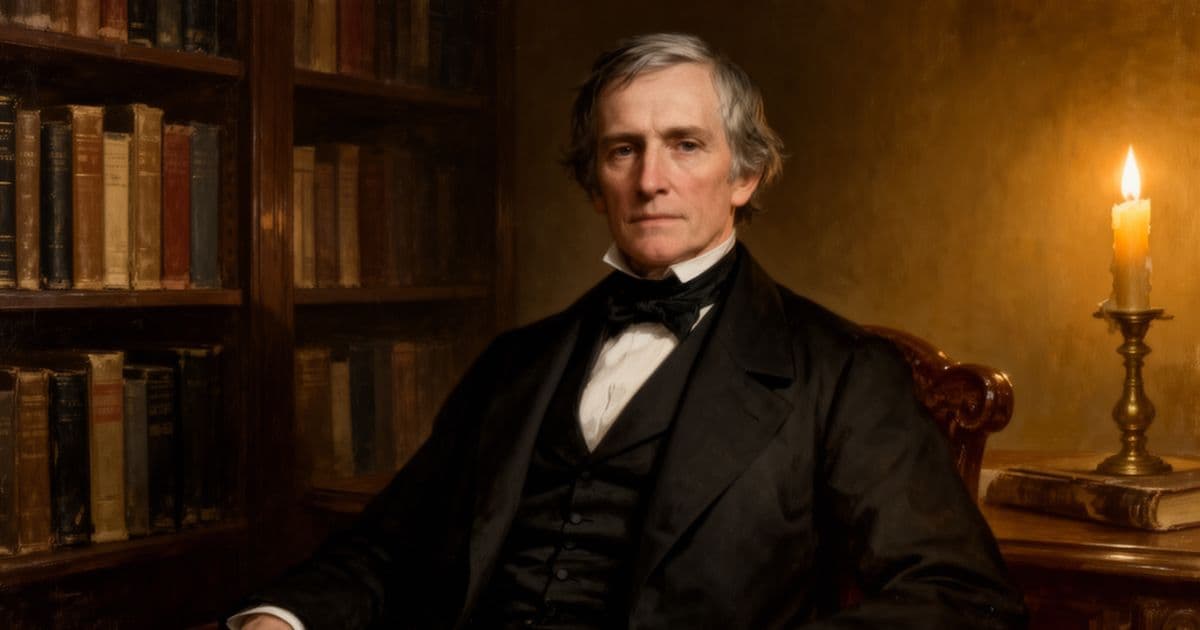
Emerson delivers his famous address defining what an American scholar should be in a young nation breaking free from European intellectual dependence. He argues that true scholars learn from three sources: nature (which teaches us about universal patterns and our connection to everything), books (which should inspire rather than dominate our thinking), and action (real-world experience that transforms abstract ideas into practical wisdom). The scholar's job isn't to parrot old ideas but to think independently, trust their own observations, and help society see truth clearly. Emerson warns against becoming a 'bookworm' who worships past thinkers instead of developing original thoughts. He emphasizes that scholars must engage with the world, not hide from it, because action gives life to ideas. The essay culminates in a call for American intellectual independence—scholars should stop imitating European models and trust their own insights. Emerson believes that when individuals think for themselves and act on their convictions, they tap into universal truths that speak to everyone. This creates a foundation for genuine democracy where each person's unique contribution matters. The piece is both a manifesto for intellectual freedom and a practical guide for anyone seeking to develop their own thinking while remaining connected to their community and times.

Coming Up in Chapter 2

Having established the scholar's role, Emerson turns to one of life's most challenging puzzles: why do bad things happen to good people, and good things to bad people? His essay on 'Compensation' reveals a hidden law that governs all of existence.

Share it with friends

Next Chapter
GO ADS FREE — JOIN US
Original text
complete·7,743 words
A

pprenticeship to the learning of other lands, draws to a close. The millions that around us are rushing into life cannot always be fed on the sere remains of foreign harvests.[3] Events, actions arise that must be sung, that will sing themselves. Who can doubt that poetry will revive and lead in a new age, as the star in the constellation Harp, which now flames in our zenith, astronomers announce, shall one day be the pole-star[4] for a thousand years?

In the light of this hope I accept the topic which not only usage but the nature of our association seem to prescribe to this day,--the AMERICAN SCHOLAR. Year by year we come up hither to read one more chapter of his biography. Let us inquire what new lights, new events, and more days have thrown on his character, his duties, and his hopes.

It is one of those fables which out of an unknown antiquity convey an unlooked-for wisdom, that the gods, in the beginning, divided Man into men, that he might be more helpful to himself; just as the hand was divided into fingers, the better to answer its end.[5]

1 / 38

Master this chapter. Complete your experience

Purchase the complete book to access all chapters and support classic literature

Read Free on GutenbergBuy at Powell'sBuy on Amazon

As an Amazon Associate, we earn a small commission from qualifying purchases at no additional cost to you.

Available in paperback, hardcover, and e-book formats

GO ADS FREE — JOIN US

Why This Matters

Connect literature to life

Skill: Detecting Intellectual Manipulation

This chapter teaches how to recognize when someone wants you to stop thinking for yourself and just follow their authority.

Practice This Today

This week, notice when someone dismisses your observations or experience—then ask yourself what you've actually seen and what small test you could try.

GO ADS FREE — JOIN US

Now let's explore the literary elements.

Key Quotes & Analysis

"The old fable covers a doctrine ever new and sublime; that there is One Man,--present to all particular men only partially, or through one faculty; and that you must take the whole society to find the whole man."

— Emerson

Context: Explaining why society needs different types of people working together

This reveals Emerson's belief that no single person contains all human potential, but each person contains a piece of universal humanity. We need each other to be complete, which forms the basis for democratic cooperation.

In Today's Words:

Everyone has different strengths, and we need all kinds of people working together to get the full picture of what humans can accomplish.

"Books are the best of things, well used; abused, among the worst."

— Emerson

Context: Warning against becoming overly dependent on other people's ideas

This captures Emerson's nuanced view of learning from others. Books should inspire and inform your own thinking, not replace it. The danger comes when you stop questioning and just accept everything you read.

In Today's Words:

Reading is great when it helps you think better, but terrible when it stops you from thinking for yourself.

"Action is with the scholar subordinate, but it is essential."

— Emerson

Context: Explaining why scholars need real-world experience, not just study

Emerson argues that while thinking is the scholar's main job, they must also engage with the world through action. Experience tests ideas and transforms abstract knowledge into practical wisdom.

In Today's Words:

Thinking is your main thing, but you've got to actually do stuff too, or your ideas won't mean anything.

"The millions that around us are rushing into life cannot always be fed on the sere remains of foreign harvests."

— Emerson

Context: Arguing that America needs its own intellectual tradition, not just European imports

This metaphor compares old European ideas to dried-up leftover crops that can't nourish a growing nation. America needs fresh thinking that addresses its own unique circumstances and challenges.

In Today's Words:

We can't keep living off other people's old ideas - we need to figure out our own solutions for our own problems.

Thematic Threads

Independence

In This Chapter

Emerson argues Americans must break free from European intellectual models and trust their own thinking

Development

Introduced here as the central theme

In Your Life:

You might recognize this when you catch yourself always asking others what to do instead of developing your own judgment

Identity

In This Chapter

The scholar's identity comes from original thinking, not from imitating past authorities

Development

Introduced here as intellectual identity formation

In Your Life:

You see this when you realize you've been trying to be someone else's version of successful instead of your own

Class

In This Chapter

Emerson challenges the idea that only certain people are qualified to think independently

Development

Introduced here as democratic thinking

In Your Life:

You experience this when you assume someone with more education or status must know better than you do

Personal Growth

In This Chapter

Growth happens through active engagement with the world, not passive consumption of ideas

Development

Introduced here as action-based development

In Your Life:

You see this when you realize reading about something isn't the same as actually doing it

Social Expectations

In This Chapter

Society expects scholars to conform to established patterns rather than think originally

Development

Introduced here as conformity pressure

In Your Life:

You feel this when you hesitate to speak up because your idea doesn't match what everyone else is saying

GO ADS FREE — JOIN US

You now have the context. Time to form your own thoughts.

Discussion Questions

  1. 1

    What are the three sources of learning that Emerson says scholars should use, and why does he think all three are necessary?

    analysis • surface
  2. 2

    Why does Emerson warn against becoming a 'bookworm' who just copies what other people have written?

    analysis • medium
  3. 3

    Think about your workplace or a skill you're learning - where do you see people relying too heavily on just one source of knowledge instead of balancing study, observation, and hands-on experience?

    application • medium
  4. 4

    When someone in authority tells you to 'just follow the rules' or 'that's how we've always done it,' how could you use Emerson's three-source approach to navigate the situation?

    application • deep
  5. 5

    What does Emerson's call for intellectual independence reveal about the relationship between confidence and original thinking?

    reflection • deep

Critical Thinking Exercise

10 minutes

Test Your Three-Source Knowledge

Pick something you thought you understood well - maybe a work process, parenting approach, or health habit. Write down what you learned from reading or being told about it, what you've actually observed when doing it, and what happened when you tried it yourself. Look for gaps or contradictions between these three sources.

Consider:

  • •Notice where your book knowledge doesn't match your real-world observations
  • •Pay attention to times when taking action taught you something neither reading nor watching could
  • •Consider how combining all three sources might change your approach going forward

Journaling Prompt

Write about a time when you trusted your own observations over expert advice and it turned out well. What gave you the confidence to think independently in that situation?

GO ADS FREE — JOIN US

Coming Up Next...

Chapter 2: The Law of Compensation

Having established the scholar's role, Emerson turns to one of life's most challenging puzzles: why do bad things happen to good people, and good things to bad people? His essay on 'Compensation' reveals a hidden law that governs all of existence.

Continue to Chapter 2
Contents
Next
The Law of Compensation

Continue Exploring

Essays by Ralph Waldo Emerson Study GuideTeaching ResourcesEssential Life IndexBrowse by ThemeAll Books

You Might Also Like

Jane Eyre cover

Jane Eyre

Charlotte Brontë

Explores personal growth

Great Expectations cover

Great Expectations

Charles Dickens

Explores personal growth

The Strange Case of Dr Jekyll and Mr Hyde cover

The Strange Case of Dr Jekyll and Mr Hyde

Robert Louis Stevenson

Explores personal growth

Don Quixote cover

Don Quixote

Miguel de Cervantes Saavedra

Explores personal growth

Browse all 47+ books
GO ADS FREE — JOIN US

Share This Chapter

Know someone who'd enjoy this? Spread the wisdom!

TwitterFacebookLinkedInEmail

Read ad-free with Prestige

Get rid of ads, unlock study guides and downloads, and support free access for everyone.

Subscribe to PrestigeCreate free account
Intelligence Amplifier
Intelligence Amplifier™Powering Wide Reads

Exploring human-AI collaboration through books, essays, and philosophical dialogues. Classic literature transformed into navigational maps for modern life.

2025 Books

→ The Amplified Human Spirit→ The Alarming Rise of Stupidity Amplified→ San Francisco: The AI Capital of the World
Visit intelligenceamplifier.org
hello@widereads.com

WideReads Originals

→ You Are Not Lost→ The Last Chapter First→ The Lit of Love→ Wealth and Poverty→ 10 Paradoxes in the Classics · coming soon
Arvintech
arvintechAmplify your Mind
Visit at arvintech.com

Navigate

  • Home
  • Library
  • Essential Life Index
  • How It Works
  • Subscribe
  • Account
  • About
  • Contact
  • Authors
  • Suggest a Book
  • Landings

Made For You

  • Students
  • Educators
  • Families
  • Readers
  • Literary Analysis
  • Finding Purpose
  • Letting Go
  • Recovering from a Breakup
  • Corruption
  • Gaslighting in the Classics

Newsletter

Weekly insights from the classics. Amplify Your Mind.

Legal

  • Privacy Policy
  • Terms of Service
  • Cookie Policy
  • Accessibility

Why Public Domain?

We focus on public domain classics because these timeless works belong to everyone. No paywalls, no restrictions—just wisdom that has stood the test of centuries, freely accessible to all readers.

Public domain books have shaped humanity's understanding of love, justice, ambition, and the human condition. By amplifying these works, we help preserve and share literature that truly belongs to the world.

A Pilgrimage

Powell's City of Books

Portland, Oregon

If you ever find yourself in Portland, walk to the corner of Burnside and 10th. The building takes up an entire city block. Inside is over a million books, new and used on the same shelf, organized by color-coded rooms with names like the Rose Room and the Pearl Room. You can lose an afternoon. You can lose a weekend. You will find a book you have been looking for your whole life, and three you did not know existed.

It is a pilgrimage. We cannot find a bookstore like it anywhere on earth. If you read the classics, and you ever get the chance, go. It belongs on every reader's bucket list.

Visit powells.com

We are not in any way affiliated with Powell's. We are just a very big fan.

© 2026 Wide Reads™. All Rights Reserved.

Intelligence Amplifier™ and Wide Reads™ are proprietary trademarks of Arvin Lioanag.

Copyright Protection: All original content, analyses, discussion questions, pedagogical frameworks, and methodology are protected by U.S. and international copyright law. Unauthorized reproduction, distribution, web scraping, or use for AI training is strictly prohibited. See our Copyright Notice for details.

Disclaimer: The information provided on this website is for general informational and educational purposes only and does not constitute professional, legal, financial, or technical advice. While we strive to ensure accuracy and relevance, we make no warranties regarding completeness, reliability, or suitability. Any reliance on such information is at your own risk. We are not liable for any losses or damages arising from use of this site. By using this site, you agree to these terms.