Chapter 14
The Art of Making Money
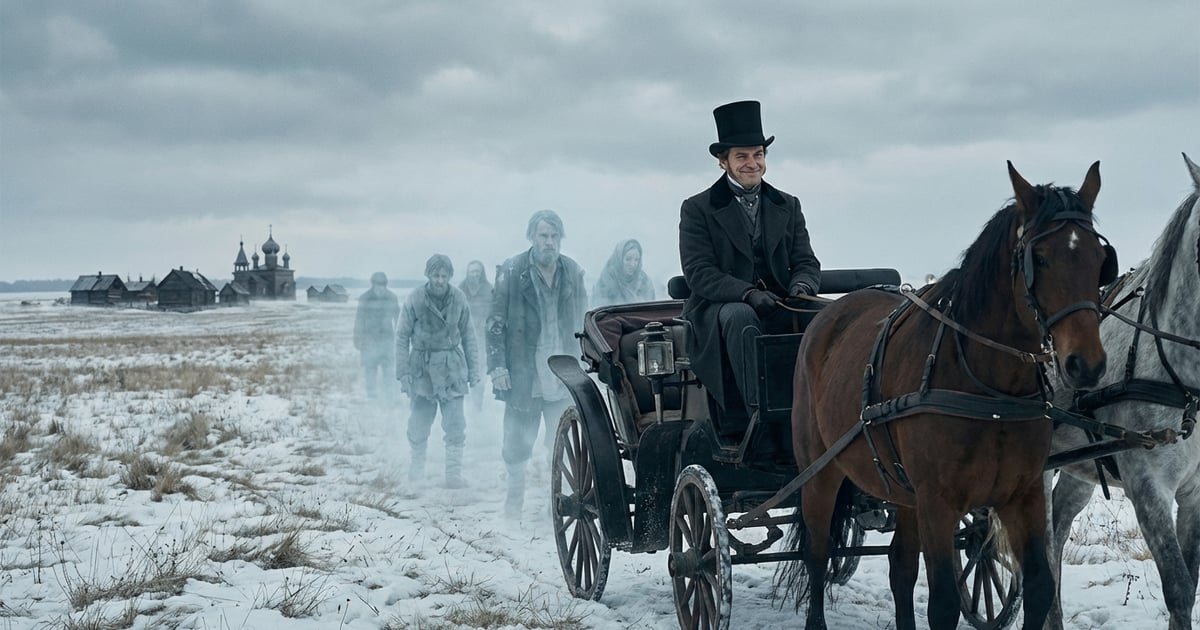
“If Colonel Koshkarev should turn out to be as mad as the last one it is a bad look-out,” said Chichikov to himself on opening his eyes amid fields and open country--everything else having disappeared save the vault of heaven and a couple of low-lying clouds. “Selifan,” he went on, “did you ask how to get to Colonel Koshkarev’s?” “Yes, Paul Ivanovitch. At least, there was such a clatter around the koliaska that I could not; but Petrushka asked the coachman.” “You fool! How often have I told you not to rely on Petrushka? Petrushka is a blockhead, an idiot.…
Public-domain chapter text, formatted for reading.
Master this chapter. Complete your experience
Purchase the complete book to access all chapters and support classic literature
Available in paperback, hardcover, and e-book formats
Now let's explore the literary elements.
Key Quotes & Analysis
"If Colonel Koshkarev should turn out to be as mad as the last one it is a bad look-out"
Context: Waking on the road toward the wrong estate
He already expects landowners to be obstacles to the scheme.
In Today's Words:
He opens his eyes in open country and dreads another eccentric colonel. When your business model depends on strange hosts, fatigue and misdirection become occupational hazards. Watch who controls the room, who needs the deal, and whether politeness is being used to keep you from asking the obvious next question.
"You fool! How often have I told you not to rely on Petrushka?"
Context: Berating Selifan for directions taken from another servant
He blames staff when the route fails instead of fixing his own planning.
In Today's Words:
He snaps that Petrushka is a blockhead and Selifan should never trust him. Leaders who outsource navigation then rage at servants protect ego while repeating the same routing errors. Watch who controls the room, who needs the deal, and whether politeness is being used to keep you from asking the obvious next question.
"when one has seen this place one may say that one has seen one of the beauty spots of Europe."
Context: Admiring the countryside despite his scheming mood
Even a hustler can pause at real landscape before the next con.
In Today's Words:
He tells himself the view rivals Europe's finest vistas. The line shows Chichikov can taste beauty even while chasing deeds, foreshadowing attraction to honest land stewardship. Watch who controls the room, who needs the deal, and whether politeness is being used to keep you from asking the obvious next question.
"factory a year, owing to the circumstance that such quantities of remnants and cuttings"
Context: Describing Kostanzhoglo's practical use of estate waste
Substance turns scraps into profit while bureaucrats shuffle paper.
In Today's Words:
Kostanzhoglo runs a factory on leftovers that other estates throw away. Real wealth here comes from knowing materials and workers, not from committees that never leave the basement. Watch who controls the room, who needs the deal, and whether politeness is being used to keep you from asking the obvious next question.
Thematic Threads
Class
In This Chapter
Kostanzhoglo represents authentic wealth built through understanding and work, while Koshkarev displays hollow aristocratic pretensions
Development
Evolved from Chichikov's encounters with various landowners to show the spectrum from genuine to performative class status
In Your Life:
You might recognize the difference between people who have real skills versus those who just talk impressively about their methods.
Identity
In This Chapter
Chichikov begins questioning his scheme-based identity when confronted with Kostanzhoglo's model of honest self-made success
Development
First time Chichikov seriously considers abandoning his dead souls plan for legitimate pursuits
In Your Life:
You might find yourself reconsidering your approach to goals when you meet someone who achieved similar results through completely different methods.
Social Expectations
In This Chapter
Koshkarev slavishly copies European bureaucratic models while Kostanzhoglo succeeds by ignoring fashion and focusing on fundamentals
Development
Continues the critique of mindless imitation of foreign trends over practical Russian wisdom
In Your Life:
You might catch yourself adopting popular methods that don't actually work for your specific situation.
Personal Growth
In This Chapter
Kostanzhoglo's philosophy of starting from nothing and learning through hands-on experience offers a blueprint for authentic development
Development
First clear positive model for growth presented in the novel
In Your Life:
You might realize that real expertise comes from doing the work yourself rather than managing systems or following trends.
Human Relationships
In This Chapter
Kostanzhoglo's genuine care for his peasants contrasts sharply with Koshkarev's bureaucratic distance from his suffering workers
Development
Shows how authentic leadership requires direct human connection rather than administrative systems
In Your Life:
You might notice whether your relationships are based on genuine care or just going through the proper motions.
You now have the context. Time to form your own thoughts.
Discussion Questions
This is not a test. Five prompts guide you through the chapter, from how it opens to how it closes, so you notice context and rhythm rather than facts to memorize. Sit with each question in your own words. When you see "One way to read it," treat it as a starting point, not the only answer.
- 1
Why is Chichikov worried when he wakes on the road?
analysis • surfaceOne way to read it
He fears Colonel Koshkarev will be as mad as the previous landowner and block his plans.
- 2
How does Colonel Koshkarev's estate differ from Kostanzhoglo's?
analysis • mediumOne way to read it
Koshkarev drowns in departments and forms while Kostanzhoglo profits from direct farming and waste.
- 3
What does Pietukh represent in the chapter?
application • mediumOne way to read it
Hospitality reduced to endless food lists, comic excess before the serious lesson in stewardship.
- 4
Why might Chichikov reconsider the dead souls scheme after meeting Kostanzhoglo?
application • deepOne way to read it
Honest land management produces visible wealth without census fraud, tempting a man tired of scams.
- 5
Where have you seen elaborate process mask lack of results?
reflection • deepOne way to read it
Name a workplace, school, or home routine where planning replaced the work it was supposed to enable.
Critical Thinking Exercise
Process Audit: Systems vs. Substance
Think of something in your life that isn't working well—maybe your morning routine, a work project, or how your family handles chores. Write down all the steps, rules, or procedures currently involved. Now imagine you're Kostanzhoglo: what's the actual goal, and what's the simplest way to achieve it? Cross out everything that doesn't directly contribute to that outcome.
Consider:
- •Are you spending more time managing the system than doing the actual work?
- •What would happen if you eliminated the most complicated step entirely?
- •Which parts of your process impress others versus which parts get results?
Journaling Prompt
Write about a time when you got so caught up in planning or organizing that you forgot what you were trying to accomplish. What did you learn from that experience?
Coming Up Next...
Chapter 15: The Final Reckoning
With Kostanzhoglo's uncovenanted loan of ten thousand roubles promised, Chichikov rides toward Khlobuev's swampy estate to buy land in earnest, meeting crooked cravats, broken boots, and a manuscript that will end mid-scene The last surviving fragment of Dead Souls begins where Gogol's manuscript will soon break off. Chichikov is in the highest spirits; forest gives way to swamp; the village looks deserted..