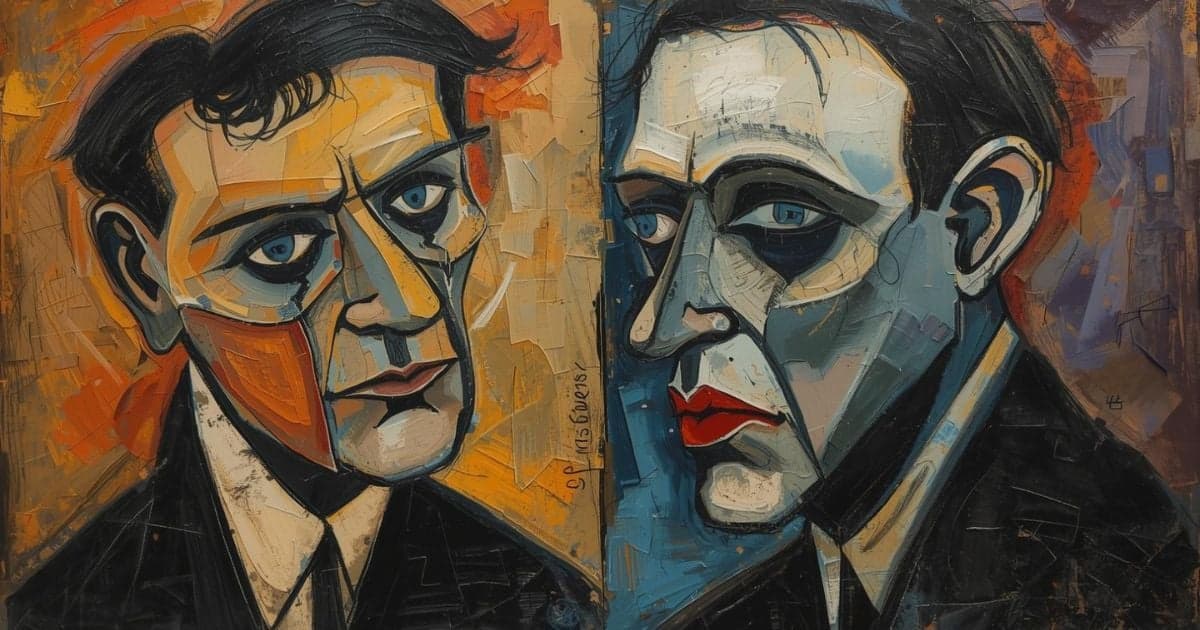
Nietzsche asks what noble still means when old titles weaken. Nobility is not a name on paper. It is a way of valuing, feeling distance, and commanding yourself. Pathos of distance names an inner gap: the power to set standards from strength instead of borrowing them from applause. Higher types, in his account, often grew inside ranked societies where command and obedience were lived facts. Without some outer distance, he argues, the inner wish to widen and surpass may never wake. He is not praising slavery. He is tracing how inner rank can form when outer rank is visible, and what survives when titles fade.
He maps two moral grammars with unusual directness. Master morality begins with self-affirmation and names good from strength, generosity, and creative power. Bad is what is petty, base, or contemptible. Slave morality begins with injury and names good from opposition to power: humility, pity, equality, obedience. Morality becomes political psychology in slow motion. Value systems grow from different positions of power and pain, then harden into conscience, law, and theology. Nietzsche does not call one side pure and the other impure. He wants you to notice which grammar you use when you praise, blame, or judge yourself.
These grammars survive inside modern people. Even those who reject religion still carry guilt, vanity, and moral bookkeeping. Vanity binds you to outside judgment and turns value into publicity. Noble formation moves the other way: less need for applause, more strictness toward yourself, more willingness to stay misunderstood. Self-overcoming becomes a discipline of the soul, not a social costume. Will to power here means life expressing rank, not a licence to bully the nearest person. The question is what your standards produce in character.
He then links rank with discipline, breeding, and responsibility, and this is where readers often misread him. Every higher culture has imposed severe training, often violently, and he refuses to prettify that history. He links creation and hardship without saying brutality is good. His point is that greatness rarely grows from comfort alone. Formation of type involves selection, renunciation, and long obedience to demanding forms. Modern kindness remembers wounds but may forget that difficulty also shapes people. A society can preserve life without elevating it.
He turns to pity, equality, and universal sympathy as modern ideals. Pity can be noble in one person and manipulative as a mass habit. Mass pity can become a currency for power. Equality may protect people legally, which he does not simply dismiss, yet it can also deny real differences in talent, endurance, and creative force. A culture that cannot speak honestly about rank will still enact rank through status games, bureaucracy, and moral trials. Calls for sympathy can weaponise victimhood and punish distinction.
Dionysus stands for affirmative strength: the capacity to say yes to life, including tragedy, conflict, and change. Dionysian yes-saying does not need innocence myths. It can hold contradiction without moral revenge. The question shifts from where morals came from to what stance toward life can survive when absolutes collapse. Nietzsche contrasts this with decadent fatigue, where people seek numbness, certainty, or punitive politics to escape freedom's weight.
He closes with a poem, From the Heights, that changes register from argument to invitation. Altitude, cold air, laughter, friendship at a distance, and selective welcome matter here. Not everyone can breathe at that height, and that is part of the point. The closing call is not a plan for mass conversion but an address to a few who can be cheerful without naivety and hard without hatred. Those who climb must leave herd vanity and hunger for universal praise behind, and learn to live with the wind.
Across the essay, nobility becomes a composite discipline: create values from strength, bear solitude, resist resentment, and accept the costs of rank without sentimental disguise. Nietzsche writes sharply enough to be misused, but his target stays clear. He wants to break slave-moral language's monopoly on modern conscience and reopen higher human formation. If modern Europe confuses comfort with greatness, equality talk with honesty, and pity performance with care, it may stabilise mediocrity. If a few can cultivate distance, responsibility, style, and Dionysian affirmation, another future remains possible: severe, risky, and alive, and worth the climb.
The book's long arc lands here. After questioning truth, testing free spirits, reading religion, surviving aphorisms, tracing morals, exposing scholars, unmasking virtues, and comparing nations, the final test is personal. Can you set a standard, keep it unwatched, and still affirm life? Can you revere yourself without needing a title, a crowd, or a moral costume? That is the noble question Nietzsche leaves open when the last page turns. The poem sends the reader back into the world with altitude in mind, not a new rulebook to obey, and not a crowd waiting to applaud you for obeying it.