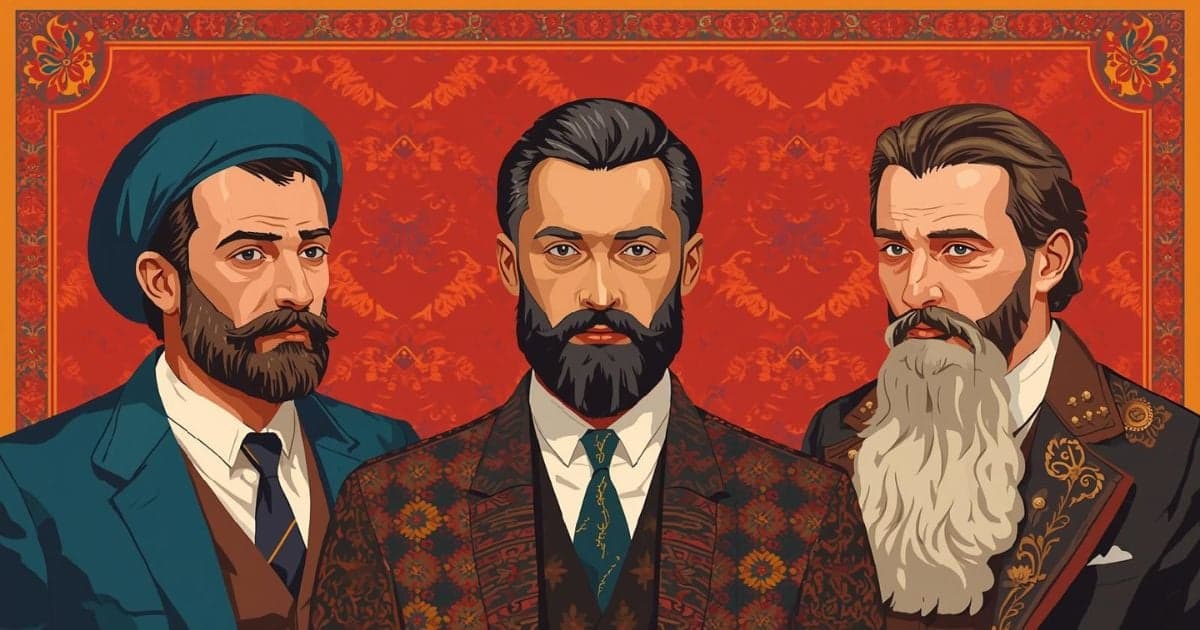
Chapter 08
Peoples and Countries
PEOPLES AND COUNTRIES 240. I HEARD, once again for the first time, Richard Wagner's overture to the Mastersinger: it is a piece of magnificent, gorgeous, heavy, latter-day art, which has the pride to presuppose two centuries of music as still living, in order that it may be understood:--it is an honour to Germans that such a pride did not miscalculate! What flavours and forces, what seasons and climes do we not find mingled in it! It impresses us at one time as ancient, at another time as foreign, bitter, and too modern, it is as arbitrary as it is pompously…
Public-domain chapter text, formatted for reading.
Master this chapter. Complete your experience
Purchase the complete book to access all chapters and support classic literature
Available in paperback, hardcover, and e-book formats
Now let's explore the literary elements.
Key Quotes & Analysis
"What flavours and forces, what seasons and climes do we not find mingled in it!"
Context: Describing Wagner's music as representing the complexity of German culture
Shows how German culture is a mixture of many influences rather than something pure or simple. This complexity is both Germany's strength and weakness - rich but unfocused.
In Today's Words:
Wagner's music shows how many forces can collide in one culture. You hear seasons, climates, and temperaments mixed together until the blend becomes identity. Nietzsche uses that richness to explain Germany's power and confusion. The same lesson applies when a workplace, family, or city carries multiple histories in one set of habits.
"The Germans are of the day before yesterday and the day after tomorrow - they have as yet no today"
Context: Analyzing the German national character and its relationship to time
Germans live either in nostalgia for the past or dreams of the future, but struggle to deal with present reality. This explains their philosophical depth but practical confusion.
In Today's Words:
Some people live in yesterday's grievances or tomorrow's dreams and never fully inhabit today. Nietzsche says Germans oscillate between past weight and future ambition. You may know someone always preparing for a better life while neglecting the decision in front of them. Cultural lens shapes what feels real.
"The Jews are beyond doubt the strongest, toughest, and purest race now living in Europe"
Context: Discussing Jewish contributions to European culture while others promote anti-Semitism
Nietzsche directly challenges the rising anti-Semitism of his time by praising Jewish intellectual strength and cultural adaptability. He sees them as a model for European synthesis.
In Today's Words:
Jewish people are actually the most resilient and mentally tough group in Europe right now, Nietzsche provocatively claims against rising prejudice. He praises adaptability and intellectual toughness where others saw only contempt. The point is not flattery; he argues that outsiders who survive hostile environments often see more clearly than comfortable insiders.
"We good Europeans - we too have hours when we allow ourselves a hearty fatherland-feeling"
Context: Explaining that being a 'good European' doesn't mean rejecting your origins entirely
Even those who think beyond nationalism can still appreciate their home culture. The key is not being trapped by it or thinking it's the only valid way to live.
In Today's Words:
Even us global thinkers sometimes get nostalgic about home, and Nietzsche says that is not automatically a sin. The danger is captivity: letting nostalgia decide what is true about yourself and others, so that affection for origin becomes a reason to stop thinking beyond the borders you inherited.
Thematic Threads
Identity
In This Chapter
Nietzsche shows how national identities both define and constrain people, with Germans especially struggling as a mixed culture without clear unified character
Development
Expands from individual identity formation to collective cultural identity and its limitations
In Your Life:
You might feel torn between family expectations and personal aspirations, or struggle to fit into workplace culture that conflicts with your values
Class
In This Chapter
Cultural refinement and artistic sensitivity become markers of sophistication, with different nations representing different forms of cultural capital
Development
Moves beyond economic class to cultural class, who gets to define taste, intelligence, and worth
In Your Life:
You might feel intimidated in situations where others display cultural knowledge you lack, or dismissed when your practical experience isn't valued
Social Expectations
In This Chapter
Each culture creates unspoken rules about what constitutes proper behavior, thinking, and achievement within that society
Development
Shows how social expectations operate at the national level, shaping entire peoples' worldviews and possibilities
In Your Life:
You might find yourself automatically conforming to group expectations even when they don't serve your interests or reflect your true beliefs
Personal Growth
In This Chapter
True development requires transcending your cultural limitations while building on its strengths, becoming 'good European' rather than narrow nationalist
Development
Evolves from individual self-overcoming to cultural synthesis and transcendence of inherited limitations
In Your Life:
You might need to consciously learn perspectives and skills your background didn't provide while honoring what it gave you
Human Relationships
In This Chapter
Different cultural approaches to relationships, German depth, French subtlety, English practicality, create both connection and misunderstanding
Development
Expands relationship dynamics to include cultural compatibility and the challenge of cross-cultural understanding
In Your Life:
You might struggle to connect with people whose cultural background leads them to express care, respect, or friendship in ways you don't recognize
You now have the context. Time to form your own thoughts.
Discussion Questions
This is not a test. Five prompts guide you through the chapter, from how it opens to how it closes, so you notice context and rhythm rather than facts to memorize. Sit with each question in your own words. When you see "One way to read it," treat it as a starting point, not the only answer.
- 1
Why does Nietzsche say Germans 'have as yet no today'?
analysis • surfaceOne way to read it
They live in nostalgia or future longing instead of present clarity. Depth and mixture make them powerful thinkers but uncertain actors in the moment.
- 2
How can cultural strength produce cultural blindness?
analysis • mediumOne way to read it
Each nation excels through a style of thinking that also limits what it notices. French nuance, English utility, and German depth each omit something essential.
- 3
Where do groups in your life use different metrics for the same problem?
application • mediumOne way to read it
Management may measure output while workers measure respect. Families may measure loyalty while children measure autonomy. The conflict is often lens mismatch, not pure bad faith.
- 4
What would 'lens-switching' look like in a real disagreement you face?
application • deepOne way to read it
It means stating the other side's standard fairly before defending your own. You do not surrender your values; you reduce unnecessary misunderstanding.
- 5
Can you honor your background without being trapped by it?
reflection • deepOne way to read it
Nietzsche's 'good European' keeps affection for home while refusing to treat one nation as the final measure of intelligence or value.
Critical Thinking Exercise
Map Your Cultural Lenses
Think of a recent disagreement or misunderstanding you had with someone from a different background (age, region, profession, family culture). Write down what lens you were using to see the situation, then try to identify what lens they might have been using. Finally, imagine how the conversation might have gone differently if you had acknowledged both perspectives from the start.
Consider:
- •Your cultural lens isn't wrong, it's just incomplete without others
- •The other person's perspective probably makes perfect sense from their background
- •Strong people can hold multiple lenses without losing their core values
Journaling Prompt
Write about a time when someone helped you see a situation through their cultural lens. How did that change your understanding, and what did you learn about the limitations of your own perspective?
Coming Up Next...
Chapter 9: What Is Noble?
Having examined how different peoples and cultures shape human character, Nietzsche now turns to his most crucial question: what defines true nobility of spirit? The final chapter will explore what it means to be genuinely superior in a world where traditional hierarchies are crumbling..