Wide Reads
Literature MattersLife IndexEducators
Sign in
Where to Begin
Beyond Good and Evil - The Scholar's Trap

Friedrich Nietzsche

Beyond Good and Evil

The Scholar's Trap

Home›Books›Beyond Good and Evil›Chapter 6
Previous
6 of 9
Next

Summary

The Scholar's Trap

Beyond Good and Evil by Friedrich Nietzsche

0:000:00
Listen to Next Chapter

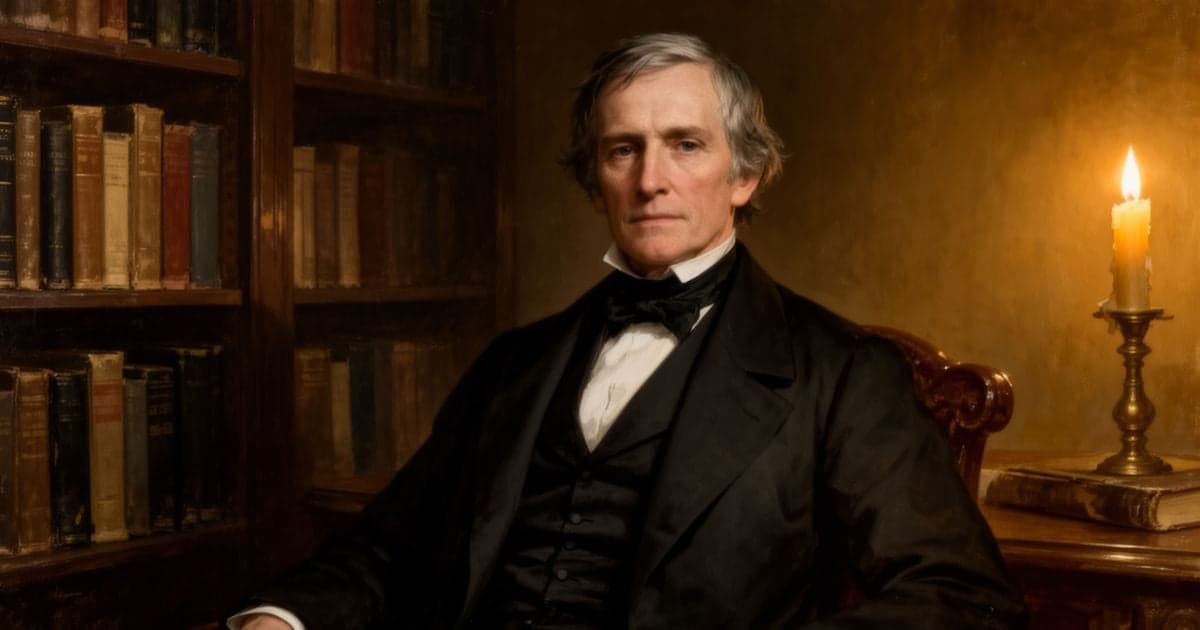
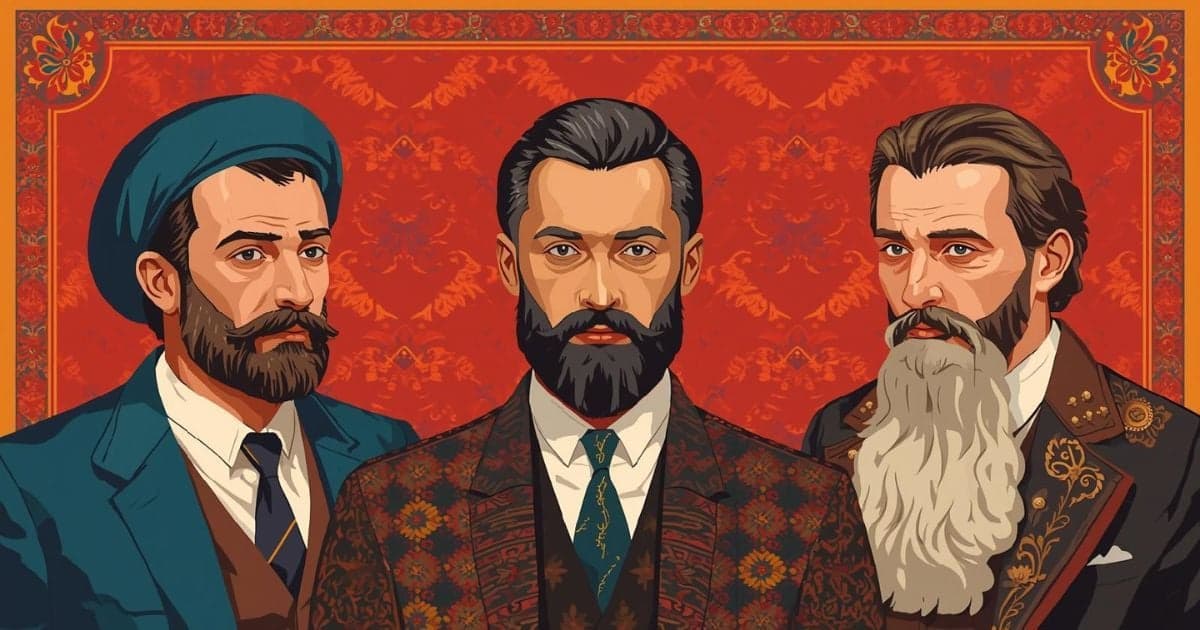
Nietzsche turns here to one of his recurring targets: the professional scholar, and the confusion between scholarly competence and genuine philosophical thinking. The modern university, he argues, has produced experts who know a great deal and understand very little. He draws a sharp distinction between three types: the narrow specialist, who resents philosophy because it exposes the limits of expertise; the objective scholar, who mirrors everything around them but creates nothing; and the genuine philosopher, who must do something the other two cannot — command, legislate, create new values. The first two types are useful. Only the third is what Nietzsche actually means by philosopher. His portrait of the objective scholar is particularly sharp. This person is celebrated as a model of intellectual virtue: no bias, no strong opinions, just careful documentation of what exists. But Nietzsche reads this as a failure of nerve disguised as virtue. To have no strong opinions is not neutrality — it is abdication. The mirror reflects everything and generates nothing. It is, in a precise sense, spineless. He connects this scholarly paralysis to a broader cultural diagnosis: the paralysis of will that he sees throughout modern Europe. Democratic mixing of cultures has produced people who can see every perspective, weigh every argument, and make no decisions. Russia interests him precisely because he detects there a concentration of will that has not yet been dispersed by liberal self-doubt. The chapter closes with a claim about what genuine philosophy actually requires: not intelligence alone, but a preparation across generations, a certain breeding of the capacity for decisive thought. Philosophy is not a skill you acquire. It is, in Nietzsche's view, something closer to a condition of character.

Coming Up in Chapter 7

Having exposed the limitations of scholars and objective thinkers, Nietzsche turns to examine 'our virtues'—the moral qualities that modern Europeans believe define them, and why these supposed strengths might actually be symptoms of decline.

Share it with friends

Previous ChapterNext Chapter
GO ADS FREE — JOIN US
Original text
complete·6,308 words

WE SCHOLARS

1 / 11

Master this chapter. Complete your experience

Purchase the complete book to access all chapters and support classic literature

Read Free on GutenbergBuy at Powell'sBuy on Amazon

As an Amazon Associate, we earn a small commission from qualifying purchases at no additional cost to you.

Available in paperback, hardcover, and e-book formats

GO ADS FREE — JOIN US

Why This Matters

Connect literature to life

Skill: Distinguishing Analysis from Leadership

This chapter teaches how to recognize when thinking becomes a substitute for acting, and when objectivity becomes paralysis.

Practice This Today

This week, notice when you're gathering more information to avoid making a decision—then set a deadline and choose based on what you already know.

GO ADS FREE — JOIN US

Now let's explore the literary elements.

Key Quotes & Analysis

"The declaration of independence of the scientific man, his emancipation from philosophy, is one of the subtler after-effects of democratic organization"

— Narrator

Context: Nietzsche explaining how modern academics broke free from philosophy

This reveals how democracy's leveling effect made scientists think they no longer needed philosophical wisdom to guide their work. They became specialists without broader understanding of meaning and value.

In Today's Words:

Scientists today think they don't need wisdom about life - just technical skills.

"The objective man is in truth a mirror accustomed to prostration before everything that wants to be known"

— Narrator

Context: Describing the weakness of the supposedly neutral scholar

Nietzsche shows how the scholar's prized objectivity actually makes them passive and weak. They become servants to every idea rather than masters who can judge and choose.

In Today's Words:

The person who tries to be fair to every viewpoint ends up standing for nothing.

"Europe suffers from paralysis of will"

— Narrator

Context: Diagnosing the weakness of modern European culture

This captures Nietzsche's view that mixing too many different cultural values without integration creates people who can't make firm decisions about anything important.

In Today's Words:

We have so many choices and perspectives that we can't commit to anything anymore.

Thematic Threads

Class

In This Chapter

Nietzsche distinguishes between intellectual classes—scholars who serve versus philosophers who command, revealing hidden hierarchies in the world of ideas

Development

Builds on earlier class themes by showing how intellectual work itself creates class divisions

In Your Life:

You might see this in how certain credentials are valued over practical wisdom in your workplace

Identity

In This Chapter

The scholar's identity becomes trapped in objectivity, losing the self in the pursuit of selflessness

Development

Continues the theme of authentic self-creation versus conforming to external expectations

In Your Life:

You might recognize this when you've become so focused on being 'fair' or 'balanced' that you've lost your own voice

Personal Growth

In This Chapter

True growth requires the courage to create values and make decisions, not just accumulate knowledge

Development

Deepens earlier themes about self-overcoming by distinguishing learning from wisdom

In Your Life:

You might notice this when you realize you know a lot about self-help but struggle to actually change

Social Expectations

In This Chapter

Society expects intellectuals to be objective and neutral, but this expectation can become a prison

Development

Expands on how social roles can limit authentic expression and decisive action

In Your Life:

You might feel this pressure to always see 'both sides' even when one side clearly needs your support

GO ADS FREE — JOIN US

You now have the context. Time to form your own thoughts.

Discussion Questions

  1. 1

    What's the difference between a scholar and a philosopher according to Nietzsche? Why does he see this distinction as important?

    analysis • surface
  2. 2

    Why does Nietzsche argue that being 'objective' and seeing all sides can actually become a weakness rather than a strength?

    analysis • medium
  3. 3

    Where do you see people in your workplace or community who are great at analyzing problems but struggle to make tough decisions when action is needed?

    application • medium
  4. 4

    Think about a situation where you had to choose between being 'fair to all sides' and taking a firm stand. How did you navigate that tension?

    application • deep
  5. 5

    What does this chapter suggest about the relationship between knowledge and courage? Can someone be truly wise without the ability to act decisively?

    reflection • deep

Critical Thinking Exercise

10 minutes

Identify Your Analysis Paralysis Triggers

Think of a decision you've been putting off or a situation where you keep analyzing without acting. Write down what you keep researching or discussing, then identify what you're really avoiding. What would happen if you stopped gathering information and made a choice tomorrow?

Consider:

  • •Notice whether you're using 'more research needed' as a way to avoid responsibility
  • •Consider whether perfect information is actually available or if you're chasing an impossible standard
  • •Ask yourself what the real cost is of not deciding versus the risk of choosing imperfectly

Journaling Prompt

Write about a time when someone you respected made a difficult decision quickly while others were still debating. What did you learn from watching how they handled uncertainty?

GO ADS FREE — JOIN US

Coming Up Next...

Chapter 7: Our Virtues and Modern Morality

Having exposed the limitations of scholars and objective thinkers, Nietzsche turns to examine 'our virtues'—the moral qualities that modern Europeans believe define them, and why these supposed strengths might actually be symptoms of decline.

Continue to Chapter 7
Previous
The Natural History of Morals
Contents
Next
Our Virtues and Modern Morality

Continue Exploring

Beyond Good and Evil Study GuideTeaching ResourcesEssential Life IndexBrowse by ThemeAll Books

You Might Also Like

Thus Spoke Zarathustra cover

Thus Spoke Zarathustra

Friedrich Nietzsche

Also by Friedrich Nietzsche

Jane Eyre cover

Jane Eyre

Charlotte Brontë

Explores personal growth

Great Expectations cover

Great Expectations

Charles Dickens

Explores personal growth

The Strange Case of Dr Jekyll and Mr Hyde cover

The Strange Case of Dr Jekyll and Mr Hyde

Robert Louis Stevenson

Explores personal growth

Browse all 47+ books
GO ADS FREE — JOIN US

Share This Chapter

Know someone who'd enjoy this? Spread the wisdom!

TwitterFacebookLinkedInEmail

Read ad-free with Prestige

Get rid of ads, unlock study guides and downloads, and support free access for everyone.

Subscribe to PrestigeCreate free account
Intelligence Amplifier
Intelligence Amplifier™Powering Wide Reads

Exploring human-AI collaboration through books, essays, and philosophical dialogues. Classic literature transformed into navigational maps for modern life.

2025 Books

→ The Amplified Human Spirit→ The Alarming Rise of Stupidity Amplified→ San Francisco: The AI Capital of the World
Visit intelligenceamplifier.org
hello@widereads.com

WideReads Originals

→ You Are Not Lost→ The Last Chapter First→ The Lit of Love→ Wealth and Poverty→ 10 Paradoxes in the Classics · coming soon
Arvintech
arvintechAmplify your Mind
Visit at arvintech.com

Navigate

  • Home
  • Library
  • Essential Life Index
  • How It Works
  • Subscribe
  • Account
  • About
  • Contact
  • Authors
  • Suggest a Book
  • Landings

Made For You

  • Students
  • Educators
  • Families
  • Readers
  • Literary Analysis
  • Finding Purpose
  • Letting Go
  • Recovering from a Breakup
  • Corruption
  • Gaslighting in the Classics

Newsletter

Weekly insights from the classics. Amplify Your Mind.

Legal

  • Privacy Policy
  • Terms of Service
  • Cookie Policy
  • Accessibility

Why Public Domain?

We focus on public domain classics because these timeless works belong to everyone. No paywalls, no restrictions—just wisdom that has stood the test of centuries, freely accessible to all readers.

Public domain books have shaped humanity's understanding of love, justice, ambition, and the human condition. By amplifying these works, we help preserve and share literature that truly belongs to the world.

A Pilgrimage

Powell's City of Books

Portland, Oregon

If you ever find yourself in Portland, walk to the corner of Burnside and 10th. The building takes up an entire city block. Inside is over a million books, new and used on the same shelf, organized by color-coded rooms with names like the Rose Room and the Pearl Room. You can lose an afternoon. You can lose a weekend. You will find a book you have been looking for your whole life, and three you did not know existed.

It is a pilgrimage. We cannot find a bookstore like it anywhere on earth. If you read the classics, and you ever get the chance, go. It belongs on every reader's bucket list.

Visit powells.com

We are not in any way affiliated with Powell's. We are just a very big fan.

© 2026 Wide Reads™. All Rights Reserved.

Intelligence Amplifier™ and Wide Reads™ are proprietary trademarks of Arvin Lioanag.

Copyright Protection: All original content, analyses, discussion questions, pedagogical frameworks, and methodology are protected by U.S. and international copyright law. Unauthorized reproduction, distribution, web scraping, or use for AI training is strictly prohibited. See our Copyright Notice for details.

Disclaimer: The information provided on this website is for general informational and educational purposes only and does not constitute professional, legal, financial, or technical advice. While we strive to ensure accuracy and relevance, we make no warranties regarding completeness, reliability, or suitability. Any reliance on such information is at your own risk. We are not liable for any losses or damages arising from use of this site. By using this site, you agree to these terms.