Chapter 08
Escape, Dreams, and Childhood Magic
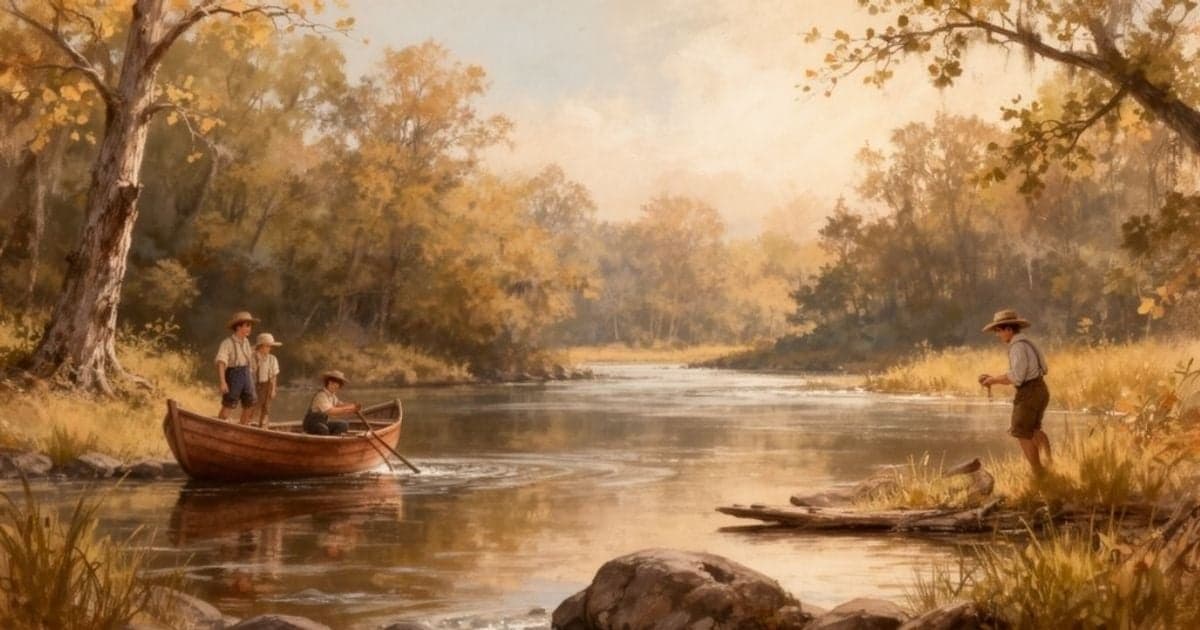
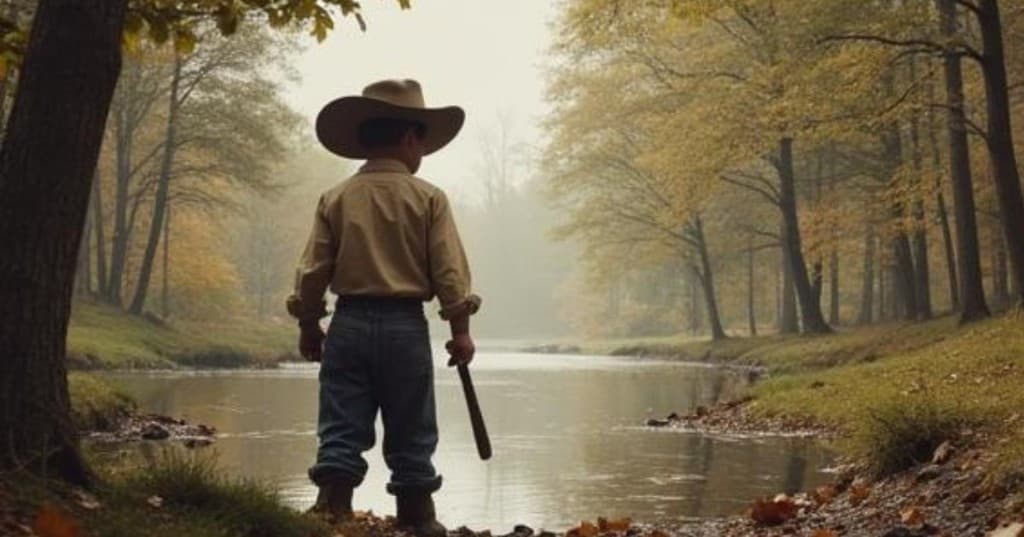
Tom dodged hither and thither through lanes until he was well out of the track of returning scholars, and then fell into a moody jog. He crossed a small “branch” two or three times, because of a prevailing juvenile superstition that to cross water baffled pursuit. Half an hour later he was disappearing behind the Douglas mansion on the summit of Cardiff Hill, and the school-house was hardly distinguishable away off in the valley behind him. He entered a dense wood, picked his pathless way to the centre of it, and sat down on a mossy spot under a spreading…
Public-domain chapter text, formatted for reading.
Master this chapter. Complete your experience
Purchase the complete book to access all chapters and support classic literature
Available in paperback, hardcover, and e-book formats
Now let's explore the literary elements.
Key Quotes & Analysis
"They said they would rather be outlaws a year in Sherwood Forest than President of the United States forever."
Context: Tom and Joe finish playing Robin Hood after Tom's heartbreak
Play heals what apology could not. The boys choose imagined freedom over adult glory because stories let them control the ending.
In Today's Words:
They would rather be outlaws than president because play lets them write the rules. After Becky's rejection, Tom rebuilds dignity in costume and script. People still retreat into stories when real life refuses to cooperate. Twain is tracking how small choices stack until they are hard to undo, which is why naming the pattern early matters more than judging the person caught in it.
"Hold! Who comes here into Sherwood Forest without my pass?"
Context: Tom and Joe begin their Robin Hood game in the woods
Tom moves from heartbreak to authored adventure. The forest becomes a stage where pain converts into role and rule.
In Today's Words:
Stop, who enters without permission? Tom turns the woods into Sherwood because he needs a world with clear heroes and passes. When reality hurts, people often rebuild identity inside a story they can direct. Twain is tracking how small choices stack until they are hard to undo, which is why naming the pattern early matters more than judging the person caught in it.
"Why, that ain’t anything. I can’t fall; that ain’t the way it is in the book."
Context: Joe refuses to die in their staged sword fight
Tom treats fiction as law. He would rather argue about book rules than lose the scene, which shows how children use stories to manage emotion.
In Today's Words:
That is not how the book does it. Tom cares more about the script than the sparring because the story is the point. Adults do the same when process matters more than the outcome everyone actually needs. Twain is tracking how small choices stack until they are hard to undo, which is why naming the pattern early matters more than judging the person caught in it.
"Brother, go find your brother!"
Context: Tom uses a charm to recover a lost marble before the Robin Hood game
Superstition and play intertwine. Tom tests magic, fails, improvises, and still keeps faith in hidden systems.
In Today's Words:
Go find the other marble. Tom treats the chant like a technology because he wants the world to answer back. When rituals fail, he adjusts instead of quitting, which is how coping often looks in childhood. Twain is tracking how small choices stack until they are hard to undo, which is why naming the pattern early matters more than judging the person caught in it.
Thematic Threads
Identity
In This Chapter
Tom tries on different heroic identities (war hero, Indian chief, pirate) to escape feeling powerless and rejected
Development
Evolved from earlier chapters where Tom performed for attention—now he's crafting entire alternate selves
In Your Life:
You might find yourself imagining being someone completely different when your current life feels inadequate or painful
Social Expectations
In This Chapter
Tom and Joe follow 'the book' religiously during Robin Hood play, even when it creates unfair outcomes
Development
Builds on previous chapters about following rules—now showing how even rebellion follows scripts
In Your Life:
You might notice how you follow unwritten rules about how to act heartbroken, successful, or rebellious
Personal Growth
In This Chapter
Tom's superstitions fail him, shaking his faith in childhood magic while he's not ready to abandon it entirely
Development
First major crack in Tom's magical worldview, setting up his transition toward maturity
In Your Life:
You might recognize moments when old coping strategies stop working but you're not ready for new ones yet
Human Relationships
In This Chapter
Joe's arrival transforms Tom's solitary brooding into shared adventure and play-acting
Development
Shows how friendship can redirect emotional pain into something more manageable and fun
In Your Life:
You might notice how the right friend can help you process difficult emotions through shared activities rather than isolation
You now have the context. Time to form your own thoughts.
Discussion Questions
This is not a test. Five prompts guide you through the chapter, from how it opens to how it closes, so you notice context and rhythm rather than facts to memorize. Sit with each question in your own words. When you see "One way to read it," treat it as a starting point, not the only answer.
- 1
Why does Tom cross the branch several times while leaving school?
analysis • surfaceOne way to read it
Folk belief says water blocks pursuit. The act is magical thinking, but it shows Tom trying to make escape feel complete.
- 2
How does Tom move from wanting to die temporarily to planning to be a pirate?
analysis • mediumOne way to read it
Youth rebounds through imagination. Pain turns into fantasy roles that restore agency without requiring Becky to apologize.
- 3
What does the Robin Hood fight reveal about Tom's relationship to books?
application • mediumOne way to read it
He treats printed adventure as law. Arguing about whether Joe falls correctly matters more than winning the duel because the script protects Tom from formless hurt.
- 4
Why do the boys prefer outlaw life to being president?
analysis • deepOne way to read it
Outlaws choose their code. President is an adult role with obligations; Sherwood offers friendship, danger, and endings they control.
- 5
What stories or games have helped you recover after a social wound?
reflection • deepOne way to read it
Strong answers name the injury, the story used, and whether recovery stayed imaginary or led to real repair. Tom does both.
Critical Thinking Exercise
Track Your Fantasy Escape Patterns
Think of a recent time when you felt hurt, frustrated, or powerless. Write down the fantasy scenarios that went through your head - the 'what if' stories, the imaginary conversations, the revenge plots. Then identify what real need or problem those fantasies were pointing to. What action could you take to address the actual issue instead of just spinning stories?
Consider:
- •Notice how your fantasies make you the hero, victim, or person who gets vindicated
- •Look for the pattern: real pain leads to imaginary power scenarios
- •Ask what the fantasy is trying to solve that reality isn't providing
Journaling Prompt
Write about a time when you got so caught up in imagining how a situation could go that you avoided dealing with how it actually was. What did you learn about the difference between fantasy relief and real solutions?
Coming Up Next...
Chapter 9: The Graveyard Murder
That night, Tom lies awake plotting his great escape, waiting for the household to sleep so he can begin his new life as a pirate. But staying still and quiet proves harder than any adventure he's imagined.