Wide Reads
Literature MattersLife IndexEducators
Sign in
Where to Begin

The Ultimate Sacrifice — A Tale of Two Cities

A Tale of Two Cities - The Ultimate Sacrifice

Charles Dickens

A Tale of Two Cities

The Ultimate Sacrifice

Home›Books›A Tale of Two Cities›Chapter 45: The Ultimate Sacrifice
Previous
45 of 45

Analysis by the Wide Reads editorial team·Reviewed against the source text·Updated December 1, 2025

Summary

The Ultimate Sacrifice

A Tale of Two Cities by Charles Dickens

0:000:00

Sydney Carton faces his final moments as he takes Charles Darnay's place at the guillotine. The chapter opens with the grim procession of death carts rolling through Paris streets, carrying condemned prisoners to their execution. Dickens reflects on how oppression and violence create endless cycles - the same conditions that produced the monarchy's cruelty now fuel the Revolution's bloodthirst.

Among the condemned, Carton comforts a young seamstress who recognizes his nobility and finds courage through his presence. Their conversation reveals two souls finding connection in humanity's darkest hour. She worries about a cousin she'll leave behind, hoping the Revolution might create a better world for the poor.

Carton reassures her about the afterlife, and they support each other with remarkable dignity. As they face death together, Carton experiences a transformation - no longer the bitter, self-loathing man we met, but someone who has found redemption through love and sacrifice. The chapter ends with Carton's prophetic vision of the future: he sees the Darnay family living peacefully, his sacrifice remembered with love, and Paris eventually healing from its wounds.

His famous final words - 'It is a far, far better thing that I do, than I have ever done' - capture his complete transformation. This ending shows how individual acts of love can break cycles of hatred, and how finding purpose in serving others can redeem even the most lost soul.

In this chapter: Terms Characters Key Quotes Themes Modern Story

Why This Matters

Connect literature to life

Skill: Recognizing Redemptive Moments

People often wonder whether their individual choices matter in the face of massive social problems and institutional failures. In this climactic scene, a man who has lived as a cynical drunk finds profound meaning by taking another's place at the guillotine, comforting a frightened girl and envisioning a better future for those he loves. His transformation suggests that even when we cannot change the world's cruelty, we can choose how we respond to it, creating ripples of compassion that outlast our own lives.

Share it with friends

PreviousPrevious Chapter
Original text
2,224 wordscomplete

Chapter 45

The Ultimate Sacrifice

The Footsteps Die Out For Ever Along the Paris streets, the death-carts rumble, hollow and harsh. Six tumbrils carry the day’s wine to La Guillotine. All the devouring and insatiate Monsters imagined since imagination could record itself, are fused in the one realisation, Guillotine. And yet there is not in France, with its rich variety of soil and climate, a blade, a leaf, a root, a sprig, a peppercorn, which will grow to maturity under conditions more certain than those that have produced this horror. Crush humanity out of shape once more, under similar hammers, and it will twist itself…

Public-domain chapter text, formatted for reading.

Master this chapter. Complete your experience

Purchase the complete book to access all chapters and support classic literature

Buy at Powell'sBuy on Amazon

Available in paperback, hardcover, and e-book formats

Now let's explore the literary elements.

Key Quotes & Analysis

"He looks into the first of them: not there."

— Narrator

Context: A key line from the opening of the chapter

The spy's methodical search through each cart reveals how people compartmentalize horror, turning mass execution into a routine checklist. His calm efficiency demonstrates humanity's disturbing ability to normalize atrocity through repetition.

In Today's Words:

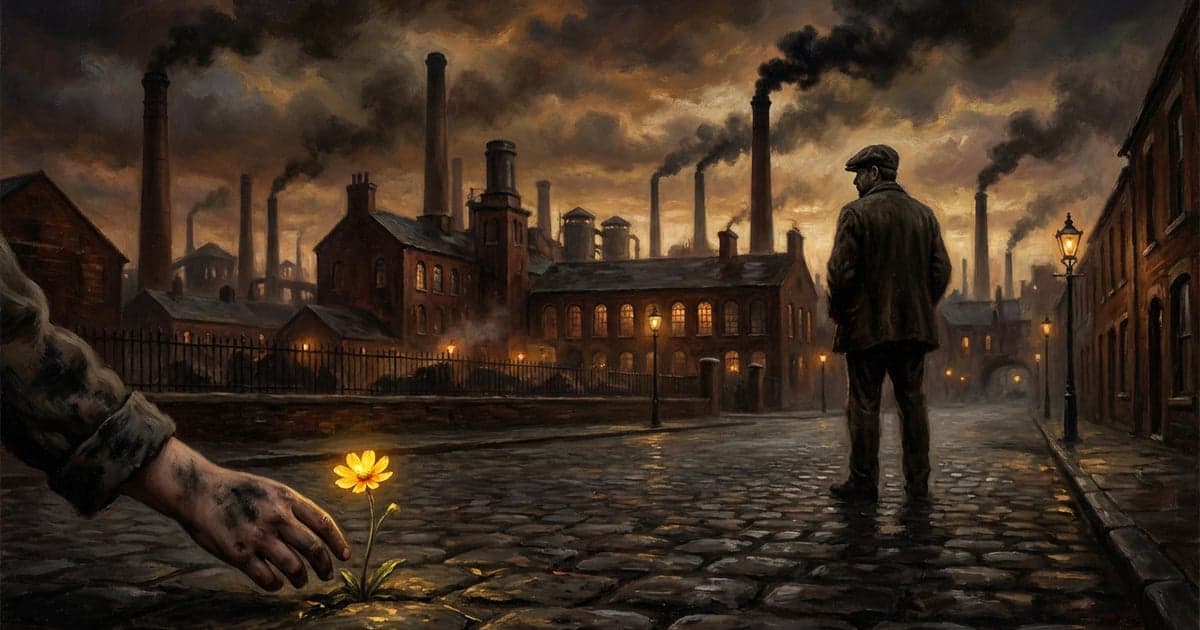
A government informant scans the first prison transport, then the second, searching faces with practiced efficiency. When he doesn't spot his target immediately, anxiety flickers across his features before he moves to the third vehicle with renewed focus. Ground it in the scene: who holds power, who absorbs risk, and what changes if you name.

"He is going to pay the forfeit: it will be paid in five minutes more."

— Narrator

Context: A key line from the middle of the chapter

The spy's calculated response shows how people use procedural language to distance themselves from moral responsibility. His emphasis on timing and payment transforms execution into a business transaction, avoiding emotional engagement.

In Today's Words:

The debt collector will settle his account in five minutes. The paperwork is already processed, the timeline set. There's no point in making noise about something that's already been decided by the system. That is how it feels when institutions treat your survival as someone else's paperwork problem.

"It cannot be, my child; there is no Time there, and no trouble there."

— Narrator

Context: A key line from the closing third of the chapter

This gentle reassurance reveals how people offer comfort by reframing suffering within larger belief systems. The response transforms immediate terror into hope, showing compassion's power to transcend desperate circumstances.

In Today's Words:

That place exists outside our normal experience of waiting and worry. The rules that make us anxious here simply don't apply there. You won't feel the passage of time or carry these burdens. You see the same squeeze when a manager passes blame down and the person with no exit absorbs the cost.

"She kisses his lips; he kisses hers; they solemnly bless each other."

— Narrator

Context: A key line from the closing third of the chapter

This intimate farewell demonstrates how human connection can create sacred moments even in dehumanizing circumstances. Their mutual blessing transforms a public execution into a private ceremony of dignity and love.

In Today's Words:

They exchange a final kiss, each offering the other a quiet blessing. In this moment of shared tenderness, they create their own ceremony of farewell, separate from the chaos surrounding them. The pattern repeats whenever rank decides who must stay calm while everyone else panics.

Thematic Threads

Personal Growth

In This Chapter

Carton completes his transformation from self-loathing drunk to sacrificial hero through purposeful action

Development

Culmination of his journey from despair to redemption through love and service

In Your Life:

You might find your own growth accelerates when you focus on helping others rather than fixing yourself

Human Relationships

In This Chapter

Carton and the seamstress find profound connection and mutual comfort in their final moments

Development

Shows how authentic relationships can form instantly when people are genuinely present for each other

In Your Life:

You might discover your deepest connections happen when you're both vulnerable and supportive

Class

In This Chapter

The seamstress represents the poor who suffer regardless of which side holds power

Development

Reinforces how revolutions often fail to help those they claim to serve

In Your Life:

You might notice how political changes rarely address the daily struggles of working people

Identity

In This Chapter

Carton finally knows who he truly is - not the failure he believed, but someone capable of ultimate love

Development

Completes his identity transformation from worthless drunk to noble sacrifice

In Your Life:

You might find your true identity emerges not from what you think about yourself, but from what you do for others

Social Expectations

In This Chapter

Both condemned prisoners transcend society's judgment to find dignity and purpose in their final act

Development

Shows how individual worth exists independent of social position or circumstances

In Your Life:

You might realize your value doesn't depend on meeting others' expectations but on your own choices to love and serve

You now have the context. Time to form your own thoughts.

Discussion Questions

This is not a test. Five prompts guide you through the chapter, from how it opens to how it closes, so you notice context and rhythm rather than facts to memorize. Sit with each question in your own words. When you see "One way to read it," treat it as a starting point, not the only answer.

  1. 1

    How does Dickens use the image of death carts as plows creating furrows in the crowd to comment on the Revolution's impact on society?

    ▶One way to read it

    The metaphor suggests the executions are systematically dividing and reshaping French society, with the guillotine as a tool that cuts through the social fabric just as plows cut through earth.

    analysis • medium
  2. 2

    What does the seamstress's concern for her cousin reveal about how ordinary people experience political upheaval?

    ▶One way to read it

    Her worry shows that personal relationships and family bonds remain paramount even during revolutionary chaos, and that individual suffering often goes unrecorded in grand historical narratives.

    reflection • deep
  3. 3

    Why might Dickens have chosen to show Carton comforting another condemned prisoner rather than facing death alone?

    ▶One way to read it

    By helping the seamstress, Carton demonstrates that his sacrifice has transformed him from self-absorbed to genuinely caring, proving his redemption through action rather than just words.

    analysis • medium
  4. 4

    How do Carton's prophetic visions at the end balance hope with realism about human nature and social change?

    ▶One way to read it

    He envisions both continued cycles of oppression and eventual healing, suggesting that while human nature creates recurring problems, individual acts of love can break destructive patterns over time.

    analysis • deep
  5. 5

    In what ways might Carton's final declaration apply to difficult choices people face in their own lives?

    ▶One way to read it

    The quote suggests that choosing to serve others' wellbeing over personal comfort, even at significant cost, can provide deeper fulfillment than self-centered pursuits.

    application • medium

Critical Thinking Exercise

10 minutes

Map Your Service Shift

Think of a time when you felt stuck in your own problems or negative thoughts. Now identify three small ways you could help someone else in your current situation - a coworker, neighbor, family member, or stranger. Write down specific actions you could take this week that would shift your focus from your own struggles to serving others.

Consider:

  • •Start with what you can actually do, not what you wish you could do
  • •Notice how thinking about helping others changes your own mood
  • •Remember that small acts of service can create big internal shifts

Journaling Prompt

Write about a time when helping someone else pulled you out of a dark place, or describe how you would feel if you took one of these service actions this week.

Previous
The Final Confrontation
Contents
Keep exploring

Continue Exploring

Study guides, teaching tools, themes, and the full library.More ways to read A Tale of Two Cities: study guides, teaching tools, and the wider library.

  • A Tale of Two Cities Study Guide
  • Teaching Resources
  • Essential Life Index
  • Browse by Theme
  • All Books

What this chapter teaches

Theme analyses that draw on this chapter and apply it to modern life.

  • Breaking Cycles of RevengeUnderstand why vengeance perpetuates suffering rather than ending it—and how Dickens shows the only force capable of stopping the cycle in A Tale of Two Cities.
  • Sacrifice and MeaningExplore sacrifice and meaning through A Tale of Two Cities by Charles Dickens. Life lessons from classic literature applied to modern challenges.
  • Understanding How Oppression Breeds ViolenceHow injustice, left unaddressed, eventually explodes—and what Dickens reveals about the path from contempt to catastrophe in A Tale of Two Cities.
Moral Dilemmas & EthicsSocial Class & StatusPower & Corruption

You Might Also Like

Hard Times cover

Hard Times

Charles Dickens

Also by Charles Dickens

Great Expectations cover

Great Expectations

Charles Dickens

Also by Charles Dickens

A Christmas Carol cover

A Christmas Carol

Charles Dickens

Also by Charles Dickens

Les Misérables: Essential Edition cover

Les Misérables: Essential Edition

Victor Hugo

Explores justice & fairness

Browse all 106+ books

Share This Chapter

Know someone who'd enjoy this? Spread the wisdom!

TwitterFacebookLinkedInEmail

Go further with Prestige

Unlock study guides and downloads, early access, and exclusive content — and support free access for everyone.

Subscribe to PrestigeCreate free account
Intelligence Amplifier
Intelligence Amplifier™Powering Wide Reads

Exploring human-AI collaboration through books, essays, and philosophical dialogues. Classic literature transformed into navigational maps for modern life.

2025 Books

→ The Amplified Human Spirit→ The Alarming Rise of Stupidity Amplified→ San Francisco: The AI Capital of the World
Visit intelligenceamplifier.org
hello@widereads.com

WideReads Originals

→ You Are Not Lost→ The Last Chapter First→ The Lit of Love→ Wealth and Poverty→ Wisdom for the Wounded
Arvintech
arvintechAmplify your Mind
Visit at arvintech.com

Navigate

  • Home
  • Library
  • Essential Life Index
  • How It Works
  • Subscribe
  • Account
  • About
  • Contact
  • Authors
  • Suggest a Book
  • Landings

Made For You

  • Trending
  • Students
  • Educators
  • Families
  • Readers
  • Literary Analysis
  • Finding Purpose
  • Letting Go
  • Recovering from a Breakup
  • Corruption
  • Gaslighting in the Classics

Newsletter

Weekly insights from the classics. Amplify Your Mind.

Legal

  • Privacy Policy
  • Terms of Service
  • Editorial Standards
  • Cookie Policy
  • Accessibility

Why Public Domain?

We focus on public domain classics because these timeless works belong to everyone. No paywalls, no restrictions—just wisdom that has stood the test of centuries, freely accessible to all readers.

Public domain books have shaped humanity's understanding of love, justice, ambition, and the human condition. By amplifying these works, we help preserve and share literature that truly belongs to the world.

A Pilgrimage

Powell's City of Books

Portland, Oregon

If you ever find yourself in Portland, walk to the corner of Burnside and 10th. The building takes up an entire city block. Inside is over a million books, new and used on the same shelf, organized by color-coded rooms with names like the Rose Room and the Pearl Room. You can lose an afternoon. You can lose a weekend. You will find a book you have been looking for your whole life, and three you did not know existed.

It is a pilgrimage. We cannot find a bookstore like it anywhere on earth. If you read the classics, and you ever get the chance, go. It belongs on every reader's bucket list.

Visit powells.com

We are not in any way affiliated with Powell's. We are just a very big fan.

© 2026 Wide Reads™. All Rights Reserved.

Intelligence Amplifier™ and Wide Reads™ are proprietary trademarks of Arvin Lioanag.

Copyright Protection: All original content, analyses, discussion questions, pedagogical frameworks, and methodology are protected by U.S. and international copyright law. Unauthorized reproduction, distribution, web scraping, or use for AI training is strictly prohibited. See our Copyright Notice for details.

Disclaimer: The information provided on this website is for general informational and educational purposes only and does not constitute professional, legal, financial, or technical advice. While we strive to ensure accuracy and relevance, we make no warranties regarding completeness, reliability, or suitability. Any reliance on such information is at your own risk. We are not liable for any losses or damages arising from use of this site. By using this site, you agree to these terms.