Chapter 29
When Revolution Ignites
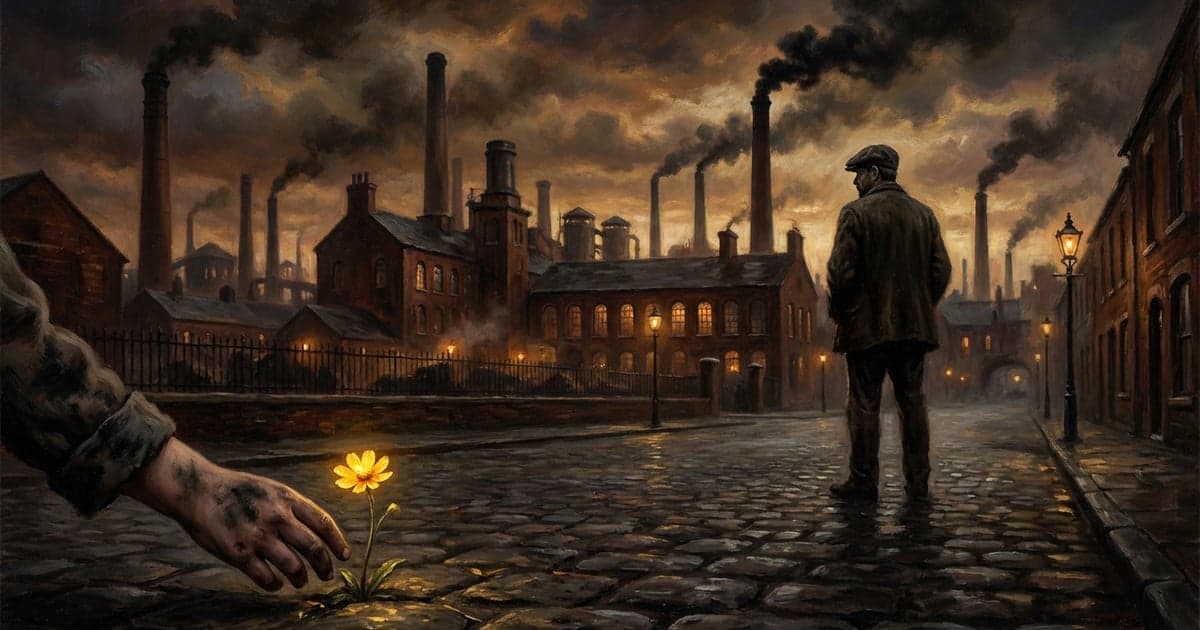
Fire Rises There was a change on the village where the fountain fell, and where the mender of roads went forth daily to hammer out of the stones on the highway such morsels of bread as might serve for patches to hold his poor ignorant soul and his poor reduced body together. The prison on the crag was not so dominant as of yore; there were soldiers to guard it, but not many; there were officers to guard the soldiers, but not one of them knew what his men would do--beyond this: that it would probably not be what he…
Public-domain chapter text, formatted for reading.
Master this chapter. Complete your experience
Purchase the complete book to access all chapters and support classic literature
Available in paperback, hardcover, and e-book formats
Now let's explore the literary elements.
Key Quotes & Analysis
"Far and wide lay a ruined country, yielding nothing but desolation."
Context: From the opening of the chapter
This description reveals how systematic oppression creates widespread desolation that affects both the physical landscape and human spirit. When exploitation becomes total, it transforms entire regions into wastelands where nothing can flourish.
In Today's Words:
The entire region was devastated, producing nothing but misery and ruin everywhere you looked. The pattern repeats whenever rank decides who must stay calm while everyone else. Ground it in the scene: who holds power, who absorbs risk, and what changes. The pattern repeats whenever rank decides who must stay calm while everyone else panics.
"Let me finish my pipe, and I shall sleep like a child."
Context: A key line from the middle of the chapter
The traveler's simple request shows how exhaustion can make people vulnerable yet trusting in desperate times. His childlike sleep metaphor contrasts sharply with his revolutionary mission, revealing the human need for rest even amid upheaval.
In Today's Words:
Let me smoke this and then I'll crash hard like I haven't slept in days. That is how it feels when institutions treat your survival as someone else's paperwork problem. That is how it feels when institutions treat your survival as. That is how it feels when institutions treat your survival as someone else's paperwork.
"It must be forty feet high,” said they, grimly; and never moved."
Context: A key line from the closing third of the chapter
The villagers' grim satisfaction and deliberate inaction demonstrates how oppressed people can transform from fearful subjects into cold observers of their oppressors' destruction. Their measured response shows calculated defiance rather than emotional outburst.
In Today's Words:
They estimated the flames coldly and stood completely still, refusing to help put out the fire. That is how it feels when institutions treat your survival as someone else's paperwork problem. That is how it feels when institutions treat your survival as someone else's paperwork problem.
"Then it soared higher, and grew broader and brighter."
Context: A key line from the middle of the chapter
This imagery captures the moment when destruction becomes unstoppable and magnificent in its power. The fire's growth mirrors how revolutionary movements gain momentum, becoming increasingly visible and impossible to contain.
In Today's Words:
The flames climbed higher and spread wider, burning more intensely with each passing moment. That is how it feels when institutions treat your survival as someone else's paperwork problem. You see the same squeeze when a manager passes blame down and the person with no exit absorbs the cost.
Thematic Threads
Class
In This Chapter
The aristocratic system finally collapses under its own extractive weight as villagers transform from subjects to revolutionaries
Development
Evolved from earlier scenes of aristocratic indifference to active peasant rebellion
In Your Life:
You might recognize this when workplace hierarchies become so unfair that employees start organizing against management
Social Expectations
In This Chapter
Traditional expectations of deference and submission completely break down as villagers celebrate their lord's burning mansion
Development
Built from previous chapters showing gradual erosion of social order
In Your Life:
You see this when family roles that once seemed permanent suddenly shift during crisis moments
Human Relationships
In This Chapter
The relationship between rulers and ruled transforms from submission to open warfare through organized networks
Development
Shows the complete breakdown of the social contract established in earlier chapters
In Your Life:
This mirrors how relationships change when one person consistently takes advantage until the other finally fights back
Identity
In This Chapter
Villagers discover their power to act collectively, transforming from victims into agents of change
Development
Represents the culmination of individual suffering becoming collective action
In Your Life:
You experience this when you realize you don't have to accept unfair treatment just because it's always been that way
Personal Growth
In This Chapter
Characters learn that change requires both individual courage and organized collective action
Development
Shows how personal awakening connects to larger social transformation
In Your Life:
You grow when you understand that solving big problems requires both personal change and working with others
You now have the context. Time to form your own thoughts.
Discussion Questions
This is not a test. Five prompts guide you through the chapter, from how it opens to how it closes, so you notice context and rhythm rather than facts to memorize. Sit with each question in your own words. When you see "One way to read it," treat it as a starting point, not the only answer.
- 1
How does the road-mender's daily struggle for survival reflect the broader conditions that lead to revolution?
analysis • mediumOne way to read it
His desperate search for basic sustenance while surrounded by desolation shows how systematic oppression creates the desperation necessary for people to risk everything for change.
- 2
What does the mysterious traveler's network of 'Jacques' reveal about how social movements actually organize and spread?
analysis • deepOne way to read it
The coded language and coordinated timing demonstrate that effective revolution requires careful planning, communication networks, and people willing to sacrifice personal comfort for collective action.
- 3
Why do the soldiers refuse to help save the burning chateau, and what does this suggest about authority during times of social upheaval?
analysis • mediumOne way to read it
Their passive response shows how institutional authority crumbles when those enforcing it lose faith in the system they're supposed to protect.
- 4
How might you recognize when a system in your own life has become too extractive and needs fundamental change rather than minor reforms?
application • deepOne way to read it
When the system consistently takes more than it gives back and shows no capacity for meaningful self-correction despite clear evidence of harm.
- 5
What does Monsieur Gabelle's desperate situation reveal about the fate of those who serve unjust systems?
reflection • mediumOne way to read it
Even minor functionaries become targets when systems collapse, showing how complicity in oppression can become personally dangerous when people finally revolt.
Critical Thinking Exercise
Map Your Own Extraction Points
Think about your current life situations—work, family, friendships, finances. Identify one relationship or system where you feel like you're giving more than you're getting. Write down what's being taken from you, what (if anything) you're receiving in return, and whether this feels sustainable long-term.
Consider:
- •Look for patterns where demands have gradually increased over time
- •Notice whether you have any organized support or if you're handling this alone
- •Consider what your 'burning point' might look like if nothing changes
Journaling Prompt
Write about a time when you finally said 'enough' to an unfair situation. What pushed you to that breaking point, and how did you organize yourself to take action? What would you do differently now?
Coming Up Next...
Chapter 30: The Pull of Duty and Danger
As revolutionary fires spread across France, the story shifts back to England where the Manette family faces their own moment of reckoning. The violence brewing across the Channel will soon reach into their peaceful London lives in ways they never imagined.