Chapter 07
An Unexpected Reunion in the Mountains
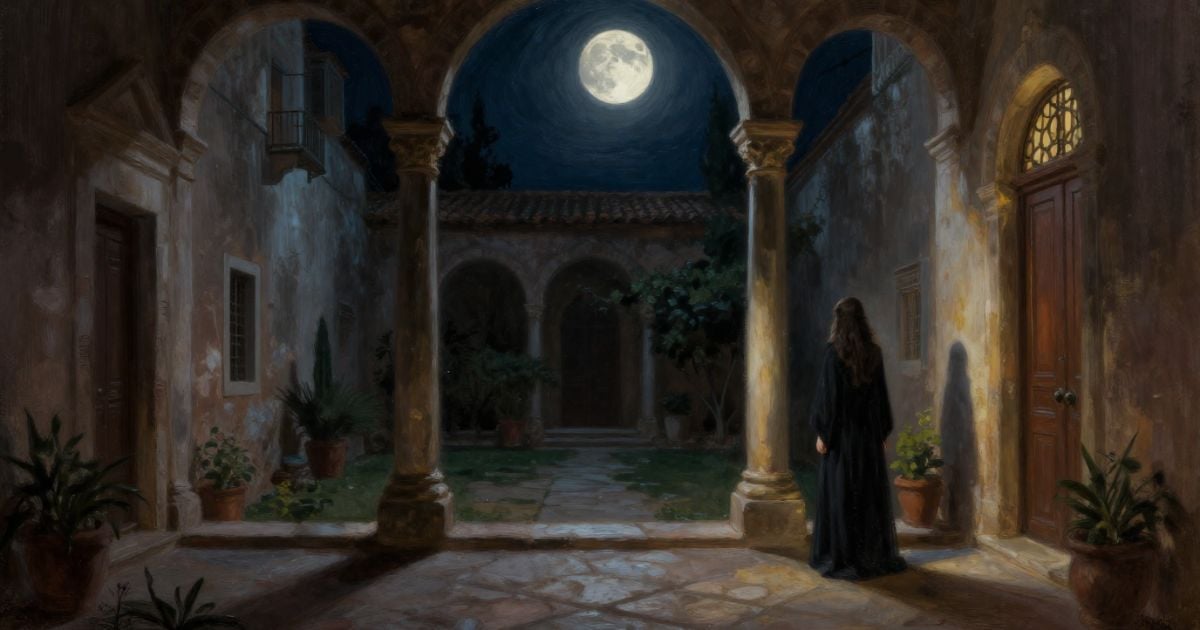
Towards the close of day Madame de Menon arrived at a small village situated among the mountains, where she purposed to pass the night. The evening was remarkably fine, and the romantic beauty of the surrounding scenery invited her to walk. She followed the windings of a stream, which was lost at some distance amongst luxuriant groves of chesnut. The rich colouring of evening glowed through the dark foliage, which spreading a pensive gloom around, offered a scene congenial to the present temper of her mind, and she entered the shades. Her thoughts, affected by the surrounding objects, gradually sunk…
Public-domain chapter text, formatted for reading.
Master this chapter. Complete your experience
Purchase the complete book to access all chapters and support classic literature
Available in paperback, hardcover, and e-book formats
Now let's explore the literary elements.
Key Quotes & Analysis
"The scene inspired madame with reverential awe, and her thoughts involuntarily rose, 'from Nature up to Nature's God.'"
Context: Madame reaches the sublime rock amphitheatre
Overwhelming beauty reframes personal trouble as part of something larger.
In Today's Words:
The wild scene inspires Madame with reverential awe, and her thoughts rise from Nature up to Nature's God. Scale can quiet panic by placing grief inside a wider order. When trouble shrinks you, deliberate contact with beauty can restore perspective before decisions. Radcliffe shows how private feeling collides with household power when truth is inconvenient. The line still matters because the same pressure appears wherever authority prefers silence to evidence.
"Her thoughts, affected by the surrounding objects, gradually sunk into a pleasing and complacent melancholy"
Context: Madame enters the shaded grove
Productive sadness in nature makes room for clear feeling.
In Today's Words:
Her thoughts, affected by the surrounding objects, gradually sink into a pleasing and complacent melancholy. The landscape does not cheer her falsely; it gives sorrow a habitable shape. Sometimes you need space to feel badly without being rushed toward false optimism. Radcliffe shows how private feeling collides with household power when truth is inconvenient. The line still matters because the same pressure appears wherever authority prefers silence to evidence.
"she distinguished the features of Julia, whose eyes lighted up with sudden recollection, and who sunk into her arms overcome with joy."
Context: Madame recognizes Julia beneath peasant disguise
Authentic connection survives costume and exile.
In Today's Words:
In peasant disguise Julia is nevertheless recognized; her eyes light with recollection and she sinks into Madame's arms. Refinement and bond outlast clothing and fear. Real relationships find you even when you are trying to disappear. Radcliffe shows how private feeling collides with household power when truth is inconvenient. The line still matters because the same pressure appears wherever authority prefers silence to evidence.
"I had no resource from misery, but in flight; and of that I could not make you a confidant, without meanly involving you in its disgrace.'"
Context: Explaining why she fled without telling Madame earlier
Escape can require secrecy to protect helpers from retaliation.
In Today's Words:
Julia says she had no resource from misery but flight, and could not confide without involving Madame in disgrace. She weighs loyalty against danger to allies. When leaving abuse, protecting helpers sometimes means temporary silence, not mistrust. Radcliffe shows how private feeling collides with household power when truth is inconvenient. The line still matters because the same pressure appears wherever authority prefers silence to evidence.
Thematic Threads
Class
In This Chapter
Servants risk everything to help Julia while her aristocratic father forces her into marriage for political gain
Development
Deepens from earlier hints to show class solidarity transcends formal loyalty structures
In Your Life:
The people who understand your struggles are often those facing similar challenges, not those above you in hierarchy
Identity
In This Chapter
Julia transforms from sheltered aristocrat to resourceful survivor, disguising herself as a peasant
Development
Continues her evolution from passive victim to active agent of her own fate
In Your Life:
Crisis often reveals capabilities you didn't know you had and forces you to shed old versions of yourself
Human Relationships
In This Chapter
Madame de Menon and Julia's reunion shows how genuine bonds survive separation and hardship
Development
Builds on earlier themes of chosen family being stronger than blood ties
In Your Life:
The people who seek you out during your worst times are the ones worth keeping in your life
Personal Growth
In This Chapter
Julia's physical and emotional changes reflect the real cost of trauma but also her increased resilience
Development
Shows growth isn't always positive—sometimes it's survival adaptation
In Your Life:
Surviving difficult experiences changes you in ways that are both loss and strength
Social Expectations
In This Chapter
Julia completely abandons aristocratic expectations to live as a peasant in hiding
Development
Escalates from questioning social norms to completely rejecting them for survival
In Your Life:
Sometimes protecting yourself requires disappointing people who never had your best interests at heart
You now have the context. Time to form your own thoughts.
Discussion Questions
This is not a test. Five prompts guide you through the chapter, from how it opens to how it closes, so you notice context and rhythm rather than facts to memorize. Sit with each question in your own words. When you see "One way to read it," treat it as a starting point, not the only answer.
- 1
How does the landscape prepare Madame to recognize Julia?
analysis • surfaceOne way to read it
Solitude and awe slow her mind enough to hear singing and see past disguise.
- 2
Why do Caterina and Nicolo help Julia escape?
analysis • mediumOne way to read it
Loyalty and moral clarity outweigh fear of the Marquis's punishment.
- 3
Where do people find sanctuary when official systems fail today?
application • mediumOne way to read it
Accept examples such as safe houses, trusted coworkers, clergy, or community networks outside abusers' reach.
- 4
Why does Julia wait to involve Madame in the escape plan?
application • deepOne way to read it
She fears implicating a protector who could be punished for knowing too much.
- 5
Who has been a 'Madame de Menon' or 'Caterina' in your life?
reflection • deepOne way to read it
Accept examples of mentors or friends who helped without controlling the outcome.
Critical Thinking Exercise
Map Your Support Network
Draw three circles: your inner circle (people who'd help you move at midnight), middle circle (people who'd lend you $50), and outer circle (people who'd share your social media post). Think about a current challenge you're facing. Which circle would you turn to first, and why? Notice whether the people with the most official power to help you are actually in your inner circle.
Consider:
- •Consider whether you're asking for help from the right people or just the obvious people
- •Notice if you're investing time in relationships that go both ways
- •Think about whether you're someone else's inner circle and what that requires
Journaling Prompt
Write about a time when someone unexpected stepped up to help you, or when someone you expected to help you didn't. What did that teach you about building reliable support networks?
Coming Up Next...
Chapter 8: Mistaken Identity and Sanctuary Found
Julia will finish her escape narrative for Madame de Menon, revealing how she reached this hidden valley and what dangers still follow her in disguise Julia finishes her escape narrative for Madame: flight in servant clothes, refuge with Caterina's kin, and the plan to reach the Benedictine abbey of St. Augustin for legal protection..