Wide Reads
Literature MattersLife IndexEducators
Sign in
Where to Begin

Chapter 20 — Wuthering Heights

Wuthering Heights - Chapter 20

Emily Brontë

Wuthering Heights

Chapter 20

Home›Books›Wuthering Heights›Chapter 20
Previous
20 of 34
Next

Analysis by the Wide Reads editorial team·Reviewed against the source text·Updated November 28, 2025

Summary

Chapter 20

Wuthering Heights by Emily Brontë

0:000:00
Listen to Next Chapter

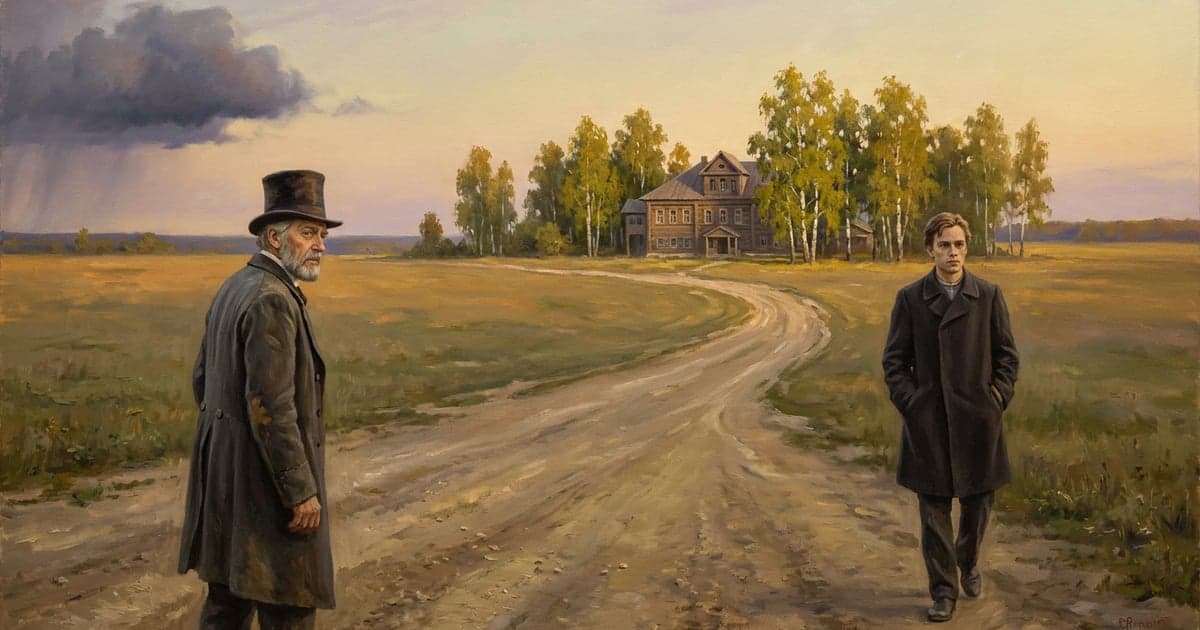
To forestall Joseph's threat, Edgar sends Linton to the Heights at dawn and orders Nelly to tell Cathy only that his father summoned him. The boy, who never knew he had a father, resists leaving uncle and cousin until Edgar and Nelly coax him out with false promises of short absence and pleasant visits.

On the ride Nelly invents a gentle Heathcliff and a respectable house; at the farm Heathcliff greets his property with contempt, Joseph mistakes the lad for a girl, and Hareton stares. Linton clings to Nelly until his father drags him between his knees and mocks Isabella's blood in him.

Alone with Nelly, Heathcliff admits he despises the whey-faced heir yet will tend him because Linton is prospective owner of the Grange and the triumph of seeing his descendant lord over Edgar's line. Joseph and porridge revolt the boy; as Nelly slips away he screams not to leave him, and the door is barred behind him.

In this chapter: Terms Characters Key Quotes Themes Modern Story

Why This Matters

Connect literature to life

Skill: Recognizing Manipulative Communication

Emotional language often masks a custody grab dressed as family duty. Edgar sends Linton to the Heights at dawn with Nelly, who must lie to Cathy about his father; Heathcliff inspects the boy, mocks his softness, and declares himself the prospective owner of Thrushcross Grange while Linton screams as the door bars behind Nelly. Hear estate logic beneath sentimental talk when a child is being moved.

Coming Up in Chapter 21

Catherine's devastation at Linton's sudden disappearance will test her father's resolve, as her passionate tears and desperate questions reveal the depth of her attachment to her cousin.

Share it with friends

PreviousPrevious ChapterNextNext Chapter
Original text
2,160 wordscomplete

Chapter 20

To forestall Joseph's threat, Edgar sends Linton to the Heights at ...

To obviate the danger of this threat being fulfilled, Mr. Linton commissioned me to take the boy home early, on Catherine’s pony; and, said he—“As we shall now have no influence over his destiny, good or bad, you must say nothing of where he is gone to my daughter: she cannot associate with him hereafter, and it is better for her to remain in ignorance of his proximity; lest she should be restless, and anxious to visit the Heights. Merely tell her his father sent for him suddenly, and he has been obliged to leave us.” Linton was very reluctant…

Public-domain chapter text, formatted for reading.

Master this chapter. Complete your experience

Purchase the complete book to access all chapters and support classic literature

Buy at Powell'sBuy on Amazon

Available in paperback, hardcover, and e-book formats

Now let's explore the literary elements.

Key Quotes & Analysis

"she cannot associate with him hereafter, and it is better for her to remain in ignorance of his proximity"

— Edgar Linton

Context: Orders before the dawn removal

Edgar chooses ignorance over consent for Cathy while Nelly must enforce the story

In Today's Words:

Edgar decides his daughter shouldn't know her cousin lives nearby, making that choice for her without asking. It's like parents who control their adult kids' relationships by hiding information, thinking they know what's best. Sometimes protecting someone means taking away their right to decide for themselves in relationships.

"Where is _my_ share in thee, puling chicken?"

— Heathcliff

Context: Examining Linton at the Heights

He claims blood tie only as leverage, not affection

In Today's Words:

Heath demands to know what he gets from this weak kid who's supposed to be his son. He's not interested in being a real father, just wants to know what's in it for him. Like deadbeat dads who only show up when there's money or property involved, not genuine love.

"my son is prospective owner of your place, and I should not wish him to die till I was certain of being his successor."

— Heathcliff

Context: Confession to Nelly after Joseph leaves

Care for Linton is estate strategy, not paternal love

In Today's Words:

Heath admits he only cares about keeping the boy alive long enough to inherit the property, then Heath can take over everything. He's not being a father, he's running a long-term real estate scam. The kid is just a tool to get the land and money he wants for revenge.

"Don’t leave me! I’ll not stay here! I’ll not stay here!"

— Young Linton

Context: Nelly closing the door

The chapter ends on trapped helplessness, not negotiated custody

In Today's Words:

The young man begs not to be left alone in this hostile place, panicking as the door closes. He's trapped in a situation he can't control, like kids caught in bitter custody battles where adults use them as weapons. His desperate pleas show how powerless he feels in this nightmare.

Thematic Threads

Social Class Division

In This Chapter

Edgar physically separates children based on class concerns

Development

Class barriers become more rigid and enforced through deception

In Your Life:

Notice when people use 'protection' as an excuse to control your relationships or limit your opportunities

Family Manipulation

In This Chapter

Adults lie to children 'for their own good'

Development

Well-meaning deception creates confusion and prevents healthy relationships

In Your Life:

Question when authority figures withhold information 'to protect you' - ask what they're really protecting

Powerlessness of Children

In This Chapter

Linton has no choice in where he lives or who he sees

Development

Children become pawns in adult conflicts and class struggles

In Your Life:

Recognize how childhood powerlessness affects your adult relationships and decision-making patterns

You now have the context. Time to form your own thoughts.

Discussion Questions

This is not a test. Five prompts guide you through the chapter, from how it opens to how it closes, so you notice context and rhythm rather than facts to memorize. Sit with each question in your own words. When you see "One way to read it," treat it as a starting point, not the only answer.

  1. 1

    Edgar sends Linton to the Heights at dawn and orders Nelly to tell Cathy only that his father summoned him suddenly, keeping her ignorant of his proximity. Why lie?

    ▶One way to read it

    Edgar cannot stop the claim, so he controls the story. Ignorance is meant to prevent restlessness and visits that would breach class boundaries.

    analysis • surface
  2. 2

    Linton never knew he had a father and resists leaving until Edgar and Nelly coax him with false promises of short absence and pleasant visits. Who pays for the soft handoff?

    ▶One way to read it

    The child. Adults argue over property while Linton has no language for what is happening until the door bars behind him.

    analysis • medium
  3. 3

    Heathcliff greets his property with contempt, asks where is my share in thee, puling chicken, and drags Linton between his knees. How does he define fatherhood here?

    ▶One way to read it

    As ownership and inspection, not affection. He looks for his own features and finds Isabella's weakness instead.

    application • medium
  4. 4

    Alone with Nelly, Heathcliff admits he despises the whey-faced heir yet will tend him because Linton is prospective owner of the Grange. What is his care worth?

    ▶One way to read it

    Estate strategy, not love. He needs the boy alive until Heathcliff can see Edgar's line supplanted by his own.

    application • deep
  5. 5

    Linton screams don't leave me as Nelly slips away and the door is barred. When is protection that uses lies and forced transfer still harm?

    ▶One way to read it

    When the child has no consent and no exit. Edgar and Nelly call it necessity; Linton experiences abandonment and captivity.

    reflection • deep

Critical Thinking Exercise

15 minutes

Decoding 'Protective' Language

Think of a time when someone in authority (parent, boss, teacher) withheld information from you 'for your own good.' Write about what they said, what they didn't say, and what you later discovered.

Consider:

  • •What was the person really trying to protect?
  • •How did the lack of information affect your choices?
  • •What would have changed if you'd known the truth?
  • •How did this experience shape your trust in authority?

Journaling Prompt

When have you used 'protection' as a reason to control information in your own relationships? What were you really protecting?

Coming Up Next...

Chapter 21

Catherine's devastation at Linton's sudden disappearance will test her father's resolve, as her passionate tears and desperate questions reveal the depth of her attachment to her cousin.

Continue to Chapter 21
Previous
Chapter XIX
Contents
Next
Chapter 21
Keep exploring

Continue Exploring

Study guides, teaching tools, themes, and the full library.More ways to read Wuthering Heights: study guides, teaching tools, and the wider library.

  • Wuthering Heights Study Guide
  • Teaching Resources
  • Essential Life Index
  • Browse by Theme
  • All Books

What this chapter teaches

Theme analyses that draw on this chapter and apply it to modern life.

  • Breaking Cycles of Intergenerational TraumaExplore how young Cathy and Hareton in Wuthering Heights refuse to perpetuate the hatred they inherited, showing the courage required to break...
  • Understanding How Revenge Destroys the AvengerExplore revenge destroys avenger through Wuthering Heights by Emily Brontë. Life lessons from classic literature applied to modern challenges.
Love & RelationshipsIdentity & Self-DiscoverySocial Class & Status

You Might Also Like

Jane Eyre cover

Jane Eyre

Charlotte Brontë

Explores love & romance

Anna Karenina cover

Anna Karenina

Leo Tolstoy

Explores love & romance

Madame Bovary cover

Madame Bovary

Gustave Flaubert

Explores love & romance

The Mill on the Floss cover

The Mill on the Floss

George Eliot

Explores suffering & resilience

Browse all 106+ books

Share This Chapter

Know someone who'd enjoy this? Spread the wisdom!

TwitterFacebookLinkedInEmail

Go further with Prestige

Unlock study guides and downloads, early access, and exclusive content — and support free access for everyone.

Subscribe to PrestigeCreate free account
Intelligence Amplifier
Intelligence Amplifier™Powering Wide Reads

Exploring human-AI collaboration through books, essays, and philosophical dialogues. Classic literature transformed into navigational maps for modern life.

2025 Books

→ The Amplified Human Spirit→ The Alarming Rise of Stupidity Amplified→ San Francisco: The AI Capital of the World
Visit intelligenceamplifier.org
hello@widereads.com

WideReads Originals

→ You Are Not Lost→ The Last Chapter First→ The Lit of Love→ Wealth and Poverty→ Wisdom for the Wounded
Arvintech
arvintechAmplify your Mind
Visit at arvintech.com

Navigate

  • Home
  • Library
  • Essential Life Index
  • How It Works
  • Subscribe
  • Account
  • About
  • Contact
  • Authors
  • Suggest a Book
  • Landings

Made For You

  • Trending
  • Students
  • Educators
  • Families
  • Readers
  • Literary Analysis
  • Finding Purpose
  • Letting Go
  • Recovering from a Breakup
  • Corruption
  • Gaslighting in the Classics

Newsletter

Weekly insights from the classics. Amplify Your Mind.

Legal

  • Privacy Policy
  • Terms of Service
  • Editorial Standards
  • Cookie Policy
  • Accessibility

Why Public Domain?

We focus on public domain classics because these timeless works belong to everyone. No paywalls, no restrictions—just wisdom that has stood the test of centuries, freely accessible to all readers.

Public domain books have shaped humanity's understanding of love, justice, ambition, and the human condition. By amplifying these works, we help preserve and share literature that truly belongs to the world.

A Pilgrimage

Powell's City of Books

Portland, Oregon

If you ever find yourself in Portland, walk to the corner of Burnside and 10th. The building takes up an entire city block. Inside is over a million books, new and used on the same shelf, organized by color-coded rooms with names like the Rose Room and the Pearl Room. You can lose an afternoon. You can lose a weekend. You will find a book you have been looking for your whole life, and three you did not know existed.

It is a pilgrimage. We cannot find a bookstore like it anywhere on earth. If you read the classics, and you ever get the chance, go. It belongs on every reader's bucket list.

Visit powells.com

We are not in any way affiliated with Powell's. We are just a very big fan.

© 2026 Wide Reads™. All Rights Reserved.

Intelligence Amplifier™ and Wide Reads™ are proprietary trademarks of Arvin Lioanag.

Copyright Protection: All original content, analyses, discussion questions, pedagogical frameworks, and methodology are protected by U.S. and international copyright law. Unauthorized reproduction, distribution, web scraping, or use for AI training is strictly prohibited. See our Copyright Notice for details.

Disclaimer: The information provided on this website is for general informational and educational purposes only and does not constitute professional, legal, financial, or technical advice. While we strive to ensure accuracy and relevance, we make no warranties regarding completeness, reliability, or suitability. Any reliance on such information is at your own risk. We are not liable for any losses or damages arising from use of this site. By using this site, you agree to these terms.