Chapter 06
The Pale Criminal's Truth
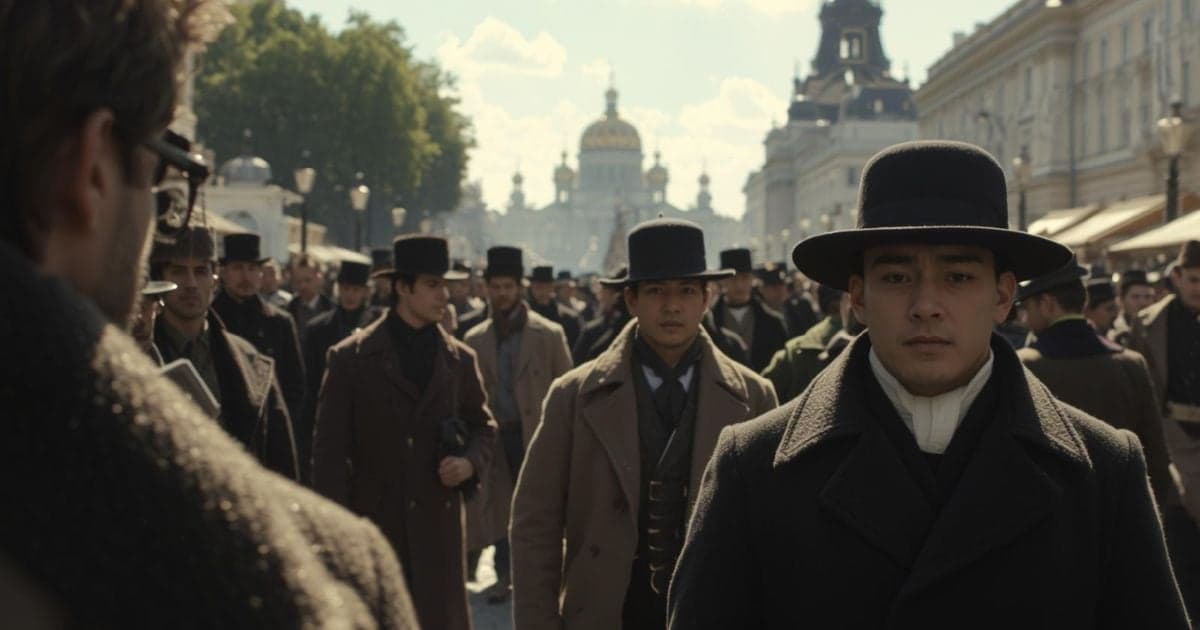
Ye do not mean to slay, ye judges and sacrificers, until the animal hath bowed its head? Lo! the pale criminal hath bowed his head: out of his eye speaketh the great contempt. “Mine ego is something which is to be surpassed: mine ego is to me the great contempt of man”: so speaketh it out of that eye. When he judged himself—that was his supreme moment; let not the exalted one relapse again into his low estate! There is no salvation for him who thus suffereth from himself, unless it be speedy death. Your slaying, ye judges, shall be…
Public-domain chapter text, formatted for reading.
Master this chapter. Complete your experience
Purchase the complete book to access all chapters and support classic literature
Available in paperback, hardcover, and e-book formats
Now let's explore the literary elements.
Key Quotes & Analysis
"Mine ego is something which is to be surpassed: mine ego is to me the great contempt of man”: so speaketh it out of that eye."
Context: What Zarathustra reads in the criminal's eyes as he awaits execution
This reveals the criminal's deepest problem isn't that he killed someone, but that he hates himself so completely he can't bear to exist. His crime was an act of self-destruction disguised as murder.
In Today's Words:
When a manager keeps sabotaging her own team's wins, look beneath the pattern: she may hate who she has become. The criminal's deepest wound is not what he did to another person but what he cannot stand about himself. Self-contempt drives more destruction than any outside enemy ever could.
"Your slaying, ye judges, shall be pity, and not revenge; and in that ye slay, see to it that ye yourselves justify life!"
Context: His advice to the judges about how to approach execution
Zarathustra argues that if society must execute this man, it should be out of mercy for someone who can't escape his own self-hatred, not to satisfy the judges' need to feel superior.
In Today's Words:
A supervisor who fires a struggling employee can do it two ways: to protect the team's wellbeing, or to feel powerful and righteous. Zarathustra demands the first. Every consequential act you take toward another person must be grounded in care for life, not your need to feel superior to someone broken.
"An idea made this pale man pale."
Context: Explaining why the criminal looks so haunted
The criminal could handle committing murder in the moment, but thinking about what it meant about him as a person afterward destroyed him. The idea of being a murderer was worse than the actual killing.
In Today's Words:
A colleague loses her temper in a meeting and handles it in the moment. But three days later she cannot sleep, not from regret about the harm done, but from horror at knowing she is capable of that outburst. The image of herself as that person becomes the real sentence.
"Verily, I would that their madness were called truth, or fidelity, or justice: but they have their virtue in order to live long, and in wretched self-complacency."
Context: Comparing the criminal's tormented honesty to the comfortable virtue of ordinary good people
Zarathustra finds conventional virtue more contemptible than the criminal's violent self-division, because respectable people perform goodness as a survival strategy rather than facing their authentic nature.
In Today's Words:
A colleague spends twenty years following every workplace rule, calling it integrity while never risking anything that matters. His virtue is armor against confronting who he might become if he dared to act. Zarathustra finds this safer life more contemptible than the criminal's terrible honesty about what he truly craved inside.
Thematic Threads
Identity
In This Chapter
The criminal is split between his violent nature and his need for acceptable motives, unable to integrate either side
Development
Deepens from earlier chapters about self-creation: here showing what happens when self-hatred blocks authentic development
In Your Life:
You might catch yourself creating elaborate reasons for behavior that stems from emotions you don't want to admit having
Social Expectations
In This Chapter
Society's 'good people' are trapped by their need to appear virtuous while avoiding authentic self-confrontation
Development
Continues the critique of conventional morality, now showing how it creates internal splits in both criminals and citizens
In Your Life:
You might notice how concern for appearing 'good' prevents you from honestly examining your real motivations
Personal Growth
In This Chapter
True development requires facing authentic desires and conflicts rather than hiding behind justifications or conformity
Development
Builds on earlier themes about self-overcoming by showing the cost of avoiding honest self-examination
In Your Life:
You might realize that real growth means acknowledging parts of yourself you'd rather keep hidden
Human Relationships
In This Chapter
Both the criminal and the judges fail to see the real person: one through self-deception, the others through lack of understanding
Development
Introduces the idea that authentic connection requires seeing past surface behaviors to underlying conflicts
In Your Life:
You might find yourself judging others' actions without understanding the internal wars that drive their behavior
You now have the context. Time to form your own thoughts.
Discussion Questions
This is not a test. Five prompts guide you through the chapter, from how it opens to how it closes, so you notice context and rhythm rather than facts to memorize. Sit with each question in your own words. When you see "One way to read it," treat it as a starting point, not the only answer.
- 1
Why does Zarathustra address the judges before saying anything about the criminal himself?
analysis • surfaceOne way to read it
He wants to shift the frame: the judges are not neutral observers but participants whose pity or revenge will determine whether the execution justifies life or merely satisfies their own need to feel superior to someone broken.
- 2
According to Zarathustra, what is the difference between the criminal's soul wanting blood and his weak reason inventing the robbery motive?
analysis • mediumOne way to read it
The soul craved violence for its own dark satisfaction; the rational mind invented robbery as a respectable story the criminal could tell himself, splitting his action from its true origin and making honest self-knowledge impossible.
- 3
Think of a time you gave an elaborate reason for a quick or impulsive decision. What might the real driving force have been?
application • mediumOne way to read it
Elaborate explanations often cover an impulse we are ashamed of: anger, jealousy, or fear. Noticing the gap between the story and the gut feeling is the first step toward honest self-knowledge rather than comfortable self-deception.
- 4
Zarathustra compares himself to a railing alongside a torrent, not a crutch. How does that distinction change what kind of help he is offering the judges?
application • deepOne way to read it
A railing steadies those strong enough to grab it but does not carry them. Zarathustra offers insight to those ready to receive it, not rescue for those unwilling to do the inner work themselves.
- 5
In the closing lines, Zarathustra says the 'good people' he knows cause him more disgust than this criminal. What does that reveal about what he values most in a person?
reflection • deepOne way to read it
He values honesty about one's nature over comfortable virtue. The criminal's self-contempt at least contains a wild truth; the good people's self-satisfaction conceals the deeper lie that they have nothing inside worth confronting.
Critical Thinking Exercise
Catch Your Own Cover Stories
Think of a recent time you acted badly - snapped at someone, avoided a responsibility, or hurt someone's feelings. Write down the story you told yourself about why it happened. Then dig deeper: what were you really feeling in that moment? What impulse were you actually following? Compare your cover story to your real motivation.
Consider:
- •Notice how quickly your mind jumps to 'reasonable' explanations
- •Pay attention to feelings you might be avoiding (fear, anger, jealousy)
- •Ask what you were trying to protect by creating the cover story
Journaling Prompt
Write about a pattern you notice in your own justifications. What emotions or impulses do you most often try to hide from yourself?
Coming Up Next...
Chapter 7: Writing with Blood and Dancing with Life
Zarathustra shifts from examining criminals to exploring the nature of authentic expression itself. He's about to reveal why true wisdom can only be written in blood - and what that means for anyone seeking real understanding..