
The Romance of the Forest

Ann Radcliffe
0:00 / 0:00
Pierre de la Motte leaves Paris at midnight with his wife, two servants, and a debt that will not wait until morning. On a wild heath the postillion loses the road. La Motte walks to a lonely house for directions and is locked in a bare room with barred windows. A ruffian opens the door, points a pistol, and swears him to carry away a girl he has never met. Bound and blindfolded, he is put back in the carriage with Adeline, who has no name she can prove and no one coming after her except the men who would not keep her. Ann Radcliffe published The Romance of the Forest in 1791. The forest of Fontanville is waiting, and so is the ruined abbey that will look like safety.
Adeline is the passenger nobody asked for: young, precise, and unwilling to buy a roof with her conscience. Pierre de la Motte is ruined, proud, and already practicing the small concessions that will later put a poniard in his hand. Madame de la Motte grieves Paris and a son in Germany, then grows jealous of the girl she is asked to shelter. The Marquis de Montalt arrives with rank, courtesy, and a plan that treats Adeline as property. Theodore loves her and will wound a marquis for her, then sit in a prison for it. Peter drives, fetches, and finally walks her toward Savoy. La Luc, in the Alps, will give her the parental name the forest never did. The pressure among them is not a ghost in the abbey. It is who gets to decide what a nameless woman is worth.
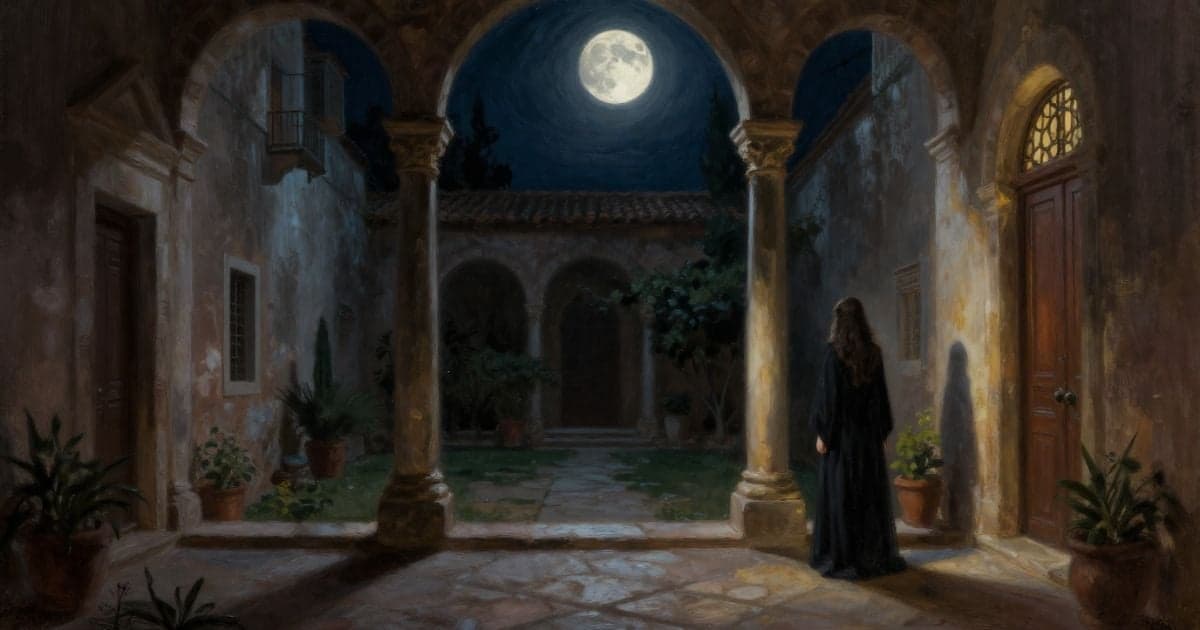
They light a fire in a tower room where birds burst from rotting tapestry, and the ruin becomes a household. Adeline gardens and sings. La Motte hunts and broods. In a hidden chamber she finds a manuscript dated 1642, a prisoner who heard his own death planned in these cells. The Marquis proposes marriage with wealth attached. She refuses. He moves her to a villa that is a cage with gardens. Theodore helps her flee. Pursuit follows. He wounds the Marquis and is seized. The hinge is midnight in the abbey tower. The Marquis hands La Motte a poniard and says Adeline must die tonight. La Motte enters, cannot kill the sleeping girl, and sends her away with Peter up the Rhone toward Savoy. La Luc takes her in beside Clara. A Paris court later hears the seal that proves her birth. The Marquis dies by poison in his cell and names her daughter and heiress of Henri de Montalt, the brother he murdered. Theodore is pardoned. The abbey is no longer a refuge anyone needs.
Radcliffe is not writing a ghost story that stays a ghost story. She builds terror out of weather, ruins, and a locked room, then pays every shadow with a human motive. The ending is earned because Adeline has already refused the splendid marriage, already fled, already walked toward a country that did not owe her a name. The court only confirms what the tower already decided when the poniard did not fall.
The first pressure is already on that heath: a girl handed to a ruined stranger at pistol-point. Reading Dangerous Situations is the barred room, the villa gardens, and the courtesy that keeps arriving with a lock. Maintaining Integrity Under Pressure is the refusal in the abbey, rank offered as shelter, and the sentence she will not say to buy another night. Finding Allies is imperfect from the start. The La Mottes hide her and later nearly kill her. Theodore is taken. Peter and La Luc do the quieter work. Uncovering Your Origins is the 1642 manuscript and the stolen seal carried into court so a murdered brother's name can be spoken. Courage vs Recklessness is knowing when to run from the villa and when to lie still in the tower while another person chooses. Trusting Providence is the road to Savoy after a murder that did not happen, and a confession that finishes what her witness would have had to bear.
Birds still leave the tapestry when the first fire is lit. Wide Reads carries summaries, quotes, and audio through all twenty-six chapters. The last object is a poniard that never came down, and a seal that finally tells the court who the banditti would not keep.
Lessons from The Romance of the Forest
Six lessons from this classic novel.
Lessons from The Romance of the Forest
Six lessons from this classic novel.Deep dives
Chapter-by-chapter breakdowns
Finding Allies
Take Theodore's hand in the forest, then La Luc's table in Savoy, after the La Mottes have already failed and saved her.
The lofty battlements, thickly enwreathed with ivy, were half demolished, and become the residence of birds of prey
Uncovering Your Origins
Read the 1642 manuscript in the cell, then carry the stolen seal into a Paris court.
Adeline's mind had the happy art, or, perhaps, it were more just to say, the happy nature, of accommodating itself to her…
Table of Contents
Midnight Flight and Mysterious Rescue
Pierre de la Motte leaves Paris at midnight with his wife and two loyal servants, fleeing creditors ...
Finding Sanctuary in Ruins
Lost in the forest of Fontanville at night, the La Mottes find their carriage useless on a track tha...
Adeline's Dark Past Revealed
Routine replaces flight at the forest abbey. La Motte hunts and broods; Madame La Motte turns housek...
The Discovery and the Descent
A month at the abbey has restored La Motte's cheer, and Adeline's gentle attention succeeds where Ma...
Family Reunions and Hidden Mysteries
A midnight uproar at the abbey gate sends La Motte into terror of arrest, but the intruder is his so...
Midnight Visitors and Dark Secrets
Storm and hoofbeats return the past to the abbey gate. La Motte fears arrest, but the visitor is the...
Dangerous Secrets and Midnight Terrors
The Marquis returns, and Adeline's unease grows when he watches her from the courtyard. La Motte dis...
Hidden Chambers and Dangerous Secrets
Adeline tries to forget her dreams, but La Motte's mockery still stings. The Marquis returns, flatte...
The Mysterious Manuscript
Adeline reads the manuscript at last: a prisoner kidnapped in 1642 describes life in the abbey cells...
Secrets in the Shadows
Peter whispers that he saw lights and figures in the eastern apartments La Motte forbade. Adeline li...
The Enchanted Prison and Daring Escape
Adeline learns she must leave the abbey for the Marquis's villa, and sunset over the ruins feels lik...
Love Under Fire
Adeline and Theodore travel toward safety, but conversation stays restrained by delicacy and danger....
The Marquis's Desperate Revenge
The surgeon orders the wounded Marquis to bed, but he cares only about keeping Adeline from escaping...
The Price of Survival
Adeline rides through the night and wakes at the abbey she hoped never to see again. La Motte locks ...
The Midnight Betrayal
The Marquis returns to the forest and ends the pretense: Adeline must die tonight. He hands La Motte...
Finding Sanctuary in Kindness
Adeline and Peter reach Savoy; she falls gravely ill in a peasant cottage near Leloncourt. The narra...
Finding Family and Healing in Kindness
Adeline recovers and meets La Luc with grateful tears; the family's sweetness wins her before he spe...
Departures and New Horizons
Clara recovers; M. Verneuil remains a welcome guest whose culture matches the family's humane values...
Music Across Dark Waters
Evening on the return voyage: Adeline watches Provence brighten, hears distant music, and feels Beat...
A Father's Desperate Journey
The Marquis, believing La Motte imprisoned, rages that Adeline reached Lyons and escaped by Rhone bo...
The Weight of Guilt and Unexpected Hope
La Motte's trial moves to Paris; even acquittal would expose older crimes in the city where he once ...
Truth Emerges in Court
In court Du Bosse testifies under oath: the Marquis hired him and D'Aunoy to murder his natural daug...
Truth Unveiled in Court
Adeline travels to Paris despite illness because La Motte and Theodore need her witness. Parting fro...
The Weight of Justice
Adeline learns she is heiress to immense wealth and that her father was murdered by her uncle the Ma...
Justice Delivered, Love Restored
Before trial, the Marquis dies by poison in his cell, confessing crimes and legally naming Adeline d...
Joy's Ecstatic Trial - The Final Homecoming
After mourning, Adeline marries Theodore at St. Maur with the Count and Countess present; La Luc ble...
Common Questions About The Romance of the Forest
Trending search questions mapped to the six lessons in this novel—what readers actually ask Google about Adeline, the ruined abbey, the Marquis de Montalt, Gothic suspense, and Radcliffe's explained supernatural.
What is The Romance of the Forest about?
Pierre de la Motte flees Paris at midnight with debt on his heels, loses the road on a heath, and is locked in a lonely house until a ruffian hands him a girl at pistol-point. Adeline has no name she can prove. They shelter in a ruined abbey where birds burst from rotting tapestry, a hidden manuscript dated 1642 records a prisoner hearing his death planned, and a Marquis offers marriage with rank attached. Radcliffe builds terror from weather and ruins, then pays every shadow with a human motive.
Explore Reading Dangerous SituationsWho is Adeline in The Romance of the Forest?
A young woman handed to La Motte on the heath with no proof of birth and no one coming after her except the men who would not keep her. She gardens, sings, refuses the Marquis when wealth is offered as shelter, flees the villa with Theodore, and waits in the abbey tower while another person decides whether a poniard will fall. A Paris court later hears the seal that proves she is daughter and heiress of Henri de Montalt, the brother the Marquis murdered.
Explore Uncovering Your OriginsWhy does Adeline refuse the Marquis in The Romance of the Forest?
The Marquis de Montalt arrives with courtesy, rank, and a proposal that treats Adeline as property dressed in silk. She is already living under his roof in the abbey he effectively controls. Refusal costs her shelter, reputation, and safety in a world where a nameless woman has almost no leverage. She says no anyway. Radcliffe makes the scene a test of whether virtue can survive when the price of yes is your conscience.
Explore Maintaining Integrity Under PressureWhat is in the hidden manuscript in The Romance of the Forest?
In a chamber of the ruined abbey Adeline finds papers dated 1642: a prisoner who heard his own death planned in these cells and left a record for whoever came after. The manuscript is not a ghost. It is evidence that the abbey's terror has a human architect and a history respectable families buried. It also foreshadows Adeline's own night in the tower when another man will be handed a weapon and told she must die.
Explore Uncovering Your OriginsIs The Romance of the Forest a Gothic novel?
Yes. Radcliffe published it in 1791 and helped define what critics called the explained supernatural: moonlight, locked rooms, ruined abbeys, and pursuit through forests, all resolved by human cruelty rather than spirits. She was the best-paid novelist in England by the mid 1790s. Byron and the Brontës later drew on her template of the persecuted heroine, the labyrinthine setting, and the villain whose charm masks a ledger of crimes.
Explore Reading Dangerous SituationsWhat life lessons does The Romance of the Forest teach?
Six lessons run through the novel: maintain integrity when rank is offered as the price of shelter; read dangerous situations when courtesy arrives with a lock; find allies imperfectly because the people who hide you may later threaten you; uncover your origins when a manuscript and a seal outlast the story told about you; choose courage over recklessness when to flee the villa and when to wait in the tower; and trust providence after a murder that did not happen and a road toward Savoy that finally gives you a name. Those skills, not a ghost in the abbey, are why the book still answers modern searches.
About Ann Radcliffe
Published 1791
Ann Radcliffe (1764-1823) was the most popular novelist of the 1790s and one of the architects of Gothic fiction. Born Ann Ward in London, she married William Radcliffe, a journalist, and began publishing in her twenties. The Romance of the Forest (1791) established her reputation for what critics called the "explained supernatural": terror built through atmosphere, landscape, and suspense, then resolved by human motive rather than ghosts.
Radcliffe's heroines model moral courage without sensational violence. She earned unprecedented fees for her work, including large advances for The Mysteries of Udolpho (1794). Her novels explore women's limited power in patriarchal society, the psychology of fear, and the slow work of uncovering secrets that respectable families bury.
She stopped publishing after 1797 and lived quietly until her death in 1823. Writers from Byron to the Brontës drew on her template of the persecuted heroine, the labyrinthine setting, and the villain whose charm masks cruelty. Today she is read as a pioneer who used popular romance to ask serious questions about power, identity, and justice.
Why This Author Matters Today
Reading Ann Radcliffe is an act of self-discovery — one that tends to be more unsettling, and more rewarding, than you expect. Their work doesn't offer easy answers. It offers something rarer: the right questions. Questions about what we owe each other, what we owe ourselves, and what kind of person we are quietly becoming through the choices we make every day.
What makes Ann Radcliffe indispensable isn't just their insight into human nature — it's their honesty about its contradictions. They understood that people are capable of extraordinary courage and ordinary cowardice, often in the same breath. That we can hold convictions firmly and abandon them the moment they cost us something. That the gap between who we think we are and who we actually are is where most of life's real drama lives.
In an age of noise, distraction, and the constant pressure to perform certainty we don't feel,Ann Radcliffe is a corrective. Their pages slow you down and ask you to look more carefully — at the world, yes, but especially at yourself. Few writers have done more to show us that thinking well is not an academic exercise but a survival skill, and that the examined life is not a luxury but the only honest way to live.
More by Ann Radcliffe in Our Library
Wide Reads is different.
Plot, characters, and themes — plus audio, source text, and patterns you can use after class
Two ways in
Read & listen to the summary
Chapter by chapter, with audio. The meaning arrives because you experienced it — not because someone listed bullet points.
Start with this.
Read the original text
The actual words the author wrote, alongside every summary. Use the guide, then step into the source.
Then step into the source.
Either way, the door opens inward.
— and most of all, Why does this matter?
Get the Full Book
Purchase the complete book to access all chapters and support classic literature

Available in paperback, hardcover, and e-book formats
You Might Also Like



Free to read • No account required