Wide Reads
Literature MattersLife IndexEducators
Sign in
Where to Begin

When Gods Bleed: Divine Intervention Gone Wrong — The Iliad

The Iliad - When Gods Bleed: Divine Intervention Gone Wrong

Homer

The Iliad

When Gods Bleed: Divine Intervention Gone Wrong

Home›Books›The Iliad›Chapter 5: When Gods Bleed: Divine Intervention Gone Wrong
Previous
5 of 24
Next

Analysis by the Wide Reads editorial team·Reviewed against the source text·Updated December 1, 2025

Summary

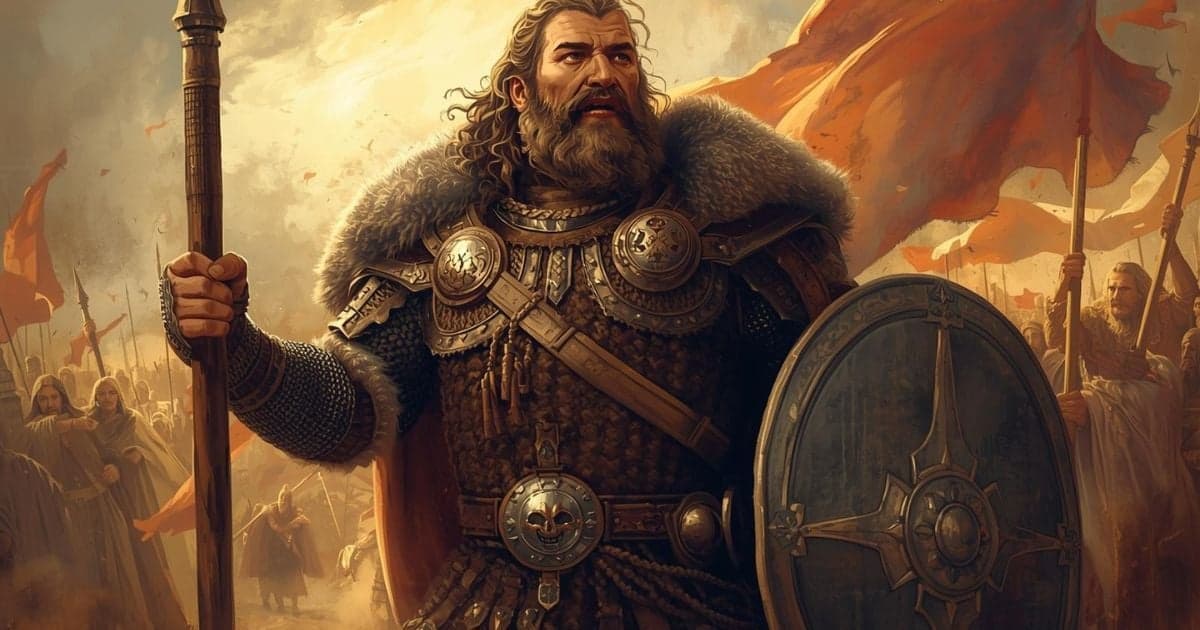
Chapter 5 of The Iliad presents one of literature's most audacious episodes: a mortal warrior who wounds gods and lives to tell about it. Diomedes, blessed by Athena with divine sight and supernatural strength, transforms from skilled warrior into an unstoppable force of nature that challenges the very hierarchy of the cosmos. The opening establishes his rampage through Trojan ranks, cutting down sons of priests and nobles with methodical brutality. He slaughters the sons of Dares, a wealthy priest of Vulcan, then continues his killing spree through Trojan nobility. But this isn't just another battle scene. Homer uses Diomedes' aristeia to explore the intoxicating and dangerous nature of unchecked power, showing how divine favor can corrupt even noble warriors. When Pandarus wounds him with an arrow, Athena's instant healing sends Diomedes back into combat with even greater fury, like a wounded lion that becomes more dangerous after being hurt. The goddess grants him the ability to distinguish gods from mortals, warning him to avoid divine combat except with Venus. This supernatural sight becomes both blessing and curse, revealing truths that mortals aren't meant to see.

The middle section escalates dramatically when Aeneas and Pandarus team up against this Greek juggernaut. Their alliance represents Troy's desperate attempt to stop what seems unstoppable. Diomedes kills Pandarus with a spear thrust that splits his face from nose to chin, a death so brutal it silences the battlefield momentarily. Then he hurls a massive stone that crushes Aeneas' hip, demonstrating strength beyond mortal limits. But the real transgression comes when Venus intervenes to save her son. Diomedes, drunk on divine favor and battle rage, actually wounds the goddess of love herself, sending her fleeing to Olympus with ichor streaming from her wounded hand. This moment represents the peak of mortal hubris, when success makes someone forget their place in the cosmic order. The goddess who commands desire and beauty becomes just another casualty in Diomedes' rampage. Apollo steps in to protect Aeneas, but even this intervention cannot fully restore order to a battlefield where mortals now hunt gods.

The chapter's climax arrives when Mars himself enters the battle to rally the Trojans. Most mortals would cower before the god of war, but Diomedes, still riding his wave of divine protection and intoxicated by his previous success against Venus, attacks Mars directly. With Athena guiding his spear and lending her strength to his arm, he wounds the god of war and sends him howling back to Zeus like a petulant child. This scene represents the ultimate inversion of natural order, where a mortal warrior makes a god flee in terror and pain. The closing section reveals the aftermath of these unprecedented acts through the divine response on Olympus. Zeus' reaction to Mars' complaints is telling: essentially dismissing his son's wounds with the observation that gods who meddle in mortal affairs must accept the consequences. The king of gods shows no sympathy for his son's injuries, recognizing that divine intervention in human conflicts carries inherent risks. This divine indifference suggests that even among immortals, actions have consequences and complaints fall on deaf ears. Venus receives more sympathy from her mother Dione, but the message remains clear: gods who descend to mortal battlefields make themselves vulnerable to mortal weapons.

This chapter functions as both thrilling action sequence and cautionary tale about the corrupting nature of power. Diomedes represents that dangerous moment when everything goes your way, when you start believing your own press and forget that even divine favor has limits. His ability to see through godly disguises becomes a metaphor for seeing past illusions of invincibility that success can create. The gods themselves emerge as surprisingly petty and vindictive, squabbling among themselves like dysfunctional family members rather than the dignified immortals mortals worship. Venus runs crying to her parents after being wounded, while Mars throws a tantrum when his military intervention backfires spectacularly. Homer suggests that power, whether mortal or divine, reveals character rather than creating it, and that authority figures often prove disappointingly human in their reactions to setbacks. The chapter also explores themes of generational conflict and the price of glory that echoes through both mortal and divine families. Diomedes fights to surpass his father Tydeus' reputation, carrying the weight of ancestral expectations into battle. Meanwhile, sons of Trojan nobles die trying to live up to their heritage, their privileged upbringing no match for Greek spears guided by divine will.

The wealthy priest Dares loses both sons in a single day, their noble birth and careful training rendered meaningless by the democracy of death in warfare. These personal tragedies underscore that war consumes the innocent alongside the guilty, making no distinction between the deserving and undeserving. The technical brilliance of Homer's battle descriptions serves a deeper purpose than mere entertainment or glorification of violence. Each death receives individual attention, from the shipwright Phereclus who built Paris' fleet to the priest Hypsenor who served the river god Scamander. These aren't faceless casualties but individuals with histories, families, skills, and unfulfilled futures cut short by the machinery of war. The cumulative effect creates a sense of profound waste that counterbalances the glory of heroic achievement, suggesting that every moment of triumph comes at an irreplaceable human cost. By the end, Diomedes has accomplished something unprecedented in wounding two Olympian gods, yet the victory feels hollow and temporary. The gods will heal and return to their eternal existence, but the mortal dead remain permanently dead, their stories ended forever. The chapter leaves readers questioning whether divine favor is ultimately blessing or curse, and whether the price of glory is worth paying when measured against the human cost of achieving it.

In this chapter: Terms Characters Key Quotes Themes Modern Story

Why This Matters

Connect literature to life

Skill: Managing a Winning Streak

Blessed success feels like proof you have no limits until the first real boundary snaps back. Diomedes, aided by Athena, wounds Venus and Mars before his rampage finally peaks. Keep the guardrails that made you effective even when confidence tells you they are optional.

Coming Up in Chapter 6

With the gods temporarily sidelined and licking their wounds, the focus shifts back to mortal heroes. Hector must rally Troy's forces while the Greeks press their advantage, setting up the next phase of this brutal war where human courage and strategy will determine the outcome.

Share it with friends

PreviousPrevious ChapterNextNext Chapter
Original text
8,872 wordscomplete

Chapter 05

When Gods Bleed: Divine Intervention Gone Wrong

ARGUMENT. THE ACTS OF DIOMED. Diomed, assisted by Pallas, performs wonders in this day’s battle. Pandarus wounds him with an arrow, but the goddess cures him, enables him to discern gods from mortals, and prohibits him from contending with any of the former, excepting Venus. Æneas joins Pandarus to oppose him; Pandarus is killed, and Æneas in great danger but for the assistance of Venus; who, as she is removing her son from the fight, is wounded on the hand by Diomed. Apollo seconds her in his rescue, and at length carries off Æneas to Troy, where he is healed…

Public-domain chapter text, formatted for reading.

Master this chapter. Complete your experience

Purchase the complete book to access all chapters and support classic literature

Buy at Powell'sBuy on Amazon

Available in paperback, hardcover, and e-book formats

Now let's explore the literary elements.

Key Quotes & Analysis

"Diomed, assisted by Pallas, performs wonders in this day’s battle."

— Narrator

Context: A pivotal line from the opening of the chapter

The opening establishes Diomedes as divinely empowered, yet this blessing comes with strict limitations that reveal how even gods must operate within boundaries. His supernatural prowess represents that intoxicating moment when everything aligns perfectly, but divine favor always carries hidden costs and conditions.

In Today's Words:

When you're having the best day of your career, crushing every goal and feeling unstoppable, remember that even peak performance has rules. Divine backing doesn't mean unlimited license to act without consequences or consideration for larger forces at play. Honor cultures still punish the person who reads restraint as weakness until the cost is public.

"The queen of love with faded charms she found."

— Narrator

Context: A pivotal line from the middle of the chapter

Venus appears diminished and vulnerable after her encounter with mortal violence, showing how even divine beings can be reduced by unexpected confrontation. Her faded state reflects the shock of discovering that perceived invulnerability has limits when faced with determined opposition.

In Today's Words:

That moment when someone you thought was untouchable gets publicly humbled, their usual confidence completely shaken. Power and status mean nothing when you're caught off guard by someone willing to challenge what everyone assumed was beyond question. Honor cultures still punish the person who reads restraint as weakness until the cost is public.

"Behold where Mars in mortal arms appears!"

— Narrator

Context: A pivotal line from the closing third of the chapter

Mars entering the battlefield in mortal disguise represents the escalation that occurs when authority figures feel compelled to intervene directly rather than through intermediaries. His appearance signals that the conflict has reached a level requiring personal involvement from the highest powers.

In Today's Words:

When the CEO finally shows up on the factory floor because things have gotten so out of hand that middle management can't contain the situation. Sometimes the big boss has to get their hands dirty personally. You still see it when rage outlasts grief and everyone treats mercy as surrender.

"Sheathed in bright arms each adverse chief came on."

— Jove

Context: A pivotal line from the closing third of the chapter

The image of warriors advancing in full armor captures that moment of inevitable confrontation when all negotiation has failed and only direct action remains. Both sides commit fully to the encounter, knowing that retreat is no longer possible and the outcome will determine everything.

In Today's Words:

Two rival companies finally meeting in the boardroom after months of hostile takeover attempts, both sides fully prepared with their best legal teams and knowing this meeting will determine who survives in the market. Naming the pattern early matters when pride keeps both sides locked in a move they cannot undo.

Thematic Threads

Power

In This Chapter

Divine favor gives Diomedes supernatural strength, but also dangerous overconfidence that leads him to attack gods

Development

Evolved from earlier themes of warrior honor—now showing how power without wisdom becomes destructive

In Your Life:

You might see this when a promotion, compliment, or success streak makes you feel like normal workplace rules don't apply to you anymore

Limits

In This Chapter

Athena sets clear boundaries (don't fight gods except Venus), but Diomedes ignores them when he feels invincible

Development

Introduced here as the tension between divine blessing and mortal limitations

In Your Life:

You might recognize this when you start bending rules you previously followed because you feel your situation is special

Consequences

In This Chapter

Even wounding gods has repercussions—Zeus reminds Mars that divine interference comes with a price

Development

Building on earlier themes of fate and choice—actions have results even for the powerful

In Your Life:

You might see this when your overconfidence at work or home finally catches up with you in unexpected ways

Identity

In This Chapter

Diomedes transforms from careful warrior to reckless god-fighter, losing sight of who he really is

Development

Continues the theme of how external circumstances can change self-perception and behavior

In Your Life:

You might experience this when success or praise makes you act like a different person than you actually are

You now have the context. Time to form your own thoughts.

Discussion Questions

This is not a test. Five prompts guide you through the chapter, from how it opens to how it closes, so you notice context and rhythm rather than facts to memorize. Sit with each question in your own words. When you see "One way to read it," treat it as a starting point, not the only answer.

  1. 1

    What advantages does Athena give Diomedes at the start of this chapter?

    ▶One way to read it

    She heals his wound, strengthens him, and lets him distinguish gods from mortals on the field.

    analysis • surface
  2. 2

    Why does Athena warn Diomedes about which divine opponents he may fight?

    ▶One way to read it

    She empowers him but sets limits because attacking most gods would be fatal overreach.

    analysis • medium
  3. 3

    What happens when Diomedes wounds Aphrodite and later Ares?

    ▶One way to read it

    Both gods retreat in pain, shocking divine and mortal observers and escalating the cosmic stakes of the battle.

    application • medium
  4. 4

    Where have you seen someone on a winning streak start taking risks they would have avoided earlier?

    ▶One way to read it

    Strong answers describe careers, sports, or public life where confidence outran judgment after repeated wins.

    application • deep
  5. 5

    What does Diomedes' aristeia suggest about the difference between courage and hubris?

    ▶One way to read it

    Courage serves a mission with limits; hubris keeps raising the bet because recent success feels like permission.

    reflection • deep

Critical Thinking Exercise

10 minutes

Track Your Invincibility Moments

Think of a time when you were on a winning streak - maybe at work, in a relationship, or with a skill you were learning. Write down what success felt like, what rules you started bending, and what eventually brought you back to reality. Then identify the warning signs you missed.

Consider:

  • •Success often feels like validation that normal rules don't apply to you
  • •The higher you climb, the harder it becomes to hear honest feedback
  • •Small rule-bending usually escalates before consequences hit

Journaling Prompt

Write about a current situation where you might be getting too comfortable with success. What rules are you tempted to bend? What would a trusted friend tell you right now?

Coming Up Next...

Chapter 6: Honor, Love, and the Price of War

With the gods temporarily sidelined and licking their wounds, the focus shifts back to mortal heroes. Hector must rally Troy's forces while the Greeks press their advantage, setting up the next phase of this brutal war where human courage and strategy will determine the outcome.

Continue to Chapter 6
Previous
When Leaders Break Their Word
Contents
Next
Honor, Love, and the Price of War
Keep exploring

Continue Exploring

Study guides, teaching tools, themes, and the full library.More ways to read The Iliad: study guides, teaching tools, and the wider library.

  • The Iliad Study Guide
  • Teaching Resources
  • Essential Life Index
  • Browse by Theme
  • All Books

Life-skill deep dives in The Iliad

  • Finding Humanity in Your EnemyShared mortality and enemy humanity in Homer
  • Managing RageHow unchecked anger destroys allies and armies in Homer
  • Processing GriefLoss, mourning, and transformation in Homer
  • Recognizing the Cost of PrideHow wounded pride cripples missions and relationships in Homer
  • Understanding Honor CultureReputation, war prizes, and public respect in Homer

You Might Also Like

The Odyssey cover

The Odyssey

Homer

Also by Homer

Beowulf cover

Beowulf

Unknown

Explores war & conflict

Metamorphoses cover

Metamorphoses

Ovid

Explores identity & self

The Aeneid cover

The Aeneid

Virgil

Explores war & conflict

Browse all 106+ books

Share This Chapter

Know someone who'd enjoy this? Spread the wisdom!

TwitterFacebookLinkedInEmail

Go further with Prestige

Unlock study guides and downloads, early access, and exclusive content — and support free access for everyone.

Subscribe to PrestigeCreate free account
Intelligence Amplifier
Intelligence Amplifier™Powering Wide Reads

Exploring human-AI collaboration through books, essays, and philosophical dialogues. Classic literature transformed into navigational maps for modern life.

2025 Books

→ The Amplified Human Spirit→ The Alarming Rise of Stupidity Amplified→ San Francisco: The AI Capital of the World
Visit intelligenceamplifier.org
hello@widereads.com

WideReads Originals

→ You Are Not Lost→ The Last Chapter First→ The Lit of Love→ Wealth and Poverty→ Wisdom for the Wounded
Arvintech
arvintechAmplify your Mind
Visit at arvintech.com

Navigate

  • Home
  • Library
  • Essential Life Index
  • How It Works
  • Subscribe
  • Account
  • About
  • Contact
  • Authors
  • Suggest a Book
  • Landings

Made For You

  • Trending
  • Students
  • Educators
  • Families
  • Readers
  • Literary Analysis
  • Finding Purpose
  • Letting Go
  • Recovering from a Breakup
  • Corruption
  • Gaslighting in the Classics

Newsletter

Weekly insights from the classics. Amplify Your Mind.

Legal

  • Privacy Policy
  • Terms of Service
  • Editorial Standards
  • Cookie Policy
  • Accessibility

Why Public Domain?

We focus on public domain classics because these timeless works belong to everyone. No paywalls, no restrictions—just wisdom that has stood the test of centuries, freely accessible to all readers.

Public domain books have shaped humanity's understanding of love, justice, ambition, and the human condition. By amplifying these works, we help preserve and share literature that truly belongs to the world.

A Pilgrimage

Powell's City of Books

Portland, Oregon

If you ever find yourself in Portland, walk to the corner of Burnside and 10th. The building takes up an entire city block. Inside is over a million books, new and used on the same shelf, organized by color-coded rooms with names like the Rose Room and the Pearl Room. You can lose an afternoon. You can lose a weekend. You will find a book you have been looking for your whole life, and three you did not know existed.

It is a pilgrimage. We cannot find a bookstore like it anywhere on earth. If you read the classics, and you ever get the chance, go. It belongs on every reader's bucket list.

Visit powells.com

We are not in any way affiliated with Powell's. We are just a very big fan.

© 2026 Wide Reads™. All Rights Reserved.

Intelligence Amplifier™ and Wide Reads™ are proprietary trademarks of Arvin Lioanag.

Copyright Protection: All original content, analyses, discussion questions, pedagogical frameworks, and methodology are protected by U.S. and international copyright law. Unauthorized reproduction, distribution, web scraping, or use for AI training is strictly prohibited. See our Copyright Notice for details.

Disclaimer: The information provided on this website is for general informational and educational purposes only and does not constitute professional, legal, financial, or technical advice. While we strive to ensure accuracy and relevance, we make no warranties regarding completeness, reliability, or suitability. Any reliance on such information is at your own risk. We are not liable for any losses or damages arising from use of this site. By using this site, you agree to these terms.