Chapter 03
The Duel That Changed Everything
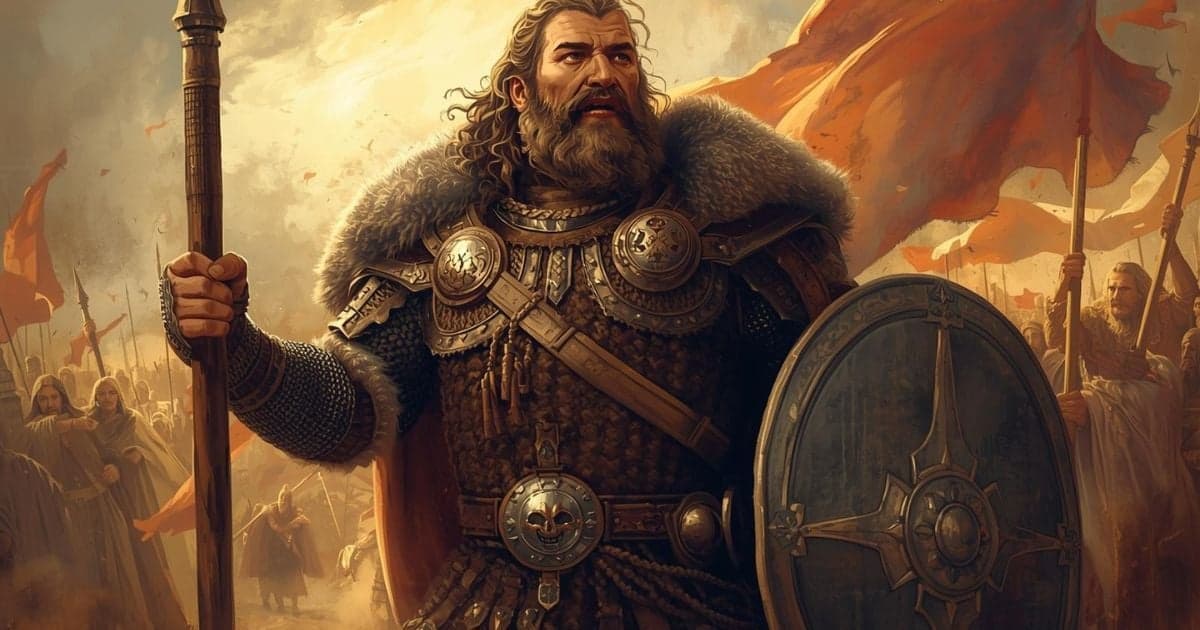
ARGUMENT. THE DUEL OF MENELAUS AND PARIS. The armies being ready to engage, a single combat is agreed upon between Menelaus and Paris (by the intervention of Hector) for the determination of the war. Iris is sent to call Helen to behold the fight. She leads her to the walls of Troy, where Priam sat with his counsellers observing the Grecian leaders on the plain below, to whom Helen gives an account of the chief of them. The kings on either part take the solemn oath for the conditions of the combat. The duel ensues; wherein Paris being overcome, he…
Public-domain chapter text, formatted for reading.
Master this chapter. Complete your experience
Purchase the complete book to access all chapters and support classic literature
Available in paperback, hardcover, and e-book formats
Now let's explore the literary elements.
Key Quotes & Analysis
"The three-and-twentieth day still continues throughout this book."
Context: A pivotal line from the opening of the chapter
The narrator establishes temporal continuity, emphasizing how this single day contains multiple pivotal moments. This detail reflects how crisis situations can feel both endless and compressed, where each hour carries the weight of years.
In Today's Words:
We're still on day twenty-three of this conflict. Like those marathon work sessions where one day feels like it contains an entire project timeline, this single day keeps delivering major plot developments that will reshape everything. Naming the pattern early matters when pride keeps both sides locked in a move they cannot undo.
"She moves a goddess, and she looks a queen!"
Context: A pivotal line from the middle of the chapter
The Trojan elders acknowledge Helen's devastating beauty even while recognizing the destruction it has caused. Their reaction captures the human tendency to admire what we know is harmful, revealing how aesthetic power can override moral judgment.
In Today's Words:
She carries herself with absolute grace and authority. It's like watching someone who commands every room they enter, the kind of presence that makes you understand why people make terrible decisions just to be near them. Naming the pattern early matters when pride keeps both sides locked in a move they cannot undo.
"And joyful nations join in leagues of peace."
Context: A pivotal line from the closing third of the chapter
Hector envisions the war's peaceful resolution through single combat, expressing hope that individual sacrifice can restore collective harmony. His words reveal the deep human longing for conflicts to have clean endings rather than messy, prolonged suffering.
In Today's Words:
Happy countries will form lasting alliances. Like hoping one difficult conversation can resolve years of workplace tension, there's optimism that this one fight will let everyone move forward as allies instead of enemies. Naming the pattern early matters when pride keeps both sides locked in a move they cannot undo.
"Both armies sat the combat to survey."
Context: A pivotal line from the closing third of the chapter
Both armies become spectators to a personal conflict that has consumed them all. This moment captures how individual drama can captivate entire communities, transforming participants into an audience watching their own fate unfold.
In Today's Words:
Both sides settled in to watch the fight. Picture two rival companies whose employees all gather to watch their CEOs duke it out in the parking lot, knowing the outcome will determine everyone's future. Honor cultures still punish the person who reads restraint as weakness until the cost is public.
Thematic Threads
Privilege
In This Chapter
Paris escapes death through divine intervention while others face harsh consequences for lesser actions
Development
Introduced here as divine favoritism, showing how protection operates regardless of merit
In Your Life:
You might notice how certain coworkers always get second chances while others get fired for the same mistakes.
Accountability
In This Chapter
The duel was meant to settle the war justly, but divine interference prevents natural consequences
Development
Building on earlier themes of honor and justice being corrupted by power
In Your Life:
You see this when promised consequences for bad behavior mysteriously disappear when it's time to follow through.
Shame
In This Chapter
Helen protests joining Paris in his bedroom, recognizing the shame of rewarding his cowardice
Development
Helen's awareness of social judgment continues from her earlier appearances
In Your Life:
You might feel this conflict when pressured to support someone whose behavior you know is wrong.
Performance
In This Chapter
Paris looks magnificent until tested, then reveals himself as all appearance with no substance
Development
Introduced here as the gap between public image and private reality
In Your Life:
You encounter this with people who interview well or make great first impressions but can't deliver when it matters.
Manipulation
In This Chapter
Venus manipulates Helen into joining Paris despite her moral objections and shame
Development
Shows how divine/powerful forces override individual agency and moral judgment
In Your Life:
You might recognize this when authority figures pressure you to ignore your instincts about what's right.
You now have the context. Time to form your own thoughts.
Discussion Questions
This is not a test. Five prompts guide you through the chapter, from how it opens to how it closes, so you notice context and rhythm rather than facts to memorize. Sit with each question in your own words. When you see "One way to read it," treat it as a starting point, not the only answer.
- 1
What exactly happens when Paris is about to lose the duel to Menelaus?
analysis • surfaceOne way to read it
Aphrodite intervenes, hides him in mist, and carries him back to his chambers before he can be killed or surrender.
- 2
Why does Venus save Paris even though he is clearly in the wrong and losing fairly?
analysis • mediumOne way to read it
She favors him as her champion and protects her own investment in Troy's prince regardless of merit.
- 3
Where do you see people today who seem to escape consequences no matter what they do?
application • mediumOne way to read it
Strong answers name workplaces, families, or public life where connections erase outcomes others cannot avoid.
- 4
How does the duel's outcome affect the larger war even though Menelaus technically wins?
application • deepOne way to read it
Greece claims victory, but Troy does not honor the settlement because Paris never truly submits.
- 5
What does this chapter reveal about the difference between fairness and power?
reflection • deepOne way to read it
Procedures can look fair while power decides whether the loser must actually live with defeat.
Critical Thinking Exercise
Map Your Own Safety Nets
Make two lists: people in your life who have safety nets (family money, connections, institutional protection) and the safety nets you're building for yourself (skills, savings, relationships, documentation habits). Don't judge either list—just observe the reality of how protection works in your world.
Consider:
- •Safety nets aren't always obvious—sometimes they're cultural or social rather than financial
- •Your safety nets might be different but equally valuable—community support, practical skills, street smarts
- •Recognizing these patterns helps you navigate situations more strategically
Journaling Prompt
Write about a time when you faced consequences while someone else in a similar situation didn't. What protected them that you didn't have access to? How did you handle it, and what would you do differently now?
Coming Up Next...
Chapter 4: When Leaders Break Their Word
The gods aren't done meddling. While the mortals think the war might actually be over, divine politics are about to override human agreements, and someone is going to break the fragile truce in spectacular fashion.