Wide Reads
Literature MattersLife IndexEducators
Sign in
Where to Begin

Agamemnon's Glory and Wounded Pride — The Iliad

The Iliad - Agamemnon's Glory and Wounded Pride

Homer

The Iliad

Agamemnon's Glory and Wounded Pride

Home›Books›The Iliad›Chapter 11: Agamemnon's Glory and Wounded Pride
Previous
11 of 24
Next

Analysis by the Wide Reads editorial team·Reviewed against the source text·Updated December 1, 2025

Summary

Agamemnon's Glory and Wounded Pride

The Iliad by Homer

0:000:00
Listen to Next Chapter

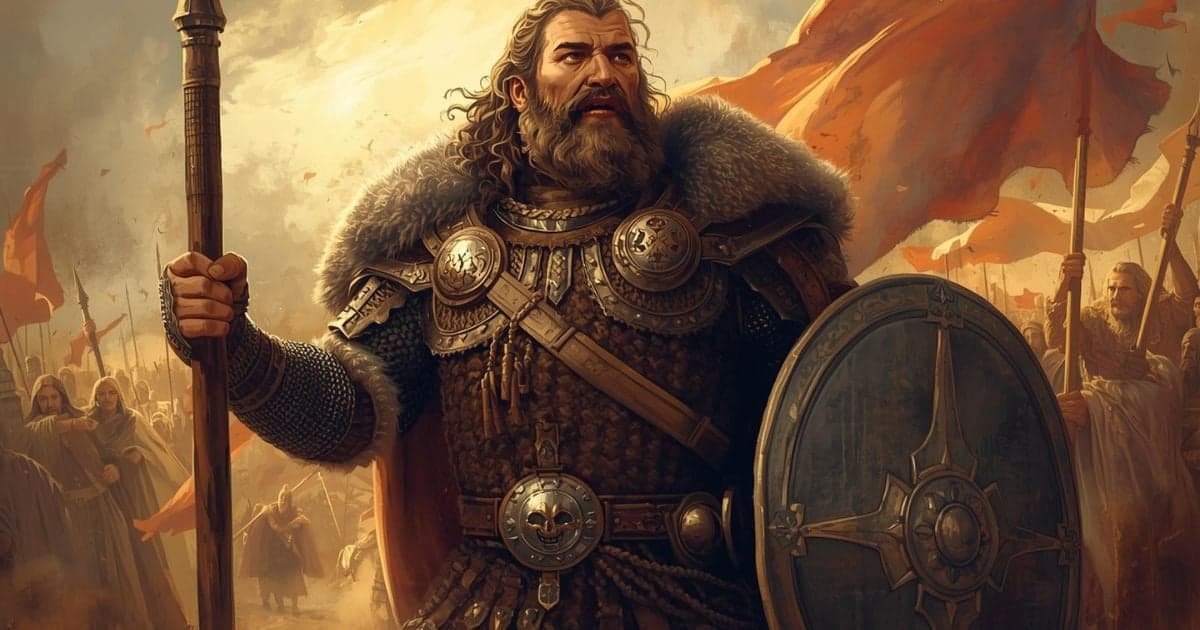
Discord descends on the Greek camp at dawn, and Agamemnon finally fights like the commander his army has needed for weeks. He arms himself in spectacular bronze, gifted years earlier by a Cypriot king, and leads the Myrmidons' neighbors into a slaughter that sweeps the Trojan line back toward the city. Zeus weighs the battle on Ida, tips the scales against Greece, and hurls thunder until even Ajax retreats; only Nestor, trapped when Paris wounds his horse, survives long enough for Diomedes to rescue him before both men flee the lightning. Iris carries Jove's order to Hector: hold back until Agamemnon is wounded, then press the attack. When Coon gashes the king's arm, Agamemnon leaves the field roaring defiance, and the Greek center collapses the moment his presence vanishes.

Hector turns the reversal into a rout. He drives the army toward the ships while Diomedes and Odysseus take serious wounds and Ajax becomes the last organized defense on the plain, absorbing spears on his shield until the Trojans ring him like hunters around a cornered boar. Paris shoots Diomedes out of the fight; Machaon, the army's healer, takes an arrow in the shoulder and Nestor carries him toward the ships. Achilles, watching from his beached fleet, sends Patroclus to learn which hero fell. That errand will matter more than anyone on the beach understands.

Nestor receives Patroclus with wine, hospitality, and a long memory. He recounts his youth among the Pylians, a war against the Epeians, and the day he stood where younger men now falter. The speech is not nostalgia for its own sake: it is a direct plea for Patroclus to persuade Achilles to return, or at least to lend his armor and Myrmidons so Greece can breathe again. Patroclus leaves stirred, finds Eurypylus wounded among the tents, and binds his thigh before hurrying back toward Achilles with Nestor's warning still ringing in his ears.

The chapter's design is momentum seen from both sides. Agamemnon's aristeia proves he can dominate a battlefield, yet one arrow ends his day and with it Greek morale. Hector, restrained early by divine command, becomes unstoppable once the king exits. Homer pairs individual brilliance with structural fragility: armies move not only on tactics but on whether the right leader is still standing. Nestor's digression slows the narrative on purpose, showing how memory and shame work on the next generation when the present battle is already being lost.

By nightfall the Greeks cling to their fortifications, their healer and their best fighters bleeding, while Achilles remains an observer until Patroclus returns with news of catastrophe. Book Eleven is the hinge where private grievance starts to collide with public ruin, and where the poem begins preparing the sacrifice that will finally bring the greatest Greek warrior back into the war.

In this chapter: Terms Characters Key Quotes Themes Modern Story

Why This Matters

Connect literature to life

Skill: Reading Leadership Sustainability

A leader's heroic streak can inspire everyone and still leave the group fragile when it ends. Agamemnon dominates the field until he is wounded, then Greek morale collapses as Hector advances. Build backup leadership before your personal effort becomes the only thing holding the line.

Coming Up in Chapter 12

As the Greek defenses crumble and their greatest warriors fall wounded, Patroclus returns from his mission with devastating news about the state of their army. His report will force Achilles to confront a terrible choice between his wounded pride and his loyalty to his dying comrades..

Share it with friends

PreviousPrevious ChapterNextNext Chapter
Original text
7,617 wordscomplete

Chapter 11

Agamemnon's Glory and Wounded Pride

The saffron morn, with early blushes spread, Now rose refulgent from Tithonus’ bed; With new-born day to gladden mortal sight, And gild the courts of heaven with sacred light: When baleful Eris, sent by Jove’s command, The torch of discord blazing in her hand, Through the red skies her bloody sign extends, And, wrapt in tempests, o’er the fleet descends. High on Ulysses’ bark her horrid stand She took, and thunder’d through the seas and land. Even Ajax and Achilles heard the sound, Whose ships, remote, the guarded navy bound, Thence the black fury through the Grecian throng With horror…

Public-domain chapter text, formatted for reading.

Master this chapter. Complete your experience

Purchase the complete book to access all chapters and support classic literature

Buy at Powell'sBuy on Amazon

Available in paperback, hardcover, and e-book formats

Now let's explore the literary elements.

Key Quotes & Analysis

"No, die, and pay the forfeit of your race."

— Narrator

Context: A pivotal line from the opening of the chapter

In Today's Words:

. That pressure appears whenever power meets grief and neither side can admit what they have lost. That pressure appears whenever power meets grief and neither side can admit what they have lost. That pressure appears whenever power meets grief and neither side can admit what they have lost.

"he glories of the day.” He said: the driver whirls his lengthful thong; The horses fly; the chariot smokes along"

— Jove

Context: A pivotal line from the middle of the chapter

In Today's Words:

. Honor cultures still punish the person who reads restraint as weakness until the cost is public. Honor cultures still punish the person who reads restraint as weakness until the cost is public. Honor cultures still punish the person who reads restraint as weakness until the cost is public.

"Oh, turn to arms; ’tis Ajax claims your aid."

— Ajax

Context: A pivotal line from the closing third of the chapter

Ajax's desperate call for reinforcement shows how even the strongest individuals reach their breaking point when facing overwhelming odds. His plea reveals that heroic endurance has limits and that survival often depends on others answering the call for help.

In Today's Words:

The strongest person on your team is drowning and needs backup immediately. Even your most reliable performer can't handle everything alone when the pressure becomes too intense and the workload becomes impossible. That pressure appears whenever power meets grief and neither side can admit what they have lost.

"Whate’er thy will, Patroclus shall obey."

— Patroclus

Context: A pivotal line from the closing third of the chapter

Patroclus's immediate compliance demonstrates the power of loyalty between close friends, where one person's request becomes another's unquestioned mission. His response shows how deep relationships create automatic commitment that bypasses rational calculation of personal risk.

In Today's Words:

When your best friend asks for something, you don't hesitate or negotiate terms. True friendship means saying yes first and figuring out the consequences later, because their needs automatically become your priorities. Honor cultures still punish the person who reads restraint as weakness until the cost is public.

Thematic Threads

Leadership

In This Chapter

Agamemnon's battlefield leadership proves his worth but creates dangerous dependency when he falls

Development

Evolution from his earlier failures—now we see both the power and peril of effective leadership

In Your Life:

You might see this when you become the go-to person at work and realize everyone depends on you alone.

Class

In This Chapter

The king must prove himself through personal combat, not just political maneuvering

Development

Deepened from earlier themes—class requires performance, not just position

In Your Life:

You might see this when your job title doesn't match what you actually have to prove daily.

Identity

In This Chapter

Agamemnon transforms from political leader to warrior hero, but at great cost

Development

Continues the theme of identity proving—but shows the price of transformation

In Your Life:

You might see this when finally stepping up in a crisis changes how others see and depend on you.

Human Relationships

In This Chapter

The army's morale completely depends on seeing their leaders fight alongside them

Development

Builds on earlier relationship dynamics—trust requires visible commitment

In Your Life:

You might see this when your team needs to see you struggle with them, not just direct from above.

Social Expectations

In This Chapter

A king must lead from the front in battle to maintain legitimacy and inspire troops

Development

Reinforces earlier themes about proving worth through action, not just authority

In Your Life:

You might see this when your role requires you to do the hard work yourself to maintain credibility.

You now have the context. Time to form your own thoughts.

Discussion Questions

This is not a test. Five prompts guide you through the chapter, from how it opens to how it closes, so you notice context and rhythm rather than facts to memorize. Sit with each question in your own words. When you see "One way to read it," treat it as a starting point, not the only answer.

  1. 1

    What happens to the Greek army when Agamemnon is wounded and leaves the battlefield?

    ▶One way to read it

    Momentum reverses quickly as Hector rallies the Trojans and wounded leaders multiply on the Greek side.

    analysis • surface
  2. 2

    How does Nestor use Patroclus's visit to push Achilles back toward the war?

    ▶One way to read it

    He tells war stories and lists the wounded chiefs to show that withdrawal has become catastrophic for Greece.

    analysis • medium
  3. 3

    Why does Agamemnon refuse to spare the sons of Antimachus?

    ▶One way to read it

    He treats their plea as proof of an old council enemy's bloodline and chooses vengeance over ransom.

    application • medium
  4. 4

    Where have you seen a team thrive only while one person carried impossible load?

    ▶One way to read it

    Strong answers describe a workplace or family where success vanished the moment the key person was absent or injured.

    application • deep
  5. 5

    What does Odysseus's stand alone against the Trojans suggest about courage without an audience?

    ▶One way to read it

    He chooses to fight because retreat would shame him, showing that character appears when support is gone.

    reflection • deep

Critical Thinking Exercise

10 minutes

Build Your Backup System

Think about one area where people depend on you heavily - at work, at home, or in your community. Map out what would happen if you suddenly couldn't fulfill that role for a week. Then design a simple backup system that could keep things running without you.

Consider:

  • •What specific knowledge or skills do you have that others don't?
  • •Who could you train to handle the most critical parts of your role?
  • •What simple systems or documentation could you create now, before a crisis hits?

Journaling Prompt

Write about a time when you or your family/workplace was thrown into chaos because one key person was suddenly unavailable. What would have made that situation easier to handle?

Coming Up Next...

Chapter 12: Breaking Through the Wall

As the Greek defenses crumble and their greatest warriors fall wounded, Patroclus returns from his mission with devastating news about the state of their army. His report will force Achilles to confront a terrible choice between his wounded pride and his loyalty to his dying comrades..

Continue to Chapter 12
Previous
Night Raid: Heroes in the Dark
Contents
Next
Breaking Through the Wall
Keep exploring

Continue Exploring

Study guides, teaching tools, themes, and the full library.More ways to read The Iliad: study guides, teaching tools, and the wider library.

  • The Iliad Study Guide
  • Teaching Resources
  • Essential Life Index
  • Browse by Theme
  • All Books

What this chapter teaches

Theme analyses that draw on this chapter and apply it to modern life.

  • Recognizing the Cost of PrideHow wounded pride cripples missions and relationships in Homer
  • Understanding Honor CultureReputation, war prizes, and public respect in Homer

You Might Also Like

The Odyssey cover

The Odyssey

Homer

Also by Homer

Beowulf cover

Beowulf

Unknown

Explores war & conflict

Metamorphoses cover

Metamorphoses

Ovid

Explores identity & self

The Aeneid cover

The Aeneid

Virgil

Explores war & conflict

Browse all 107+ books

Share This Chapter

Know someone who'd enjoy this? Spread the wisdom!

TwitterFacebookLinkedInEmail

Go further with Prestige

Unlock study guides and downloads, early access, and exclusive content — and support free access for everyone.

Subscribe to PrestigeCreate free account
Intelligence Amplifier
Intelligence Amplifier™Powering Wide Reads

Exploring human-AI collaboration through books, essays, and philosophical dialogues. Classic literature transformed into navigational maps for modern life.

2025 Books

→ The Amplified Human Spirit→ The Alarming Rise of Stupidity Amplified→ San Francisco: The AI Capital of the World
Visit intelligenceamplifier.org
hello@widereads.com

WideReads Originals

→ You Are Not Lost→ The Last Chapter First→ The Lit of Love→ Wealth and Poverty→ Wisdom for the Wounded
Arvintech
arvintechAmplify your Mind
Visit at arvintech.com

Navigate

  • Home
  • Library
  • Essential Life Index
  • How It Works
  • Subscribe
  • Account
  • About
  • Contact
  • Authors
  • Suggest a Book
  • Landings

Made For You

  • Trending
  • Students
  • Educators
  • Families
  • Readers
  • Literary Analysis
  • Finding Purpose
  • Letting Go
  • Recovering from a Breakup
  • Corruption
  • Gaslighting in the Classics

Newsletter

Weekly insights from the classics. Amplify Your Mind.

Legal

  • Privacy Policy
  • Terms of Service
  • Editorial Standards
  • Cookie Policy
  • Accessibility

Why Public Domain?

We focus on public domain classics because these timeless works belong to everyone. No paywalls, no restrictions—just wisdom that has stood the test of centuries, freely accessible to all readers.

Public domain books have shaped humanity's understanding of love, justice, ambition, and the human condition. By amplifying these works, we help preserve and share literature that truly belongs to the world.

A Pilgrimage

Powell's City of Books

Portland, Oregon

If you ever find yourself in Portland, walk to the corner of Burnside and 10th. The building takes up an entire city block. Inside is over a million books, new and used on the same shelf, organized by color-coded rooms with names like the Rose Room and the Pearl Room. You can lose an afternoon. You can lose a weekend. You will find a book you have been looking for your whole life, and three you did not know existed.

It is a pilgrimage. We cannot find a bookstore like it anywhere on earth. If you read the classics, and you ever get the chance, go. It belongs on every reader's bucket list.

Visit powells.com

We are not in any way affiliated with Powell's. We are just a very big fan.

© 2026 Wide Reads™. All Rights Reserved.

Intelligence Amplifier™ and Wide Reads™ are proprietary trademarks of Arvin Lioanag.

Copyright Protection: All original content, analyses, discussion questions, pedagogical frameworks, and methodology are protected by U.S. and international copyright law. Unauthorized reproduction, distribution, web scraping, or use for AI training is strictly prohibited. See our Copyright Notice for details.

Disclaimer: The information provided on this website is for general informational and educational purposes only and does not constitute professional, legal, financial, or technical advice. While we strive to ensure accuracy and relevance, we make no warranties regarding completeness, reliability, or suitability. Any reliance on such information is at your own risk. We are not liable for any losses or damages arising from use of this site. By using this site, you agree to these terms.