Wide Reads
Literature MattersLife IndexEducators
Sign in
Where to Begin

The Rendezvous — The Count of Monte Cristo

The Count of Monte Cristo - The Rendezvous

Alexandre Dumas

The Count of Monte Cristo

The Rendezvous

Home›Books›The Count of Monte Cristo›Chapter 38: The Rendezvous
Previous
38 of 117
Next

Analysis by the Wide Reads editorial team·Reviewed against the source text·Updated November 29, 2025

Summary

The Rendezvous

The Count of Monte Cristo by Alexandre Dumas

0:000:00
Listen to Next Chapter

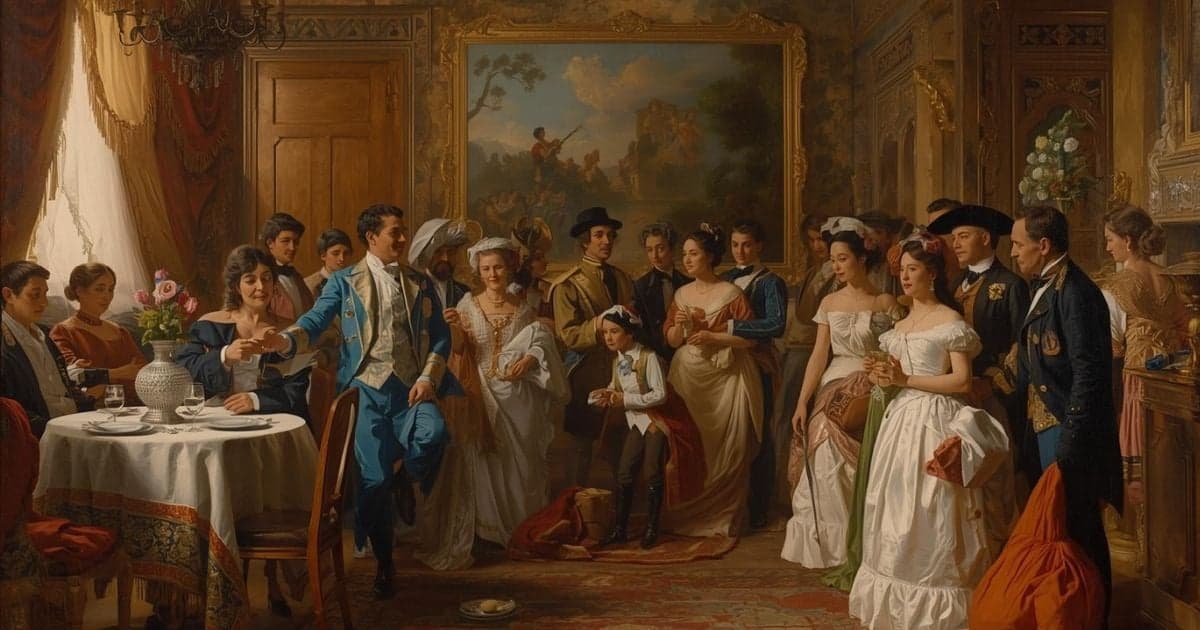
The morning after the catacombs, Albert asks Franz to come while he thanks the Count again. Gratitude is effusive, but the Count deflects it with a smile and names the rescue a trifle of twenty thousand francs saved from travel expenses.

Then the conversation turns practical: the Count has never seen Paris and asks Albert to open society to him. They fix a precise appointment for May 21 at half past ten at No. 27 Rue du Helder, three months away, with the Count's reputation for punctuality treated as part of the bond. Albert announces his own return to France and a projected marriage; the Count will visit Naples before arriving.

Franz finally tells Albert the full Roman story, from Monte Cristo and hashish to the Colosseum and catacombs. Albert reframes every alarming detail as eccentric wealth and philanthropy, arguing that a man who asks only for a Paris introduction deserves trust. They part at the hotel; Franz feels the Count's hand cold as a corpse while Albert leaves a card repeating the May appointment.

In this chapter: Terms Characters Key Quotes Themes Modern Story

Why This Matters

Connect literature to life

Skill: Separating Thanks From Access

Rescue can become a doorway if you are not careful. Albert thanks the Count for his life, and the Count answers by asking for an introduction to Paris on a date he writes into his tablets. Before you grant access to your network, decide whether gratitude has made the request feel smaller than it is.

Coming Up in Chapter 39

Three months later in Paris, Albert's pavilion on the Rue du Helder will fill with sherry, political gossip, and friends waiting for half past ten. Debray and Beauchamp will trade jokes about ministers and marriage before the guest they cannot explain finally appears.

Share it with friends

PreviousPrevious ChapterNextNext Chapter
Original text
3,068 wordscomplete

Chapter 38

The Rendezvous

The first words that Albert uttered to his friend, on the following morning, contained a request that Franz would accompany him on a visit to the count; true, the young man had warmly and energetically thanked the count on the previous evening; but services such as he had rendered could never be too often acknowledged. Franz, who seemed attracted by some invisible influence towards the count, in which terror was strangely mingled, felt an extreme reluctance to permit his friend to be exposed alone to the singular fascination that this mysterious personage seemed to exercise over him, and therefore made…

Public-domain chapter text, formatted for reading.

Master this chapter. Complete your experience

Purchase the complete book to access all chapters and support classic literature

Buy at Powell'sBuy on Amazon

Available in paperback, hardcover, and e-book formats

Now let's explore the literary elements.

Key Quotes & Analysis

"I am wholly a stranger to Paris"

— The Count of Monte Cristo

Context: The Count explains why he needs Albert's help entering society

He presents himself as socially new while already commanding vast influence.

In Today's Words:

The Count says he is wholly a stranger to Paris even after moving through Rome like a sovereign. Powerful people often claim inexperience while arranging precise access. When someone requests an introduction, ask what machinery they already have working behind the request. The pattern is not abstract. It appears whenever power, timing, and social ritual quietly decide what people treat as real.

"three months ere I join you"

— The Count of Monte Cristo

Context: The Count sets the interval before his Paris arrival

Delay lets him arrive as a scheduled event, not a spontaneous guest.

In Today's Words:

The Count gives himself three months before joining Albert in Paris, turning a favor into a timed entry. Delay can build anticipation and control. Notice when someone converts gratitude into a calendar they alone designed. The pattern is not abstract. It appears whenever power, timing, and social ritual quietly decide what people treat as real.

"The 21st of May, at half-past ten in the morning, Rue du Helder"

— The Count of Monte Cristo

Context: The Count records the appointment in his tablets

Precision makes the future meeting feel contractual and inevitable.

In Today's Words:

The Count writes the exact date, hour, and address as if registering a treaty. Specific appointments can signal reliability or fixation. Decide whether precision comforts you or quietly locks you into someone else's timeline. The pattern is not abstract. It appears whenever power, timing, and social ritual quietly decide what people treat as real.

"cold and icy as that of a corpse"

— Narrator (Franz's sensation)

Context: Franz shakes the Count's hand when they part

Physical revulsion survives Albert's cheerful trust.

In Today's Words:

Franz feels the Count's hand cold and icy as a corpse when they say goodbye. The body sometimes registers danger before the mind has language for it. Trust polite manners, but do not ignore a physical recoil you cannot explain away. The pattern is not abstract. It appears whenever power, timing, and social ritual quietly decide what people treat as real.

Thematic Threads

Scheduled invasion

In This Chapter

The Count fixes May 21 at half past ten in Albert's home.

Development

Paris entry is treated like a treaty date, not a casual visit.

In Your Life:

People who plan far ahead may be positioning you before you feel involved.

Split perception

In This Chapter

Franz tells the full Roman truth; Albert hears philanthropy.

Development

The same man becomes a vampire to one friend and a hero to another.

In Your Life:

When two trusted people disagree on someone, compare what each one was asked to give.

Cold contact

In This Chapter

Franz feels the Count's hand like a corpse at parting.

Development

Physical dread persists after social manners succeed.

In Your Life:

A pleasant conversation does not erase a body-level warning.

You now have the context. Time to form your own thoughts.

Discussion Questions

This is not a test. Five prompts guide you through the chapter, from how it opens to how it closes, so you notice context and rhythm rather than facts to memorize. Sit with each question in your own words. When you see "One way to read it," treat it as a starting point, not the only answer.

  1. 1

    Albert offers the count his family influence in Paris, and the count asks only for an introduction to society on a fixed date. Why might he prefer a formal appointment over casual thanks?

    ▶One way to read it

    One way to read it: he has been planning Paris for years and needs a host, not flattery. The May 21 meeting is a contract, not a favor returned in passing.

    analysis • surface
  2. 2

    Franz tells Albert everything from Monte Cristo to the catacombs, but Albert recasts it as travel eccentricity and philanthropy. What lets him flatten Franz's fear?

    ▶One way to read it

    One way to read it: Albert was saved, so the count must be good. He turns debt into social opportunity and calls suspicion ungrateful.

    analysis • medium
  3. 3

    The count's hand feels cold as a corpse when they part. Franz has felt that dread before; Albert notices nothing. How do two friends read the same man so differently?

    ▶One way to read it

    One way to read it: Franz carries secret scenes; Albert carries invitations and cigars. One has evidence, the other has benefit, and benefit wins.

    application • medium
  4. 4

    Albert leaves a card with his Paris address pinned to the hour. When has pinning down a future meeting felt like trust or like a trap?

    ▶One way to read it

    One way to read it: punctuality sounds polite, but the count treats time like a weapon he already loaded. Albert thinks he gained a friend; Franz hears a countdown.

    application • deep
  5. 5

    Franz promises not to repeat the Monte Cristo story yet agrees Albert should host the count in Paris. Where is the line between warning a friend and letting them choose?

    ▶One way to read it

    One way to read it: Franz honors a vow and knows argument failed. He can only watch Albert walk toward a reunion he dreads.

    reflection • deep

Critical Thinking Exercise

10 minutes

Rewrite the Recognition Scene

Rewrite this confrontation from Mercédès' perspective, starting from the moment she realizes she must face the truth. Focus on what she's feeling and thinking as she watches this stranger reveal himself as the man she once loved. What does she see when she looks at him now?

Consider:

  • •How might twenty-five years of guilt and grief have affected her daily life?
  • •What fears might she have about what he's become and what he wants?
  • •How does seeing him alive change everything she believed about her past choices?

Journaling Prompt

Write about a time when someone from your past confronted you about how you'd changed, or when you had to face someone you'd hurt or disappointed years earlier. What did that recognition reveal about who you'd become?

Coming Up Next...

Chapter 39: The Guests

Three months later in Paris, Albert's pavilion on the Rue du Helder will fill with sherry, political gossip, and friends waiting for half past ten. Debray and Beauchamp will trade jokes about ministers and marriage before the guest they cannot explain finally appears.

Continue to Chapter 39
Previous
The Catacombs of Saint Sebastian
Contents
Next
The Guests
Keep exploring

Continue Exploring

Study guides, teaching tools, themes, and the full library.More ways to read The Count of Monte Cristo: study guides, teaching tools, and the wider library.

  • The Count of Monte Cristo Study Guide
  • Teaching Resources
  • Essential Life Index
  • Browse by Theme
  • All Books

Life-skill deep dives in The Count of Monte Cristo

  • Distinguishing Justice from RevengeExplore distinguishing justice from revenge through The Count of Monte Cristo by Alexandre Dumas. Timeless wisdom for modern life.
  • How Trauma Transforms IdentitySee how suffering creates new selves—Edmond Dantès dies in the Château d
  • Surviving Catastrophic BetrayalUnderstand how to endure when people you trusted destroy you—Dantès loses everything yet survives through will and learning, showing growth is...
  • Understanding Collateral DamageRecognize how revenge never limits itself to the guilty—watch how the Count
Moral Dilemmas & EthicsPower & CorruptionIdentity & Self-Discovery

You Might Also Like

Les Misérables: Essential Edition cover

Les Misérables: Essential Edition

Victor Hugo

Explores justice & fairness

Noli Me Tángere cover

Noli Me Tángere

José Rizal

Explores justice & fairness

A Tale of Two Cities cover

A Tale of Two Cities

Charles Dickens

Explores justice & fairness

Crime and Punishment cover

Crime and Punishment

Fyodor Dostoevsky

Explores suffering & resilience

Browse all 106+ books

Share This Chapter

Know someone who'd enjoy this? Spread the wisdom!

TwitterFacebookLinkedInEmail

Go further with Prestige

Unlock study guides and downloads, early access, and exclusive content — and support free access for everyone.

Subscribe to PrestigeCreate free account
Intelligence Amplifier
Intelligence Amplifier™Powering Wide Reads

Exploring human-AI collaboration through books, essays, and philosophical dialogues. Classic literature transformed into navigational maps for modern life.

2025 Books

→ The Amplified Human Spirit→ The Alarming Rise of Stupidity Amplified→ San Francisco: The AI Capital of the World
Visit intelligenceamplifier.org
hello@widereads.com

WideReads Originals

→ You Are Not Lost→ The Last Chapter First→ The Lit of Love→ Wealth and Poverty→ Wisdom for the Wounded
Arvintech
arvintechAmplify your Mind
Visit at arvintech.com

Navigate

  • Home
  • Library
  • Essential Life Index
  • How It Works
  • Subscribe
  • Account
  • About
  • Contact
  • Authors
  • Suggest a Book
  • Landings

Made For You

  • Trending
  • Students
  • Educators
  • Families
  • Readers
  • Literary Analysis
  • Finding Purpose
  • Letting Go
  • Recovering from a Breakup
  • Corruption
  • Gaslighting in the Classics

Newsletter

Weekly insights from the classics. Amplify Your Mind.

Legal

  • Privacy Policy
  • Terms of Service
  • Editorial Standards
  • Cookie Policy
  • Accessibility

Why Public Domain?

We focus on public domain classics because these timeless works belong to everyone. No paywalls, no restrictions—just wisdom that has stood the test of centuries, freely accessible to all readers.

Public domain books have shaped humanity's understanding of love, justice, ambition, and the human condition. By amplifying these works, we help preserve and share literature that truly belongs to the world.

A Pilgrimage

Powell's City of Books

Portland, Oregon

If you ever find yourself in Portland, walk to the corner of Burnside and 10th. The building takes up an entire city block. Inside is over a million books, new and used on the same shelf, organized by color-coded rooms with names like the Rose Room and the Pearl Room. You can lose an afternoon. You can lose a weekend. You will find a book you have been looking for your whole life, and three you did not know existed.

It is a pilgrimage. We cannot find a bookstore like it anywhere on earth. If you read the classics, and you ever get the chance, go. It belongs on every reader's bucket list.

Visit powells.com

We are not in any way affiliated with Powell's. We are just a very big fan.

© 2026 Wide Reads™. All Rights Reserved.

Intelligence Amplifier™ and Wide Reads™ are proprietary trademarks of Arvin Lioanag.

Copyright Protection: All original content, analyses, discussion questions, pedagogical frameworks, and methodology are protected by U.S. and international copyright law. Unauthorized reproduction, distribution, web scraping, or use for AI training is strictly prohibited. See our Copyright Notice for details.

Disclaimer: The information provided on this website is for general informational and educational purposes only and does not constitute professional, legal, financial, or technical advice. While we strive to ensure accuracy and relevance, we make no warranties regarding completeness, reliability, or suitability. Any reliance on such information is at your own risk. We are not liable for any losses or damages arising from use of this site. By using this site, you agree to these terms.