Chapter 52
The First And Rightful Lover
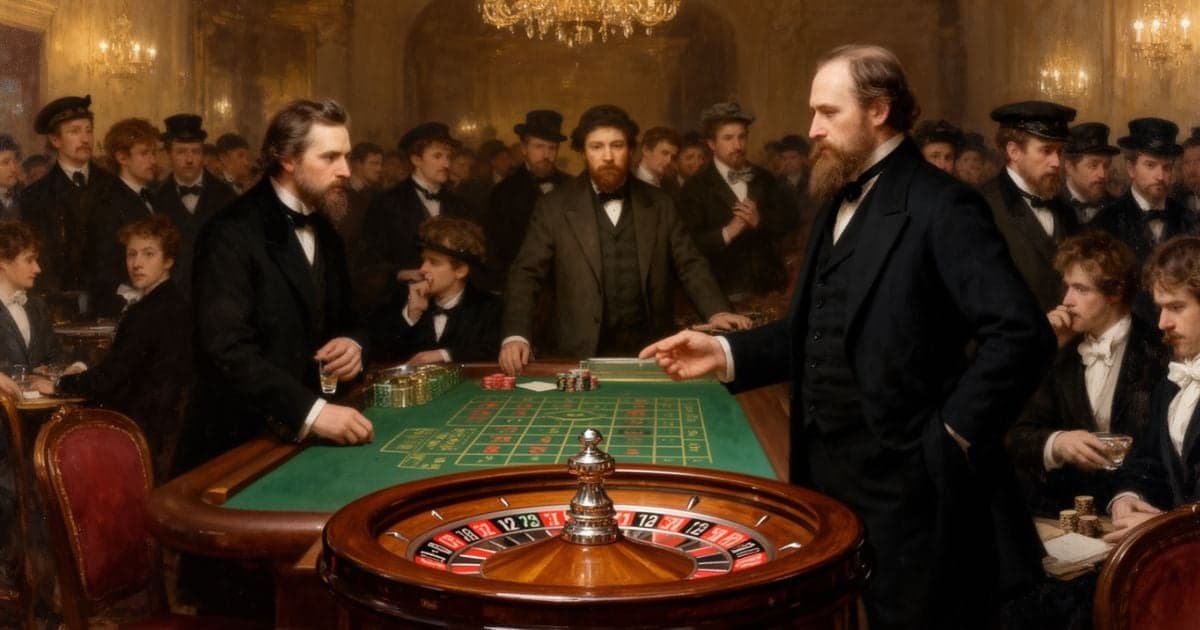
The First And Rightful Lover With his long, rapid strides, Mitya walked straight up to the table. “Gentlemen,” he said in a loud voice, almost shouting, yet stammering at every word, “I ... I’m all right! Don’t be afraid!” he exclaimed, “I—there’s nothing the matter,” he turned suddenly to Grushenka, who had shrunk back in her chair towards Kalganov, and clasped his hand tightly. “I ... I’m coming, too. I’m here till morning. Gentlemen, may I stay with you till morning? Only till morning, for the last time, in this same room?” So he finished, turning to the fat little…
Public-domain chapter text, formatted for reading.
Master this chapter. Complete your experience
Purchase the complete book to access all chapters and support classic literature
Available in paperback, hardcover, and e-book formats
Now let's explore the literary elements.
Key Quotes & Analysis
"may I stay with you till morning? Only till morning, for the last time, in this same room?”"
Context: His entrance after Grushenka’s shriek; he asks the Polish gentlemen
Last night language masks a man who still fights to stay in the scene. He begs the room where he once adored her, not knowing yet he will buy and brawl in it.
In Today's Words:
He asks to remain until morning, only once more, in the very room where she was his queen. That is how people bargain with endings: not by leaving, but by scheduling one more hour. Treat last-night speeches as a warning: the storm is often already inside the door. The room will hold faro, bribes, and marked cards before dawn.
"Pan Mitya offered me three thousand, in the other room to depart. I spat in the _pan’s_ face.”"
Context: After Mitya’s failed bribe in the bedroom
The lover’s rescue becomes merchandise in public. Grushenka hears price before apology, and shame becomes rage.
In Today's Words:
The little Pole tells her Mitya tried to pay him three thousand to go away, and he spat in Mitya’s face. The cruelest part is not the money; it is that everyone in the room learns love is being negotiated like freight. When you try to buy someone out of your pain, you risk proving the other person’s worst fear about what they are worth.
"He was a falcon, but this is a gander. He used to laugh and sing to me.... And I’ve been crying for five years"
Context: After the bribe and the Pole’s wig and manners
Memory collapses against the present body in the room. Five years of grief reclassified as anger at herself and him.
In Today's Words:
She says the man she mourned was a falcon, but the one before her is a gander in a cheap disguise, and she wasted five years crying for a story. That is the beautiful lie breaking: not gentle nostalgia, but disgust at your own devotion. When reality finally matches the smallness you refused to see, freedom often arrives as fury.
"marked cards! I could send you to Siberia for playing with false cards, d’you know that, for it’s just the same as false banknotes"
Context: He pulls the hidden pack from the sofa after the quarrel
The innkeeper ends the romance with evidence. Cheating makes the officer small in a way tears could not.
In Today's Words:
Trifon exposes the marked deck and says it is crime enough for Siberia, like counterfeit money. The fantasy dies not in poetry but in proof. When someone’s dignity was mostly costume, one concrete cheat can do what years of waiting could not. Hold that standard when someone’s honor is mostly performance.
Thematic Threads
Deception
In This Chapter
The Polish men use marked cards to cheat at gambling, while Grushenka has been deceiving herself about her former lover's character
Development
Building from earlier themes of self-deception and hidden motives throughout the family
In Your Life:
You might be lying to yourself about a relationship, job, or situation that you know deep down isn't working
Class
In This Chapter
Mitya desperately tries to impress the Polish 'gentlemen' with expensive champagne and grand gestures, not realizing they're common cheats
Development
Continues the exploration of how social status can be performed rather than earned
In Your Life:
You might find yourself trying to impress people who aren't worth impressing, spending money you don't have to gain respect you'll never get
Liberation
In This Chapter
Grushenka's anger at discovering the truth about her former lover actually frees her from five years of emotional captivity
Development
Introduced here as the positive outcome of facing painful truths
In Your Life:
Sometimes getting angry about how someone really treated you is the first step toward healing and moving on
Desperation
In This Chapter
Mitya throws money around recklessly, trying to buy love, respect, and control over an increasingly chaotic situation
Development
Escalating from his earlier impulsive behaviors and financial troubles
In Your Life:
When you're panicking about losing someone or something, you might make increasingly desperate gestures that actually push people away
Memory
In This Chapter
Grushenka realizes her five-year obsession was based on a romanticized version of events that never matched reality
Development
Introduced here as a major theme about how we edit our past to serve our present emotional needs
In Your Life:
You might be holding onto a version of someone or something that exists more in your memory than in reality
You now have the context. Time to form your own thoughts.
Discussion Questions
This is not a test. Five prompts guide you through the chapter, from how it opens to how it closes, so you notice context and rhythm rather than facts to memorize. Sit with each question in your own words. When you see "One way to read it," treat it as a starting point, not the only answer.
- 1
What does Mitya ask when he enters, and how does Grushenka’s mood toward him shift at first?
analysis • surfaceOne way to read it
Mitya storms into the blue room begging to stay till morning for the last time, weeps, and turns childlike with champagne. Grushenka lets him in at first, softening toward his misery before the Poles and the card game poison the room again.
- 2
What happens at the faro table, and why does Kalganov intervene?
analysis • mediumOne way to read it
The two Poles drink to pre-1772 Poland and rake Mitya at faro until Kalganov stops the game. They cheat with a marked pack Trifon later produces. Kalganov intervenes because the swindle has become naked and Mitya is pouring money he cannot afford to lose.
- 3
What does Mitya offer the Poles in the bedroom, and how does Grushenka learn of it?
application • mediumOne way to read it
Mitya offers three thousand roubles in the bedroom to make them leave. They spit and expose his bribe in Russian. Grushenka hears the attempt to buy her rivals away and reads it as proof she is merchandise, not a woman choosing freely.
- 4
What does Grushenka say about the falcon and the gander, and how does Trifon expose the Poles?
application • deepOne way to read it
Her fury peaks: am I for sale, five years wasted on a falcon who is only a gander in a wig. Trifon produces the marked pack; Vrublevsky insults her; Mitya throws him out. The officer's spell breaks when cheating and bribery strip the romance from both men.
- 5
When have you discovered someone was smaller than the version you had carried for years?
reflection • deepOne way to read it
Grushenka sees the returning officer as a gander in a wig beside Mitya's wasteful falcon love. Idealized lovers and mentors often shrink when seen cheating, begging, or bribing. Disillusion can be grief and liberation at once.
Critical Thinking Exercise
Reality Check Your Golden Memories
Think of something from your past that you often remember fondly - a relationship, job, living situation, or time period. Write down three things you loved about it, then three things that were actually problematic or difficult. Notice how your mind wants to focus on the good and skip over the bad. This isn't about becoming negative - it's about seeing the full picture so you can make better decisions going forward.
Consider:
- •Your brain naturally edits memories to protect your feelings, but this can keep you stuck
- •Idealizing the past often prevents you from appreciating what you have now
- •Seeing the full truth - good and bad - helps you recognize patterns and make better choices
Journaling Prompt
Write about a time when discovering someone's true character was initially painful but ultimately freed you to move forward. How did facing that reality change your life for the better?
Coming Up Next...
Chapter 53: When the Music Stops
With the Polish interlopers gone and Grushenka finally free from her past, Mitya believes his moment has come. But his wild celebration and desperate joy may be premature—forces beyond this room are already closing in on him.