Chapter 08
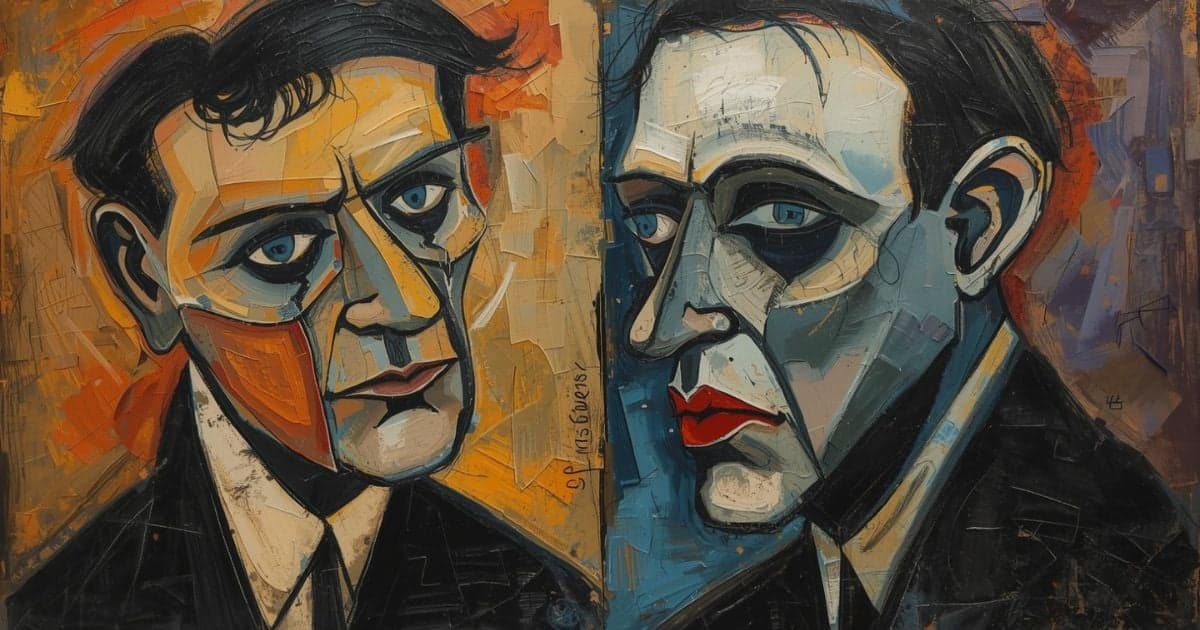
When Your Mind Runs Wild
OF IDLENESS As we see some grounds that have long lain idle and untilled, when grown rich and fertile by rest, to abound with and spend their virtue in the product of innumerable sorts of weeds and wild herbs that are unprofitable, and that to make them perform their true office, we are to cultivate and prepare them for such seeds as are proper for our service; and as we see women that, without knowledge of man, do sometimes of themselves bring forth inanimate and formless lumps of flesh, but that to cause a natural and perfect generation they are…
Public-domain chapter text, formatted for reading.
Master this chapter. Complete your experience
Purchase the complete book to access all chapters and support classic literature
Available in paperback, hardcover, and e-book formats
Now let's explore the literary elements.
Key Quotes & Analysis
"When I lately retired to my own house, with a resolution, as much as possibly I could, to avoid all manner of concern in affairs, and to spend in privacy and repose the little remainder of time I have to live, I fancied I could not more oblige my mind than to suffer it at full leisure to entertain and divert itself, which I now hoped it might henceforth do, as being by time become more settled and mature"
Context: Opening retirement plan
He expects leisure to calm the mind.
In Today's Words:
Montaigne retired to his house intending to avoid public business and spend his remaining time in privacy. He thought age had settled his mind. Many people expect the same from a sabbatical or retirement, only to discover that unstructured time does not automatically bring peace.
"it is like a horse that has broke from his rider, who voluntarily runs into a much more violent career than any horseman would put him to, and creates me so many chimaeras and fantastic monsters, one upon another, without order or design, that, the better at leisure to contemplate their strangeness and absurdity, I have begun to commit them to writing, hoping in time to make it ashamed of itself."
Context: What idleness did to his thoughts
Unbounded mind accelerates beyond any rider's plan.
In Today's Words:
Montaigne says his mind became like a horse that broke from its rider and ran harder than any horseman would urge. Without external structure, thoughts race further, not slower. If your brain speeds up when you stop working, the problem is not weakness; it is missing direction.
"The soul that has no established aim loses itself, for, as it is said-- “Quisquis ubique habitat, Maxime, nusquam habitat."
Context: Epigraph on scattered living
Aimlessness is moral and mental drift.
In Today's Words:
Montaigne quotes Martial: the soul without a settled aim loses itself. Living everywhere at once is living nowhere. When you feel scattered, the fix is not more stimulation but one chosen focus you return to daily, even if it is small, unglamorous, and slow to show results.
"I have begun to commit them to writing, hoping in time to make it ashamed of itself."
Context: Birth of the essay project
Writing externalizes and disciplines mental excess.
In Today's Words:
Montaigne began writing his mental wanderings down, hoping shame would tame them. Putting chaotic thoughts on paper forces distance and pattern recognition you cannot get while spinning in place. If your mind will not quiet, try capturing it before you try to silence it by force.
Thematic Threads
Self-Knowledge
In This Chapter
Montaigne honestly examines his own mental processes instead of pretending retirement brings wisdom
Development
Introduced here
In Your Life:
You might recognize this when you catch yourself being brutally honest about your own patterns instead of maintaining comfortable illusions.
Class
In This Chapter
Montaigne has the luxury of retirement and leisure that reveals problems invisible to working people
Development
Introduced here
In Your Life:
You might see this in how different economic classes face different types of mental health challenges.
Purpose
In This Chapter
The essay reveals how lack of meaningful work creates psychological distress rather than peace
Development
Introduced here
In Your Life:
You might experience this during unemployment, retirement, or any period when your usual sense of purpose disappears.
Mental Health
In This Chapter
Montaigne describes what we'd now recognize as anxiety and intrusive thoughts with remarkable accuracy
Development
Introduced here
In Your Life:
You might recognize this in your own experience of racing thoughts, especially during quiet moments or transitions.
Practical Solutions
In This Chapter
Rather than philosophizing about the problem, Montaigne creates a concrete solution through writing
Development
Introduced here
In Your Life:
You might apply this by finding your own structured activity when life feels chaotic or directionless.
You now have the context. Time to form your own thoughts.
Discussion Questions
This is not a test. Five prompts guide you through the chapter, from how it opens to how it closes, so you notice context and rhythm rather than facts to memorize. Sit with each question in your own words. When you see "One way to read it," treat it as a starting point, not the only answer.
- 1
What does Montaigne compare his restless mind to when he retires to his house?
analysis • surfaceOne way to read it
He compares it to untilled land sprouting weeds, a runaway horse galloping wildly, and sick man's dreams creating vain phantasms. All suggest minds without direction become chaotic rather than peaceful.
- 2
Why does Montaigne's metaphor of the runaway horse work so well to describe his mental state?
analysis • mediumOne way to read it
A riderless horse runs more wildly than one with direction. Similarly, his unguided mind creates more chaos than when occupied with duties. Freedom without purpose becomes its own prison.
- 3
Where do you see Montaigne's 'idle mind trap' in retirement, unemployment, or social media scrolling today?
application • mediumOne way to read it
Retirees often struggle with depression without work structure. Unemployed people spiral into anxiety. Social media feeds our minds endless content without purpose, creating restlessness rather than satisfaction.
- 4
How would you apply Montaigne's writing solution to manage your own mental wandering in a specific situation?
application • deepOne way to read it
When anxious thoughts spiral, write them down to see their absurdity clearly. Like Montaigne journaling his fantasies, putting worries on paper often reveals they're less threatening than they seemed in our heads.
- 5
What does Montaigne's discovery about leisure reveal about the relationship between structure and mental well-being?
reflection • deepOne way to read it
Minds need purposeful constraints to flourish, just as gardens need cultivation. Pure freedom often creates chaos rather than peace. Meaningful activity, even simple writing, provides the structure that allows genuine rest.
Critical Thinking Exercise
Design Your Mental Structure
Think about a time in your life when you had too much unstructured time - maybe during unemployment, illness, or a slow period at work. Map out what your mind actually did during those hours versus what you thought it would do. Then design a simple 'mental structure' you could have used to redirect that mental energy productively.
Consider:
- •Notice the difference between what you expected your mind to do and what it actually did
- •Focus on simple, achievable activities that require just enough mental effort to stay engaged
- •Consider how even 15-20 minutes of structured thinking might have changed your entire day
Journaling Prompt
Write about a current area of your life where your mind tends to 'run wild' with worry or overthinking. What small, purposeful activity could you use to redirect that mental energy when you notice it happening?
Coming Up Next...
Chapter 9: Why Bad Memory Makes Good People
From the chaos of idleness Montaigne turns to liars. His terrible memory becomes a lens for why deception requires keeping stories straight, and why he hates the vice Montaigne confesses he has almost no memory, a defect so famous in his region that forgetting is mistaken for stupidity or ingratitude. He insists memory and understanding differ, and notes that strong memory often pairs with.