Chapter 02
When Grief Goes Too Deep for Words
OF SORROW No man living is more free from this passion than I, who yet neither like it in myself nor admire it in others, and yet generally the world, as a settled thing, is pleased to grace it with a particular esteem, clothing therewith wisdom, virtue, and conscience. Foolish and sordid guise! --[“No man is more free from this passion than I, for I neither love nor regard it: albeit the world hath undertaken, as it were upon covenant, to grace it with a particular favour. Therewith they adorne age, vertue, and conscience. Oh foolish and base ornament!” Florio,…
Public-domain chapter text, formatted for reading.
Master this chapter. Complete your experience
Purchase the complete book to access all chapters and support classic literature
Available in paperback, hardcover, and e-book formats
Now let's explore the literary elements.
Key Quotes & Analysis
"No man living is more free from this passion than I, who yet neither like it in myself nor admire it in others, and yet generally the world, as a settled thing, is pleased to grace it with a particular esteem, clothing therewith wisdom, virtue, and conscience."
Context: Opening stance on sorrow
Montaigne distances himself from grief as virtue while refusing to moralize others.
In Today's Words:
Montaigne says he is freer from excessive sorrow than most people, and he neither indulges it in himself nor admires it in others around him. That stance matters when coworkers treat public grief as proof of depth or virtue. You can respect pain without treating drama as wisdom.
"because only this last affliction was to be manifested by tears, the two first far exceeding all manner of expression."
Context: Answer to Cambyses about why he wept for a friend but not his children
The greatest losses can exceed the body's ability to display them.
In Today's Words:
Psammenitus explains that only the friend's capture could be shown through tears; his children's fates were too large for any expression he could manage. When the worst has already happened, people may look numb while a smaller loss finally opens the floodgates. Do not read silence as indifference.
"being before brimful of grief, the least addition overflowed the bounds of all patience."
Context: French prince breaks after a servant's death
A full emotional container spills over at the smallest extra weight.
In Today's Words:
Montaigne says the prince held together through his brothers' deaths but collapsed when a servant died because grief had already filled him to the brim. A tiny trigger after a major crisis is not silly; it is overflow. Before you judge the reaction, ask how full the person already was.
"Light griefs can speak: deep sorrows are dumb."
Context: Classical support for overwhelmed silence
Small sorrows find words; the deepest often cannot.
In Today's Words:
Seneca's line, quoted here, says light griefs can speak while deep sorrows are dumb and wordless. That is why someone may narrate a parking ticket after a diagnosis they cannot yet name aloud. Listen for what the smaller complaint might be standing in for underneath.
Thematic Threads
Emotional Capacity
In This Chapter
Montaigne explores how extreme grief can overwhelm our ability to express it, while smaller sorrows remain within our emotional bandwidth
Development
Introduced here
In Your Life:
You might recognize this when you stay composed through major crises but break down over minor inconveniences.
Social Expectations
In This Chapter
Society expects visible grief reactions and misinterprets silence as lack of caring or strength
Development
Introduced here
In Your Life:
You might feel pressure to perform your emotions in ways others can understand and validate.
Human Relationships
In This Chapter
Understanding others requires recognizing that silence might indicate the deepest pain, not indifference
Development
Introduced here
In Your Life:
You might need to check on the quiet person differently, knowing they could be carrying the heaviest burden.
Personal Growth
In This Chapter
Montaigne models self-awareness by examining his own emotional responses and capacity for sorrow
Development
Introduced here
In Your Life:
You might learn to honor your own emotional limits instead of judging yourself for going numb during overwhelming times.
Identity
In This Chapter
How we process and express grief becomes part of how we understand ourselves and how others see us
Development
Introduced here
In Your Life:
You might question whether your way of handling pain matches who you think you are or who others expect you to be.
You now have the context. Time to form your own thoughts.
Discussion Questions
This is not a test. Five prompts guide you through the chapter, from how it opens to how it closes, so you notice context and rhythm rather than facts to memorize. Sit with each question in your own words. When you see "One way to read it," treat it as a starting point, not the only answer.
- 1
Why does Montaigne claim that King Psammenitus could weep for a friend but not for his own children being executed?
analysis • surfaceOne way to read it
Psammenitus explained that his children's fate was too enormous for tears, while only the smaller loss of his friend could be expressed through weeping. The deepest sorrows overwhelm our capacity for normal emotional response.
- 2
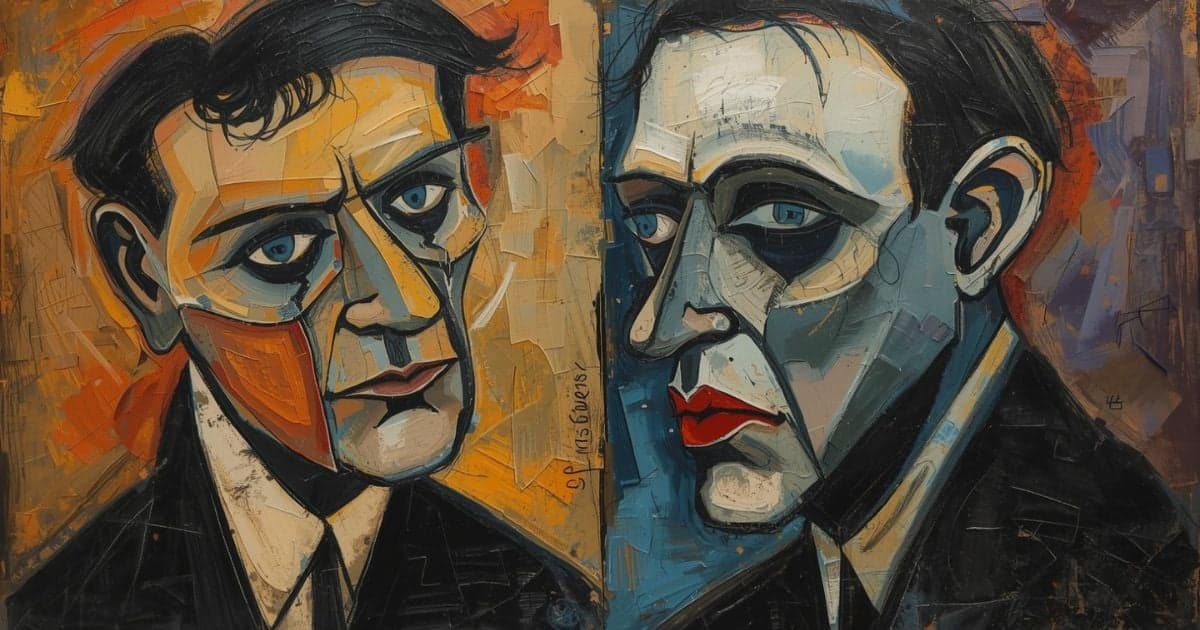
Why does Montaigne think the ancient painter drew the grieving father with a veiled face instead of showing his expression?
analysis • mediumOne way to read it
The painter recognized that some grief exceeds what any facial expression can convey. When sorrow reaches its peak, it renders us speechless and motionless rather than dramatically expressive.
- 3
Where do you see this pattern of quiet devastation versus loud complaints in your own experience or observations?
application • mediumOne way to read it
People often cry over minor frustrations but go silent during major crises like death or divorce. The person who seems 'fine' after a tragedy may actually be experiencing the deepest pain, beyond tears.
- 4
How might understanding this help you respond better when someone seems unnaturally calm after a major loss?
application • deepOne way to read it
Instead of assuming they're handling it well, you might offer quiet presence rather than expecting them to express grief normally. Their silence could indicate overwhelming pain, not indifference.
- 5
What does Montaigne's observation about extreme emotions reveal about how we judge people's reactions to tragedy?
reflection • deepOne way to read it
We often mistake dramatic displays for genuine feeling and quiet responses for callousness. True devastation may actually shut down our expressive systems entirely, making the most affected appear the least reactive.
Critical Thinking Exercise
Map Your Emotional Circuit Breakers
Think about the last six months of your life. Write down one big stressful situation you handled quietly and one small thing that made you react strongly. Then identify what your emotional 'bandwidth' was at each moment. What was already taking up space in your emotional system?
Consider:
- •Notice the difference between your capacity when you're already stretched thin versus when you have emotional reserves
- •Consider whether the 'small' trigger was actually your emotions finding a safe place to release bigger feelings
- •Think about how others might misread your reactions without knowing your full emotional load
Journaling Prompt
Write about a time when you or someone you care about went silent during a crisis. What was really happening beneath that silence, and how might you handle similar situations differently now?
Coming Up Next...
Chapter 3: Why We Live Beyond Ourselves
Montaigne turns from grief's silence to how desire and fear pull us out of the present. He argues that we live ahead of ourselves, chasing futures we cannot hold and reputations we will not see..