Chapter 42
When Duty Meets Temptation
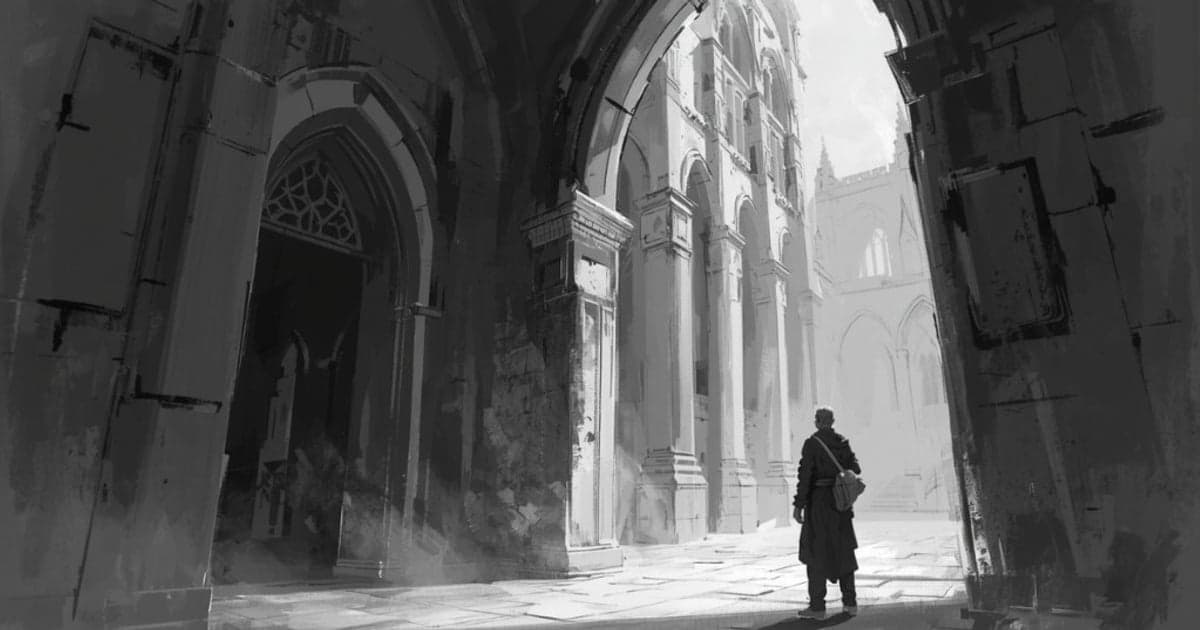
JOSEPH AND HIS BURDEN—BUCK’S HEAD A wall bounded the site of Casterbridge Union-house, except along a portion of the end. Here a high gable stood prominent, and it was covered like the front with a mat of ivy. In this gable was no window, chimney, ornament, or protuberance of any kind. The single feature appertaining to it, beyond the expanse of dark green leaves, was a small door. The situation of the door was peculiar. The sill was three or four feet above the ground, and for a moment one was at a loss for an explanation of this exceptional…
Public-domain chapter text, formatted for reading.
Master this chapter. Complete your experience
Purchase the complete book to access all chapters and support classic literature
Available in paperback, hardcover, and e-book formats
Now let's explore the literary elements.
Key Quotes & Analysis
"tis neighbour Poorgrass"
Context: Mark recognizes Joseph at the Buck's Head
Community ties turn an errand into a public affair.
In Today's Words:
Mark Clark calls Joseph neighbour Poorgrass at the inn, turning a private burial errand into village business. Gossip travels with the coffin. When solemn tasks pass through comic hands, expect delays, drink, and stories that outrun discretion. The pattern is not abstract. It appears whenever charm, guilt, or pride quietly decide what people treat as
"However, I expect our mistress will pay all"
Context: Mark tells the innkeeper Bathsheba will cover the tab
Assumed wealth smooths moral hesitation.
In Today's Words:
Mark says he expects mistress will pay all, so the men drink freely while Fanny waits outside. Financial confidence can excuse behavior that would otherwise feel indecent. When someone spends another person's name, check whether permission exists or only assumption. The pattern is not abstract. It appears whenever charm, guilt, or pride quietly decide what
"hurry, Joseph"
Context: Oak presses Joseph to stop delaying on the road
Competence confronts superstition without cruelty.
In Today's Words:
Oak asks why the hurry is missing when the poor woman's dead and Weatherbury waits. He replaces Joseph's fear with duty. When a group task stalls on one person's dread, steady leadership names the human cost of delay. The pattern is not abstract. It appears whenever charm, guilt, or pride quietly decide what people treat
"chapel members be clever chaps"
Context: Mark contrasts chapel folk with parish humor on the road
Religion and superstition argue while the coffin waits.
In Today's Words:
Mark says chapel members be clever chaps enough in their way while Joseph fears the dead. Comic theology fills the road. When fear and jokes share a wagon, notice which one slows the duty. The pattern is not abstract. It appears whenever charm, guilt, or pride quietly decide what people treat as love, duty, or
Thematic Threads
Duty vs. Comfort
In This Chapter
Joseph abandons his solemn duty to transport Fanny's coffin because alcohol and companionship feel safer than lonely responsibility
Development
Builds on earlier themes of characters choosing personal comfort over obligations
In Your Life:
You might recognize this when you choose scrolling social media over studying for an important certification.
Protective Deception
In This Chapter
Gabriel erases 'and child' from the coffin to shield Bathsheba from painful truth about Troy and Fanny
Development
Continues Gabriel's pattern of trying to protect Bathsheba while keeping her in the dark
In Your Life:
You see this when you don't tell your partner about a family member's criticism to 'keep the peace.'
Social Enablement
In This Chapter
Jan Coggan and Mark Clark encourage Joseph's drinking, normalizing his abandonment of duty through shared irresponsibility
Development
Introduced here as a new dimension of how community can corrupt individual responsibility
In Your Life:
This appears when coworkers encourage you to call in sick when you're just tired, not actually ill.
Class and Dignity
In This Chapter
Fanny Robin, even in death, receives dignity through proper burial arrangements despite her workhouse origins
Development
Continues Hardy's examination of how class affects treatment, even in death
In Your Life:
You might see this in how differently funeral homes treat families based on their ability to pay.
Hidden Consequences
In This Chapter
The coffin's original inscription 'and child' reveals Fanny died in childbirth, information that could devastate Bathsheba
Development
Builds tension around secrets that will eventually surface with explosive results
In Your Life:
This mirrors when medical bills or debt problems are hidden from a spouse until they become unmanageable.
You now have the context. Time to form your own thoughts.
Discussion Questions
This is not a test. Five prompts guide you through the chapter, from how it opens to how it closes, so you notice context and rhythm rather than facts to memorize. Sit with each question in your own words. When you see "One way to read it," treat it as a starting point, not the only answer.
- 1
Why is Joseph Poorgrass reluctant to drive after dark?
analysis • mediumOne way to read it
He fears the dead and suffers from his multiplying eye and drink.
- 2
Who ultimately drives the wagon most reliably?
analysis • mediumOne way to read it
Gabriel Oak takes the reins when the others falter.
- 3
What does Mark Clark assume about payment at the inn?
analysis • mediumOne way to read it
That Bathsheba will pay all charges for the party.
- 4
When have you seen necessary work done badly but still done?
application • deepOne way to read it
Accept examples where flawed people nonetheless completed an essential errand.
- 5
How would this scene change if only Oak handled the coffin from the start?
reflection • deepOne way to read it
Answers should note less delay, less gossip, and fewer chances for rumor to spread.
Critical Thinking Exercise
Map Your Compromise Cascade
Think of a recent situation where you made a small compromise that led to bigger problems. Draw or write out the chain: what was your original intention, what pressures influenced each decision, and where did it lead? Then identify the moment where you could have changed course.
Consider:
- •Look for the moment when 'just this once' became a pattern
- •Notice who encouraged the compromise and what they were avoiding
- •Identify what information or support you needed but didn't have
Journaling Prompt
Write about a time when someone protected you from a difficult truth. Looking back, would you rather have known? How did finding out later change the situation?
Coming Up Next...
Chapter 43: The Truth in the Coffin
Bathsheba waits by the season's first fire while Liddy whispers village rumors about Fanny, and Troy's return will force the truth written on the coffin into the open That evening Bathsheba sits cheerless by the first fire while Liddy offers to sit up; whispers about Fanny make her weep. Maryann's rumour that the coffin holds more than one reaches her; she stares into the.