Wide Reads
Literature MattersLife IndexEducators
Sign in
Where to Begin

The Pleasure Experiment That Failed — Ecclesiastes

Ecclesiastes - The Pleasure Experiment That Failed

Qoheleth

Ecclesiastes

The Pleasure Experiment That Failed

Home›Books›Ecclesiastes›Chapter 2: The Pleasure Experiment That Failed
Previous
2 of 12
Next

Analysis by the Wide Reads editorial team·Reviewed against the source text·Updated December 15, 2025

Summary

The Pleasure Experiment That Failed

Ecclesiastes by Qoheleth

0:000:00
Listen to Next Chapter

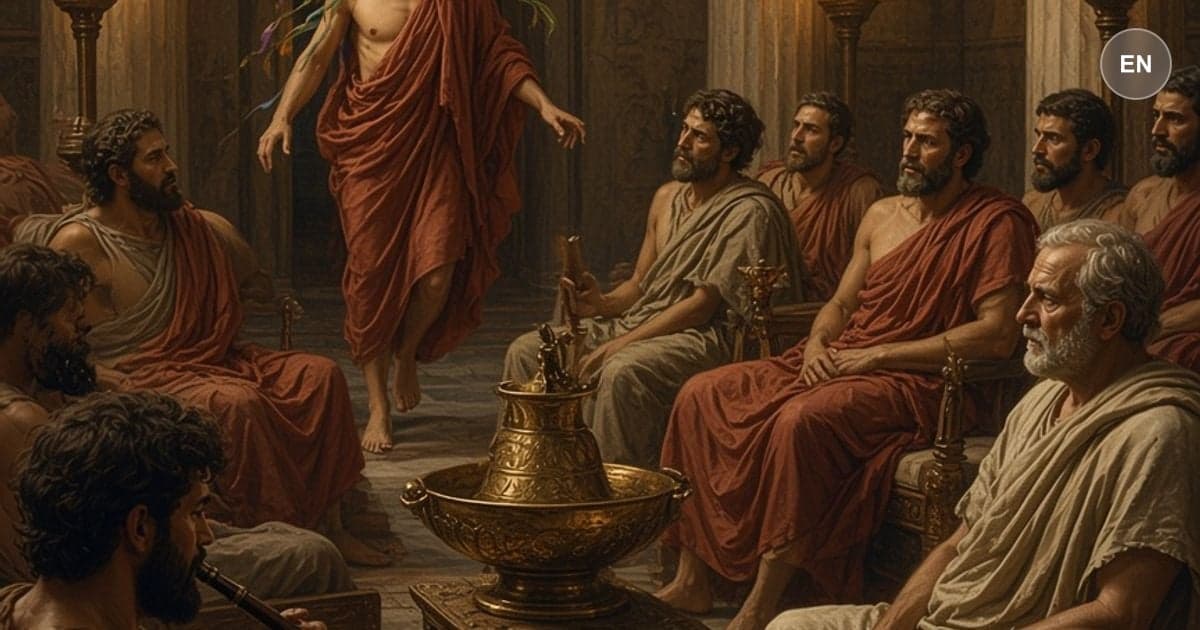
The Preacher decides to run a deliberate experiment on himself. If wisdom brings only grief, maybe pleasure is the answer. So he goes all in: wine, laughter, massive construction projects, houses, vineyards, gardens, orchards, water pools, servants, livestock, silver and gold, singers, and musical instruments of every kind. He becomes greater than anyone before him in Jerusalem. Whatever his eyes desired, he did not withhold. And importantly, he did this with his wisdom still intact; he wasn't being reckless, he was testing the question scientifically. For a time, it works in one sense: his heart found real joy in the work itself: the building, the creating, the achieving. That enjoyment was real.

But then comes the moment of reckoning. He steps back and surveys everything his hands had built and all the labor he had poured out, and it's all vanity, a chasing after wind. Nothing gained.

At this point the Preacher doesn't immediately despair. He turns to compare wisdom against folly one more time. He sees that wisdom is genuinely better than folly, as light is better than darkness. The wise man sees where he's going; the fool stumbles in the dark. And yet, one fate comes to them both. The wise man dies just like the fool, and in time both are forgotten equally. This is the blow that finishes him: 'Why was I then more wise?' If wisdom and foolishness end in the same grave, what was it worth?

So the Preacher says plainly: he hated life. The work done under the sun felt grievous to him. He hated all his labor too, because he would have to leave it to whoever comes after him, and who knows whether that person will be wise or a complete fool? Someone who did none of the work will control everything he built. His days are full of sorrow, his labor is grief, and he cannot even rest at night.

But then something shifts. Out of that darkest moment comes a quiet and grounded conclusion: there is nothing better for a person than to eat and drink and find satisfaction in their work. Not as a grand answer, but as a gift, something that comes from the hand of God. Simple, daily, present. This chapter ends not with triumph but with the smallest possible foothold, and it's enough.


In this chapter: Terms Characters Key Quotes Themes Modern Story

Why This Matters

Connect literature to life

Skill: Recognizing the Hedonic Treadmill

A bigger house, a longer vacation, or the next luxury purchase often promises the calm your last milestone failed to deliver, then leaves you hungry again as soon as it arrives. The Teacher says he will prove himself with mirth, builds houses and vineyards, gathers silver and gold and singers, withholds nothing his eyes desire, surveys all his works, and finds no profit under the sun before concluding there is nothing better than to eat, drink, and enjoy good in his labour. Before you sign for the upgrade or chase the next pleasure binge, notice whether you are on the hedonic treadmill and let today's meal and today's task be enough to receive as gift.

Coming Up in Chapter 3

After hitting rock bottom with pleasure and success, the Teacher discovers something profound about timing. There's a rhythm to life that most people miss, and understanding it changes everything about how we approach our daily struggles.

Share it with friends

PreviousPrevious ChapterNextNext Chapter
Original text
760 wordscomplete

Chapter 02

The Pleasure Experiment That Failed

1I said in mine heart, Go to now, I will prove thee with mirth, therefore enjoy pleasure: and, behold, this also is vanity. 2I said of laughter, It is mad: and of mirth, What doeth it? 3I sought in mine heart to give myself unto wine, yet acquainting mine heart with wisdom; and to lay hold on folly, till I might see what was that good for the sons of men, which they should do under the heaven all the days of their life. 4I made me great works; I builded me houses; I planted me…

Public-domain chapter text, formatted for reading.

Master this chapter. Complete your experience

Purchase the complete book to access all chapters and support classic literature

Buy at Powell'sBuy on Amazon

Available in paperback, hardcover, and e-book formats

Now let's explore the literary elements.

Key Quotes & Analysis

"I said in mine heart, Go to now, I will prove thee with mirth, therefore enjoy pleasure: and, behold, this also is vanity."

— The Teacher

Context: He decides to test whether pleasure and fun can give life meaning after wisdom brought grief

This shows the Teacher's deliberate experiment. He is not guessing about happiness; he is going to live out the pleasure hypothesis and measure the result. Calling it vanity before the test even fully runs suggests he already suspects indulgence will fail, but he needs proof.

In Today's Words:

Fine, I told myself, I will try the full pleasure plan and see if nonstop fun fixes the emptiness. Party more, spend more, say yes to every impulse. He runs the experiment honestly and the answer comes back the same: it still does not hold. Pleasure without limits does not become meaning.

"And whatsoever mine eyes desired I kept not from them, I withheld not my heart from any joy; for my heart rejoiced in all my labour: and this was my portion of all my labour."

— The Teacher

Context: At the peak of his accumulation, before he steps back to judge it all

This is the high point of the experiment, not the crash yet. He withheld nothing from himself and genuinely rejoiced in the work. The failure is not that he felt nothing at all; it is that even real joy in building and acquiring did not survive the moment he looked at the whole picture.

In Today's Words:

If he wanted the house, the trip, the title, or the upgrade, he took it. No budget, no waiting, no talking himself out of desire. For a while it even worked: the projects felt good, the wins felt real. Pleasure can feel good and still evaporate when you ask what any of it was for.

"Therefore I hated life; because the work that is wrought under the sun is grievous unto me: for all is vanity and vexation of spirit."

— The Teacher

Context: After comparing wisdom and folly and realizing both face the same death and the same forgetting

This is the emotional bottom of the chapter. The Teacher is not mildly disappointed; he says he hated life itself. Work under the sun feels grievous because the same fate meets the wise and the fool, and nothing built here lasts on its own terms.

In Today's Words:

This is the crash after the climb: not a bad week, but hatred of the whole setup. You built, achieved, indulged, outthought people, and still landed in the same graveyard math as everyone else. When work feels grievous instead of purposeful, you are hearing the Teacher at his lowest point.

"There is nothing better for a man, than that he should eat and drink, and that he should make his soul enjoy good in his labour. This also I saw, that it was from the hand of God."

— The Teacher

Context: The quiet conclusion after despair over inheritance, sleepless grief, and vanity

After listing every reason to despair, the Teacher does not offer a grand solution. He lands on something small and present: eat, drink, find good in today's work. It is not triumph; it is a gift received in the ordinary, not manufactured by the next acquisition.

In Today's Words:

After all the building and all the emptiness, he does not tell you to chase bigger goals. He tells you to eat your meal, drink your drink, and let today's work be enough to enjoy. Not a motivational poster. Satisfaction in the present task, received as gift rather than extracted from the next promotion.

Thematic Threads

Class

In This Chapter

The Teacher uses extreme wealth to test whether material success brings meaning, discovering that even unlimited resources can't purchase satisfaction

Development

Building on chapter 1's intellectual pursuits, now exploring whether economic advantage provides answers

In Your Life:

You might notice how much mental energy you spend comparing your financial situation to others or believing money would solve your core problems

Identity

In This Chapter

The Teacher constructs an identity around being the most successful person in Jerusalem, only to discover this external identity feels hollow

Development

Expanding from personal worth through wisdom to worth through achievement and status

In Your Life:

You might catch yourself defining who you are by your job title, possessions, or accomplishments rather than your character or relationships

Social Expectations

In This Chapter

The Teacher meets every cultural definition of success—wealth, power, projects, pleasure—yet still feels empty, questioning society's promises

Development

Introduced here as the Teacher directly tests what his culture says should bring fulfillment

In Your Life:

You might recognize pressure to pursue goals that look impressive to others but don't actually align with what brings you peace

Personal Growth

In This Chapter

True growth comes not from accumulating more but from learning to find satisfaction in simple, present-moment experiences

Development

Shifting from growth through knowledge acquisition to growth through appreciation and presence

In Your Life:

You might discover that your biggest breakthroughs come from changing your perspective on what you already have, not getting something new

Human Relationships

In This Chapter

Despite having servants, entertainers, and unlimited social access, the Teacher experiences profound isolation in his success

Development

Introduced here as the Teacher realizes that achievement-focused life can actually distance you from meaningful connection

In Your Life:

You might notice how pursuing individual success can sometimes conflict with the time and energy needed for deep relationships

You now have the context. Time to form your own thoughts.

Discussion Questions

This is not a test. Five prompts guide you through the chapter, from how it opens to how it closes, so you notice context and rhythm rather than facts to memorize. Sit with each question in your own words. When you see "One way to read it," treat it as a starting point, not the only answer.

  1. 1

    What experiment does the Teacher run at the start of the chapter, and what kinds of pleasure and projects does he pursue?

    ▶One way to read it

    He tests pleasure with wine, laughter, massive building projects, wealth, singers, and every desire his eyes wanted, withholding nothing from himself.

    analysis • surface
  2. 2

    Why does the Teacher say he hated life even after concluding that wisdom is better than folly?

    ▶One way to read it

    Wisdom and folly share the same death and the same forgetting, so even being wiser than everyone before him could not protect him from vanity and grief.

    analysis • medium
  3. 3

    The Teacher worries that a fool may inherit everything he built. Where do you see that fear in family businesses, estates, or careers people leave behind?

    ▶One way to read it

    Parents worry a business will pass to heirs who waste it; builders fear successors who never earned the work will control everything they made.

    application • medium
  4. 4

    The chapter ends by finding good in eating, drinking, and enjoying daily labor. How is that different from the pleasure experiment that failed at the beginning?

    ▶One way to read it

    It is not another acquisition but a present gift: eat, drink, and find good in today's labor rather than treating satisfaction as a future payoff.

    application • deep
  5. 5

    If both the wise and the fool are forgotten and die the same way, what would change about how you spend this week?

    ▶One way to read it

    You might invest less energy in legacy-building and more in enjoying today's work, food, and relationships while you still have them.

    reflection • deep

Critical Thinking Exercise

10 minutes

Track Your Own Hedonic Treadmill

Think of something you really wanted in the past year—a purchase, promotion, relationship status, or achievement. Write down how you felt before getting it, right after getting it, and how you feel about it now. Then identify what you're currently chasing that you believe will bring lasting satisfaction.

Consider:

  • •Notice the pattern of anticipation being stronger than actual satisfaction
  • •Consider whether your current chase might follow the same pattern
  • •Think about what you already have that you've stopped appreciating

Journaling Prompt

Write about a time when you got exactly what you thought you wanted but felt empty afterward. What did that teach you about where real satisfaction comes from?

Coming Up Next...

Chapter 3: Everything Has Its Season

After hitting rock bottom with pleasure and success, the Teacher discovers something profound about timing. There's a rhythm to life that most people miss, and understanding it changes everything about how we approach our daily struggles.

Continue to Chapter 3
Previous
Everything Is Meaningless
Contents
Next
Everything Has Its Season
Keep exploring

Continue Exploring

Study guides, teaching tools, themes, and the full library.More ways to read Ecclesiastes: study guides, teaching tools, and the wider library.

  • Ecclesiastes Study Guide
  • Teaching Resources
  • Essential Life Index
  • Browse by Theme
  • All Books

What this chapter teaches

Theme analyses that draw on this chapter and apply it to modern life.

  • Confronting Your MortalityHow Ecclesiastes uses death not as despair but as the sharpest tool for focusing on what truly matters while you still have time.
  • Finding Meaning When Nothing LastsQoheleth strips away every false source of meaning — wealth, wisdom, pleasure, legacy — to find what actually makes a life worthwhile.
  • Questioning False PursuitsThe Teacher tests every ambition — wealth, wisdom, pleasure, legacy — and finds them vapor. What are you chasing that won
  • The Art of ContentmentExplore art of contentment through Ecclesiastes. Life lessons from classic literature applied to modern challenges.

You Might Also Like

The Book of Job cover

The Book of Job

Anonymous

Explores personal growth

Meditations cover

Meditations

Marcus Aurelius

Explores mortality & legacy

Thus Spoke Zarathustra cover

Thus Spoke Zarathustra

Friedrich Nietzsche

Explores personal growth

The Bhagavad Gita cover

The Bhagavad Gita

Vyasa

Explores morality & ethics

Browse all 106+ books

Share This Chapter

Know someone who'd enjoy this? Spread the wisdom!

TwitterFacebookLinkedInEmail

Go further with Prestige

Unlock study guides and downloads, early access, and exclusive content — and support free access for everyone.

Subscribe to PrestigeCreate free account
Intelligence Amplifier
Intelligence Amplifier™Powering Wide Reads

Exploring human-AI collaboration through books, essays, and philosophical dialogues. Classic literature transformed into navigational maps for modern life.

2025 Books

→ The Amplified Human Spirit→ The Alarming Rise of Stupidity Amplified→ San Francisco: The AI Capital of the World
Visit intelligenceamplifier.org
hello@widereads.com

WideReads Originals

→ You Are Not Lost→ The Last Chapter First→ The Lit of Love→ Wealth and Poverty→ Wisdom for the Wounded
Arvintech
arvintechAmplify your Mind
Visit at arvintech.com

Navigate

  • Home
  • Library
  • Essential Life Index
  • How It Works
  • Subscribe
  • Account
  • About
  • Contact
  • Authors
  • Suggest a Book
  • Landings

Made For You

  • Trending
  • Students
  • Educators
  • Families
  • Readers
  • Literary Analysis
  • Finding Purpose
  • Letting Go
  • Recovering from a Breakup
  • Corruption
  • Gaslighting in the Classics

Newsletter

Weekly insights from the classics. Amplify Your Mind.

Legal

  • Privacy Policy
  • Terms of Service
  • Editorial Standards
  • Cookie Policy
  • Accessibility

Why Public Domain?

We focus on public domain classics because these timeless works belong to everyone. No paywalls, no restrictions—just wisdom that has stood the test of centuries, freely accessible to all readers.

Public domain books have shaped humanity's understanding of love, justice, ambition, and the human condition. By amplifying these works, we help preserve and share literature that truly belongs to the world.

A Pilgrimage

Powell's City of Books

Portland, Oregon

If you ever find yourself in Portland, walk to the corner of Burnside and 10th. The building takes up an entire city block. Inside is over a million books, new and used on the same shelf, organized by color-coded rooms with names like the Rose Room and the Pearl Room. You can lose an afternoon. You can lose a weekend. You will find a book you have been looking for your whole life, and three you did not know existed.

It is a pilgrimage. We cannot find a bookstore like it anywhere on earth. If you read the classics, and you ever get the chance, go. It belongs on every reader's bucket list.

Visit powells.com

We are not in any way affiliated with Powell's. We are just a very big fan.

© 2026 Wide Reads™. All Rights Reserved.

Intelligence Amplifier™ and Wide Reads™ are proprietary trademarks of Arvin Lioanag.

Copyright Protection: All original content, analyses, discussion questions, pedagogical frameworks, and methodology are protected by U.S. and international copyright law. Unauthorized reproduction, distribution, web scraping, or use for AI training is strictly prohibited. See our Copyright Notice for details.

Disclaimer: The information provided on this website is for general informational and educational purposes only and does not constitute professional, legal, financial, or technical advice. While we strive to ensure accuracy and relevance, we make no warranties regarding completeness, reliability, or suitability. Any reliance on such information is at your own risk. We are not liable for any losses or damages arising from use of this site. By using this site, you agree to these terms.