Wide Reads
Literature MattersLife IndexEducators
Sign in
Where to Begin

When the Wicked Seem to Win — The Consolation of Philosophy

The Consolation of Philosophy - When the Wicked Seem to Win

Boethius

The Consolation of Philosophy

When the Wicked Seem to Win

Home›Books›The Consolation of Philosophy›Chapter 4: When the Wicked Seem to Win
Previous
4 of 5
Next

Analysis by the Wide Reads editorial team·Reviewed against the source text·Updated December 3, 2025

Summary

When the Wicked Seem to Win

The Consolation of Philosophy by Boethius

0:000:00
Listen to Next Chapter

You can agree that God is good in theory and still want to throw the book when the wicked prosper.

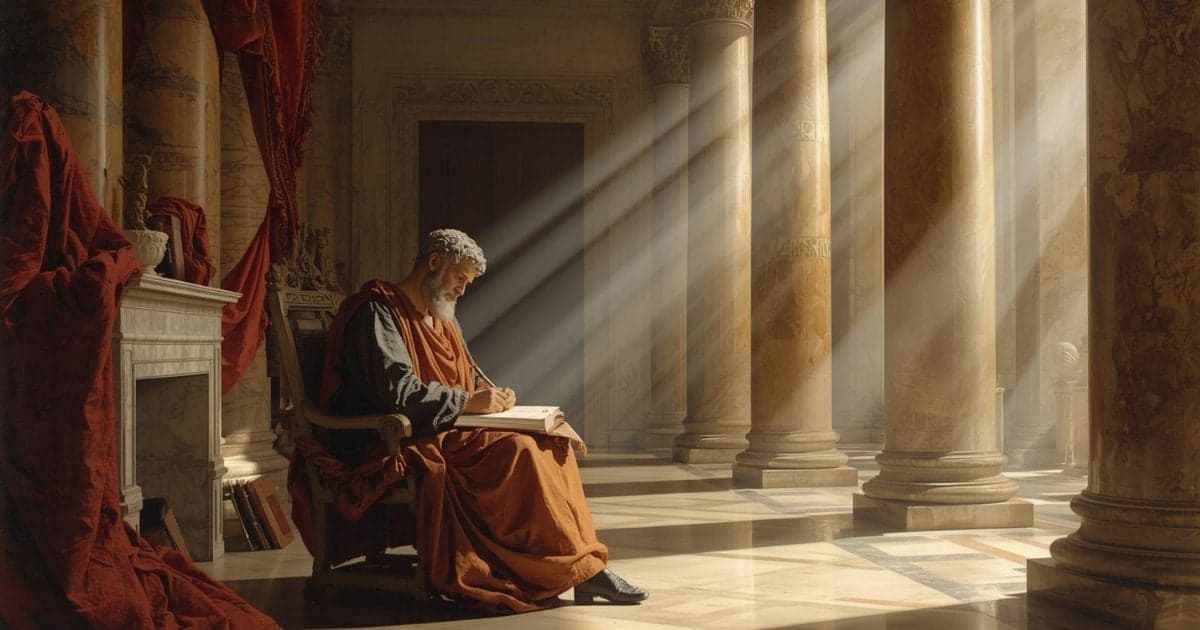
That is Boethius at the opening of Book IV. He accepts Philosophy's ladder: happiness, the good, divine order. Then he points at the world from his cell. Virtue punished. Crime unpunished. The innocent disgraced, the cruel elevated. He is not posing a classroom problem. He is describing the political ruin that may kill him while his enemies celebrate.

Philosophy does not tell him to stop looking. She meets the scandal head-on with a series of paradoxes that feel outrageous until you follow the steps. Only the good truly have power, she argues, drawing on Plato's Gorgias, where to will evil is not to will at all: the wicked may move armies and sign decrees, but they cannot accomplish what they ultimately will, because they will happiness and destroy themselves chasing substitutes. Whoever gets what he wants without getting the good never had real power, only appetite dressed as command.

She insists that vice does not escape its account and reward does not skip the virtuous; the timing is hidden, not cancelled. The tyrant who looks strongest may be weakest in the only sense that matters. Then she turns the knife: the wrongdoer who succeeds is more wretched than the victim; the criminal who escapes punishment is worse off than the one who is punished. Not because pain is pleasant, but because unchecked vice eats the soul that must live with itself. Boethius answers the way honest people do: the logic may cohere, but the front page does not. Along the way she dismantles the idea that punishment is always visible as punishment. Sometimes the virtuous suffer because the world is broken; sometimes the wicked flourish because fortune is indifferent to merit. Philosophy does not pretend those facts away. She argues that the wicked man's success is not strength but a deeper kind of lack: he has what he wanted and still is not what he wanted to be. The good man, by contrast, cannot lose the one thing that matters most, because virtue is not a title fortune can revoke.

Philosophy supports the argument with stories that are not decoration. Ulysses loses his crew because Circe's pleasure turned men into beasts; the fable is a mirror for anyone who trades judgment for appetite and calls the result freedom. Examples of ruin pile up from history and myth: power without virtue ends in self-destruction even when the world applauds the rise. The applause is part of the trap, because it convinces the crowd and the tyrant alike that the ascent means approval from reality itself.

So she changes the lens. Providence is God's plan held complete in one eternal view: simple, whole, not hurried along a corridor of time. Fate is that plan unfolding here, event by event, in the world we actually live in. From inside a single event, justice looks random. From the whole, even what harms you may be discipline, correction, or the stripping away of what was never yours to keep. The distinction is not a trick to silence grief; it is a way to say that your chapter is real and still not the entire book. She compares the eternal view to a spectator who sees the whole play at once while the actors on stage experience only their scene. That image does not erase Boethius's pain. It gives him a reason not to let one scene rewrite his entire theology.

Her hardest claim comes last: every fortune, rightly understood, is good fortune for the soul aimed at the good. That does not call evil good. It does not ask Boethius to enjoy his cell. It says the outrage you feel is often the pain of seeing one chapter without the book, and that the wicked's apparent victory is a kind of poverty disguised as triumph. She even argues that Providence can use the wicked to improve the wicked, a claim that sounds impossible until you remember people who changed only after disaster stripped their illusions: seeing injustice clearly can turn some toward the good they had abandoned.

Book IV is long because the scandal is serious. Boethius keeps interrupting with the objection every honest reader feels: if this is true, why does the world look so unjust right now? Philosophy treats those interruptions as part of the cure, not a failure of faith. This chapter is for anyone who has watched the wrong person win. It does not offer a timetable for justice. It offers a way to refuse despair without lying to yourself: the story is larger than the scene you are in, and your task may still be to remain good inside it, even when you cannot yet see how the whole story resolves.

In this chapter: Terms Characters Key Quotes Themes Modern Story

Why This Matters

Connect literature to life

Skill: Separating Appearance from Moral Judgment

When the wrong people keep winning, it is easy to decide the world has no moral order. Boethius names that scandal from his cell, and Philosophy answers with paradox after paradox: the wicked lack true power, punishment delayed is not denied, and Providence sees the whole plan while Fate unfolds it piece by piece in time. Hold your outrage honestly without treating one cruel chapter as the entire story.

Coming Up in Chapter 5

Boethius accepts God's goodness and the hidden order of fortune, but one fear remains: if God foreknows everything, is human freedom only an illusion? The last book takes up fate, foreknowledge, and choice.

Share it with friends

PreviousPrevious ChapterNextNext Chapter
Original text
9,115 wordscomplete

Chapter 04

When the Wicked Seem to Win

Softly and sweetly Philosophy sang these verses to the end without losing aught of the dignity of her expression or the seriousness of her tones; then, forasmuch as I was as yet unable to forget my deeply-seated sorrow, just as she was about to say something further, I broke in and cried: 'O thou guide into the way of true light, all that thy voice hath uttered from the beginning even unto now has manifestly seemed to me at once divine contemplated in itself, and by the force of thy arguments placed beyond the possibility of overthrow. Moreover, these truths…

Public-domain chapter text, formatted for reading.

Master this chapter. Complete your experience

Purchase the complete book to access all chapters and support classic literature

Buy at Powell'sBuy on Amazon

Available in paperback, hardcover, and e-book formats

Now let's explore the literary elements.

Key Quotes & Analysis

"But, lo! herein is the very chiefest cause of my grief--that, while there exists a good ruler of the universe, it is possible that evil should be at all, still more that it should go unpunished. Surely thou must see how deservedly this of itself provokes astonishment. But a yet greater marvel follows: While wickedness reigns and flourishes, virtue not only lacks its reward, but is even thrust down and trampled under the feet of the wicked, and suffers punishment in the place of crime. That this should happen under the rule of a God who knows all things and can do all things, but wills only the good, cannot be sufficiently wondered at nor sufficiently lamented.'"

— Boethius

Context: Opening protest after Book III: God is good, yet evil and unpunished wickedness remain

Sets the book's problem: not abstract theodicy but Boethius's lived outrage at injustice.

"the good are always strong, the bad always weak and impotent"

— Philosophy

Context: Philosophy previews the paradoxes that will answer Boethius's complaint

Reverses the apparent power of villains: moral strength belongs only to the good.

"wise alone are able to do what they would, while the wicked follow their own hearts' lust, but can _not_ accomplish what they would."

— Philosophy

Context: From the argument that ability to do evil is not real power (Plato's Gorgias)

The wicked may get their way in the world but cannot achieve what they ultimately will: happiness.

"'That absolutely every fortune is good fortune.'"

— Philosophy

Context: Climax of Book IV: reframing all fortune under divine order

Not that pain is imaginary, but that fortune always serves the good when seen from the whole.

Thematic Threads

Class

In This Chapter

High office and worldly success no longer mark the truly powerful; virtue and vice are re-ranked by an eternal standard

Development

Deepened from Books II–III: external rank is not only unstable but morally misleading

In Your Life:

You might assume the person with the title is winning, this book asks whether they are free, just, or happy inside.

Identity

In This Chapter

Boethius must decide whether he is defined by his enemies' victory or by participation in the good

Development

Moves from finding happiness in God to defending that claim against the world's counter-evidence

In Your Life:

You might let someone else's unfair win tell you that your integrity was pointless.

Social Expectations

In This Chapter

Society treats visible success as proof of worth; Philosophy dismantles that equation

Development

Completes the critique of appearances begun with Fortune's gifts

In Your Life:

You might read promotions, verdicts, or viral fame as moral verdicts when they are only events in time.

Personal Growth

In This Chapter

Growth here means expanding perspective, accepting that present suffering may be discipline or hidden reward

Development

From inner happiness (Book III) to trusting the order that contains suffering (Book IV)

In Your Life:

You might need meaning not only when you lose status but when bad people seem to thrive.

Human Relationships

In This Chapter

Justice toward others is grounded in the truth that harming another harms the wrongdoer most

Development

Extends virtue ethics from the self to the moral logic of crime and punishment

In Your Life:

You might want revenge, but Philosophy asks who is actually more wretched, the victim or the unpunished wrongdoer.

You now have the context. Time to form your own thoughts.

Discussion Questions

This is not a test. Five prompts guide you through the chapter, from how it opens to how it closes, so you notice context and rhythm rather than facts to memorize. Sit with each question in your own words. When you see "One way to read it," treat it as a starting point, not the only answer.

  1. 1

    What scandal does Boethius raise at the opening of Book IV?

    ▶One way to read it

    The wicked prosper while the virtuous suffer—his cell is evidence, not a classroom hypothetical.

    analysis • surface
  2. 2

    How does Philosophy argue that only the good truly have power?

    ▶One way to read it

    Drawing on Plato's Gorgias: the wicked will evil outcomes they cannot achieve; real willing aims at the good, so crime is weakness, not strength.

    analysis • medium
  3. 3

    Why does Philosophy not tell Boethius to stop looking at injustice?

    ▶One way to read it

    She meets the scandal directly with paradox—reframing punishment and reward within providence rather than denying his experience.

    application • medium
  4. 4

    How can virtue punished and crime unpunished coexist with divine order?

    ▶One way to read it

    Temporal outcomes mislead; ultimate justice belongs to providence's view, where evil lacks what it pretends to gain.

    application • deep
  5. 5

    When have you struggled to believe goodness matters because wrong seemed to win in plain sight?

    ▶One way to read it

    Book IV refuses cheap comfort while insisting the moral universe is not absurd from the highest perspective.

    reflection • deep

Critical Thinking Exercise

10 minutes

Map a Moral Scandal

Describe one situation where someone wrong seemed to win (at work, in politics, in a relationship, online). Write three columns: (1) what happened that you can see, (2) what you assume it means about justice, (3) what you cannot know about causes, character, or long-term effects. Then ask: am I judging a whole story from one chapter?

Consider:

  • •Distinguish how something feels from what follows logically about the whole universe
  • •Notice if you are equating visible success with real happiness or power
  • •Consider whether delayed justice is the same as no justice

Journaling Prompt

Write about a time the wicked seemed to win. What did you conclude about the world, and what would change if you could see ten years forward?

Coming Up Next...

Chapter 5: Freedom Under God's Sight

Boethius accepts God's goodness and the hidden order of fortune, but one fear remains: if God foreknows everything, is human freedom only an illusion? The last book takes up fate, foreknowledge, and choice.

Continue to Chapter 5
Previous
The Path to True Happiness
Contents
Next
Freedom Under God's Sight
Keep exploring

Continue Exploring

Study guides, teaching tools, themes, and the full library.More ways to read The Consolation of Philosophy: study guides, teaching tools, and the wider library.

  • The Consolation of Philosophy Study Guide
  • Teaching Resources
  • Essential Life Index
  • Browse by Theme
  • All Books

You Might Also Like

Letters from a Stoic cover

Letters from a Stoic

Seneca

Explores suffering & resilience

Meditations cover

Meditations

Marcus Aurelius

Explores personal growth

The Dhammapada cover

The Dhammapada

Buddha

Explores suffering & resilience

Divine Comedy cover

Divine Comedy

Dante Alighieri

Explores suffering & resilience

Browse all 106+ books

Share This Chapter

Know someone who'd enjoy this? Spread the wisdom!

TwitterFacebookLinkedInEmail

Go further with Prestige

Unlock study guides and downloads, early access, and exclusive content — and support free access for everyone.

Subscribe to PrestigeCreate free account
Intelligence Amplifier
Intelligence Amplifier™Powering Wide Reads

Exploring human-AI collaboration through books, essays, and philosophical dialogues. Classic literature transformed into navigational maps for modern life.

2025 Books

→ The Amplified Human Spirit→ The Alarming Rise of Stupidity Amplified→ San Francisco: The AI Capital of the World
Visit intelligenceamplifier.org
hello@widereads.com

WideReads Originals

→ You Are Not Lost→ The Last Chapter First→ The Lit of Love→ Wealth and Poverty→ Wisdom for the Wounded
Arvintech
arvintechAmplify your Mind
Visit at arvintech.com

Navigate

  • Home
  • Library
  • Essential Life Index
  • How It Works
  • Subscribe
  • Account
  • About
  • Contact
  • Authors
  • Suggest a Book
  • Landings

Made For You

  • Trending
  • Students
  • Educators
  • Families
  • Readers
  • Literary Analysis
  • Finding Purpose
  • Letting Go
  • Recovering from a Breakup
  • Corruption
  • Gaslighting in the Classics

Newsletter

Weekly insights from the classics. Amplify Your Mind.

Legal

  • Privacy Policy
  • Terms of Service
  • Editorial Standards
  • Cookie Policy
  • Accessibility

Why Public Domain?

We focus on public domain classics because these timeless works belong to everyone. No paywalls, no restrictions—just wisdom that has stood the test of centuries, freely accessible to all readers.

Public domain books have shaped humanity's understanding of love, justice, ambition, and the human condition. By amplifying these works, we help preserve and share literature that truly belongs to the world.

A Pilgrimage

Powell's City of Books

Portland, Oregon

If you ever find yourself in Portland, walk to the corner of Burnside and 10th. The building takes up an entire city block. Inside is over a million books, new and used on the same shelf, organized by color-coded rooms with names like the Rose Room and the Pearl Room. You can lose an afternoon. You can lose a weekend. You will find a book you have been looking for your whole life, and three you did not know existed.

It is a pilgrimage. We cannot find a bookstore like it anywhere on earth. If you read the classics, and you ever get the chance, go. It belongs on every reader's bucket list.

Visit powells.com

We are not in any way affiliated with Powell's. We are just a very big fan.

© 2026 Wide Reads™. All Rights Reserved.

Intelligence Amplifier™ and Wide Reads™ are proprietary trademarks of Arvin Lioanag.

Copyright Protection: All original content, analyses, discussion questions, pedagogical frameworks, and methodology are protected by U.S. and international copyright law. Unauthorized reproduction, distribution, web scraping, or use for AI training is strictly prohibited. See our Copyright Notice for details.

Disclaimer: The information provided on this website is for general informational and educational purposes only and does not constitute professional, legal, financial, or technical advice. While we strive to ensure accuracy and relevance, we make no warranties regarding completeness, reliability, or suitability. Any reliance on such information is at your own risk. We are not liable for any losses or damages arising from use of this site. By using this site, you agree to these terms.