Chapter 25
The Man Who Has Everything
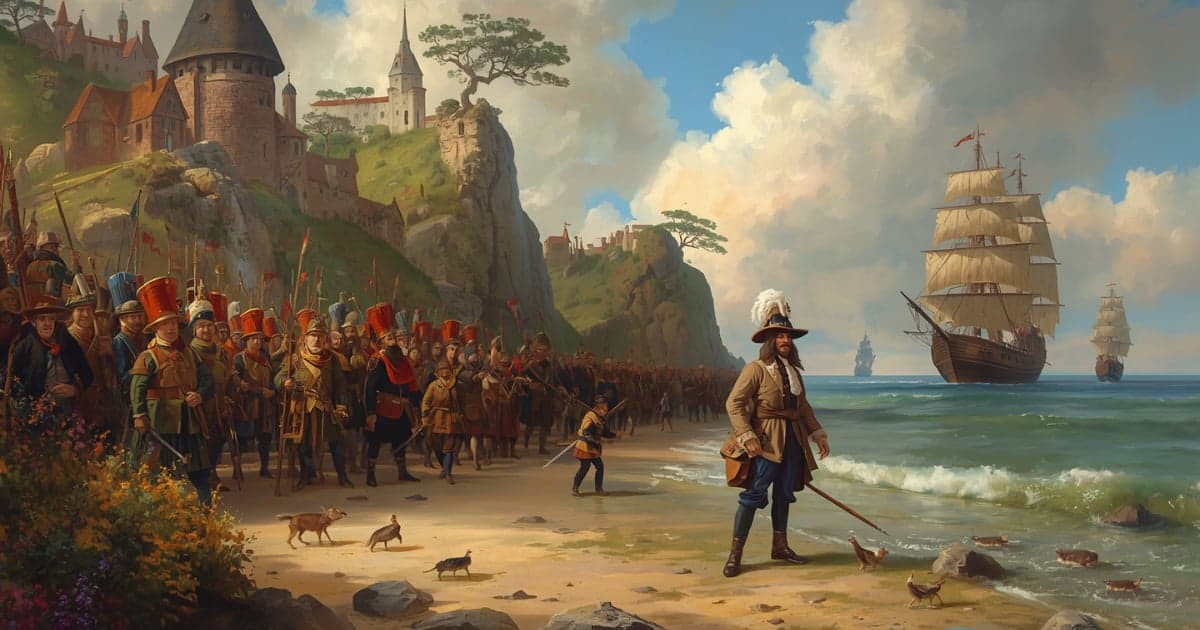
THE VISIT TO LORD POCOCURANTE, A NOBLE VENETIAN. Candide and Martin went in a gondola on the Brenta, and arrived at the palace of the noble Signor Pococurante. The gardens, laid out with taste, were adorned with fine marble statues. The palace was beautifully built. The master of the house was a man of sixty, and very rich. He received the two travellers with polite indifference, which put Candide a little out of countenance, but was not at all disagreeable to Martin. First, two pretty girls, very neatly dressed, served them with chocolate, which was frothed exceedingly well. Candide could…
Public-domain chapter text, formatted for reading.
Master this chapter. Complete your experience
Purchase the complete book to access all chapters and support classic literature
Available in paperback, hardcover, and e-book formats
Now let's explore the literary elements.
Key Quotes & Analysis
"I bought them at a great price, out of vanity, some years ago. They are said to be the finest things in Italy, but they do not please me at all."
Context: Dismissing Raphael paintings that Candide admires
He admits buying art for status rather than love, and now can't appreciate what he owns. This shows how wealth without genuine appreciation leads to emptiness.
In Today's Words:
When a comforting theory meets a brutal fact, I paid a fortune for these because people said I should. Everyone thinks they're amazing, but honestly, I don't see what the big deal is. Voltaire keeps asking who benefits from the explanation. Ask who profits when suffering gets renamed as progress.
"THE VISIT TO LORD POCOCURANTE, A NOBLE VENETIAN."
Context: From The Man Who Has Everything
This line marks a turn where private feeling collides with the roles each character is trying to maintain.
In Today's Words:
If you have ever been punished for trusting the official story, This line marks a turn where private feeling collides with the roles each character is trying to maintain. The joke is sharp because the pattern still runs modern institutions. Ask who profits when suffering gets renamed as progress.
"Candide and Martin went in a gondola on the Brenta, and arrived at the palace of the noble Signor Pococurante."
Context: From The Man Who Has Everything
This line marks a turn where private feeling collides with the roles each character is trying to maintain.
In Today's Words:
When disaster arrives and someone still calls it necessary, This line marks a turn where private feeling collides with the roles each character is trying to maintain. Practical wisdom starts when philosophy stops performing. Ask who profits when suffering gets renamed as progress. Ask who profits when suffering gets renamed as progress.
"The gardens, laid out with taste, were adorned with fine marble statues."
Context: From The Man Who Has Everything
This line marks a turn where private feeling collides with the roles each character is trying to maintain.
In Today's Words:
After kindness from a stranger you cannot explain, This line marks a turn where private feeling collides with the roles each character is trying to maintain. Candide's education is what happens when theory meets the road. Ask who profits when suffering gets renamed as progress.
Thematic Threads
Class
In This Chapter
Pococurante's wealth isolates him from authentic experience—he owns art but can't feel its beauty
Development
Evolved from earlier chapters showing class barriers to now showing how privilege can become its own trap
In Your Life:
You might notice how achieving a higher position at work sometimes makes it harder to connect with simple workplace pleasures.
Identity
In This Chapter
Pococurante defines himself through sophisticated criticism rather than genuine appreciation
Development
Builds on Candide's identity struggles by showing how identity based on superiority leads to emptiness
In Your Life:
You might catch yourself proving your worth by finding flaws in things others enjoy.
Social Expectations
In This Chapter
Pococurante performs refinement and boredom as markers of his elevated status
Development
Continues theme of people performing roles society expects rather than being authentic
In Your Life:
You might feel pressure to be unimpressed by things that actually bring you joy because it seems more sophisticated.
Personal Growth
In This Chapter
Pococurante has stopped growing—his wealth has made him static and judgmental
Development
Contrasts with Candide's ongoing development, showing how privilege can halt growth
In Your Life:
You might notice how comfort zones can trap you in patterns of criticism rather than curiosity.
You now have the context. Time to form your own thoughts.
Discussion Questions
This is not a test. Five prompts guide you through the chapter, from how it opens to how it closes, so you notice context and rhythm rather than facts to memorize. Sit with each question in your own words. When you see "One way to read it," treat it as a starting point, not the only answer.
- 1
What happens in the opening of "The Man Who Has Everything" when Candide and Martin visit Lord Pococurante, a wealthy Venetian senator...?
analysis • surfaceOne way to read it
Voltaire opens by showing Candide and Martin visit Lord Pococurante, a wealthy Venetian senator who owns everything money... before Candide's naive faith is tested further.
- 2
Why does the middle of "The Man Who Has Everything" turn on This chapter exposes the hollow core of material success and intellectual...?
analysis • mediumOne way to read it
The chapter escalates when This chapter exposes the hollow core of material success and intellectual snobbery., exposing the gap between Pangloss's theory and lived catastrophe.
- 3
Where do you see the endless dissatisfaction loop in modern workplaces, politics, or family life?
application • mediumOne way to read it
One reading: the same pattern appears when institutions explain harm instead of reducing it.
- 4
If you were Candide in the closing pressure of "The Man Who Has Everything", what would you do differently?
application • deepOne way to read it
A practical response is to act on evidence before rebuilding a theory that makes the harm sound necessary.
- 5
What does "The Man Who Has Everything" suggest about trusting philosophies that cannot survive bad evidence?
reflection • deepOne way to read it
It suggests that any worldview that cannot absorb real suffering is protecting someone else's comfort.
Critical Thinking Exercise
Map Your Dissatisfaction Triggers
Think about an area of your life where you've gained expertise or success. Write down three things you used to enjoy in that area but now find yourself criticizing instead of experiencing. Then identify one small way you could reconnect with the simple pleasure you used to feel.
Consider:
- •Notice the difference between constructive evaluation and automatic fault-finding
- •Consider how your increased knowledge might be blocking your enjoyment
- •Think about whether your criticism serves a purpose or just creates distance
Journaling Prompt
Write about a time when achieving something you wanted didn't bring the satisfaction you expected. What did you learn about the relationship between success and happiness?
Coming Up Next...
Chapter 26: Dinner with Fallen Kings
Candide and Martin's journey takes an unexpected turn when they encounter six mysterious strangers at supper, each harboring secrets that will challenge everything they think they know about power and fortune Candide and Martin sit down for what they think is a normal dinner at their Venice inn, but it turns into one of the most surreal encounters of their journey. When Cacambo suddenly.