Chapter 21
Two Worldviews Clash at Sea
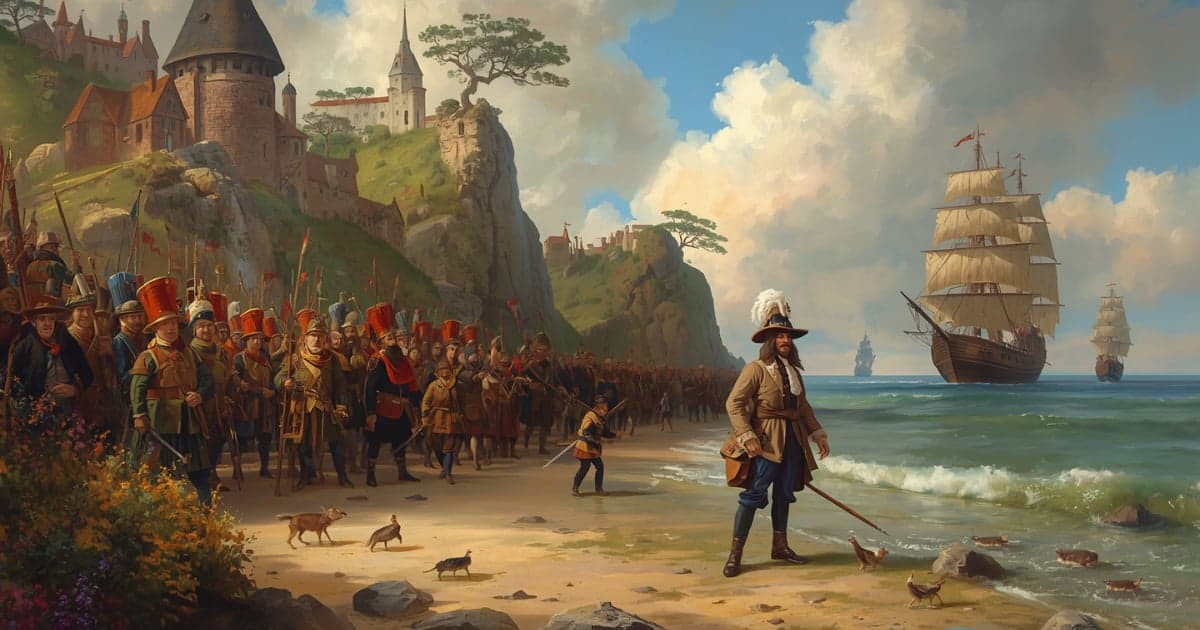
CANDIDE AND MARTIN, REASONING, DRAW NEAR THE COAST OF FRANCE. At length they descried the coast of France. "Were you ever in France, Mr. Martin?" said Candide. "Yes," said Martin, "I have been in several provinces. In some one-half of the people are fools, in others they are too cunning; in some they are weak and simple, in others they affect to be witty; in all, the principal occupation is love, the next is slander, and the third is talking nonsense." "But, Mr. Martin, have you seen Paris?" "Yes, I have. All these kinds are found there. It is a…
Public-domain chapter text, formatted for reading.
Master this chapter. Complete your experience
Purchase the complete book to access all chapters and support classic literature
Available in paperback, hardcover, and e-book formats
Now let's explore the literary elements.
Key Quotes & Analysis
"In some one-half of the people are fools, in others they are too cunning; in some they are weak and simple, in others they affect to be witty; in all, the principal occupation is love, the next is slander, and the third is talking nonsense."
Context: Martin describing French society to Candide as they approach the coast
This quote reveals Martin's cynical worldview and serves as Voltaire's satirical take on French society. Martin sees only negative traits in people and reduces complex human behavior to simple, unflattering categories.
In Today's Words:
If you have ever been punished for trusting the official story, Half the people are idiots, the other half are scheming. Everyone's either weak or trying too hard to be clever. Mostly they just chase romance, gossip, and talk trash. Candide's education is what happens when theory meets the road.
"You may easily imagine that after spending a month at El Dorado I can desire to behold nothing upon earth but Miss Cunegonde."
Context: Explaining why he has no interest in seeing France
Shows how Candide's optimism is now focused entirely on personal love rather than broader philosophical questions. His experience in paradise has made him prioritize individual happiness over understanding society.
In Today's Words:
When disaster arrives and someone still calls it necessary, Shows how Candide's optimism is now focused entirely on personal love rather than broader philosophical questions. His experience in paradise has made him prioritize individual happiness over understanding society. Notice whether you are absorbing comfort or testing it against evidence.
"CANDIDE AND MARTIN, REASONING, DRAW NEAR THE COAST OF FRANCE."
Context: From Two Worldviews Clash at Sea
This line marks a turn where private feeling collides with the roles each character is trying to maintain.
In Today's Words:
After kindness from a stranger you cannot explain, This line marks a turn where private feeling collides with the roles each character is trying to maintain. Voltaire keeps asking who benefits from the explanation. Ask who profits when suffering gets renamed as progress. Ask who profits when suffering gets renamed as progress.
"At length they descried the coast of France."
Context: From Two Worldviews Clash at Sea
This line marks a turn where private feeling collides with the roles each character is trying to maintain.
In Today's Words:
When the system explains suffering instead of reducing it, This line marks a turn where private feeling collides with the roles each character is trying to maintain. The joke is sharp because the pattern still runs modern institutions. Ask who profits when suffering gets renamed as progress.
Thematic Threads
Class
In This Chapter
Martin's cynicism about French society reflects his experience of being pushed to society's margins—robbed, imprisoned, forced into menial work
Development
Continues from earlier chapters showing how social position shapes worldview and survival strategies
In Your Life:
Your economic struggles might make you cynical about 'the system,' but that cynicism can become a trap that prevents you from seeing opportunities.
Identity
In This Chapter
Martin has built his entire identity around being the realist who sees through illusions, while Candide clings to his optimistic identity
Development
Develops the theme of how people construct identity around their philosophical positions rather than remaining flexible
In Your Life:
You might define yourself as 'the practical one' or 'the positive one' so strongly that you can't adapt when situations require different approaches.
Human Nature
In This Chapter
Martin's hawk-and-pigeon analogy reduces complex human behavior to simple animal instincts, while Candide hints at free will
Development
Introduced here as a central philosophical debate that will likely continue throughout their journey
In Your Life:
When you're hurt, you might convince yourself that people 'never change' to protect yourself, but this belief can become a self-fulfilling prophecy.
Personal Growth
In This Chapter
Both characters are stuck—Candide in naive optimism, Martin in defensive pessimism—neither allowing experience to create nuanced wisdom
Development
Continues the pattern of characters learning the wrong lessons from their experiences
In Your Life:
Your past experiences should inform your decisions, not imprison them—wisdom means staying open to being surprised by people.
Social Expectations
In This Chapter
Martin describes French society as full of people pretending to seek pleasure while actually miserable, suggesting widespread social performance
Development
Builds on earlier themes about the gap between social appearances and reality
In Your Life:
The pressure to appear happy or successful on social media might be making you as miserable as the French society Martin describes.
You now have the context. Time to form your own thoughts.
Discussion Questions
This is not a test. Five prompts guide you through the chapter, from how it opens to how it closes, so you notice context and rhythm rather than facts to memorize. Sit with each question in your own words. When you see "One way to read it," treat it as a starting point, not the only answer.
- 1
What happens in the opening of "Two Worldviews Clash at Sea" when As Candide and Martin sail toward France, their contrasting worldviews...?
analysis • surfaceOne way to read it
Voltaire opens by showing As Candide and Martin sail toward France, their contrasting worldviews come into sharp focus... before Candide's naive faith is tested further.
- 2
Why does the middle of "Two Worldviews Clash at Sea" turn on Candide starts to object, mentioning free will, but the conversation ends...?
analysis • mediumOne way to read it
The chapter escalates when Candide starts to object, mentioning free will, but the conversation ends as they reach..., exposing the gap between Pangloss's theory and lived catastrophe.
- 3
Where do you see the philosophical armor pattern in modern workplaces, politics, or family life?
application • mediumOne way to read it
One reading: the same pattern appears when institutions explain harm instead of reducing it.
- 4
If you were Candide in the closing pressure of "Two Worldviews Clash at Sea", what would you do differently?
application • deepOne way to read it
A practical response is to act on evidence before rebuilding a theory that makes the harm sound necessary.
- 5
What does "Two Worldviews Clash at Sea" suggest about trusting philosophies that cannot survive bad evidence?
reflection • deepOne way to read it
It suggests that any worldview that cannot absorb real suffering is protecting someone else's comfort.
Critical Thinking Exercise
Trace Your Protective Philosophy
Think of one area where you've developed a 'rule' about how the world works based on painful experiences - maybe about relationships, work, family, or money. Write down that rule, then trace it back to the specific experiences that created it. Finally, identify one small way you could test whether that rule still serves you or if it's become unnecessary armor.
Consider:
- •Your rule might have been necessary protection at the time it formed
- •Rules based on pain often contain some truth but miss important exceptions
- •The goal isn't to become naive, but to stay open to new evidence
Journaling Prompt
Write about a time when someone surprised you by acting better than your protective rules predicted they would. How did that challenge your assumptions, and what did you learn about the difference between wisdom and cynicism?
Coming Up Next...
Chapter 22: Candide Discovers Parisian Society
Candide and Martin's theoretical debates about human nature are about to get a reality check as they experience France firsthand. Will Paris live up to Martin's cynical expectations, or will Candide find reasons to maintain his stubborn optimism?