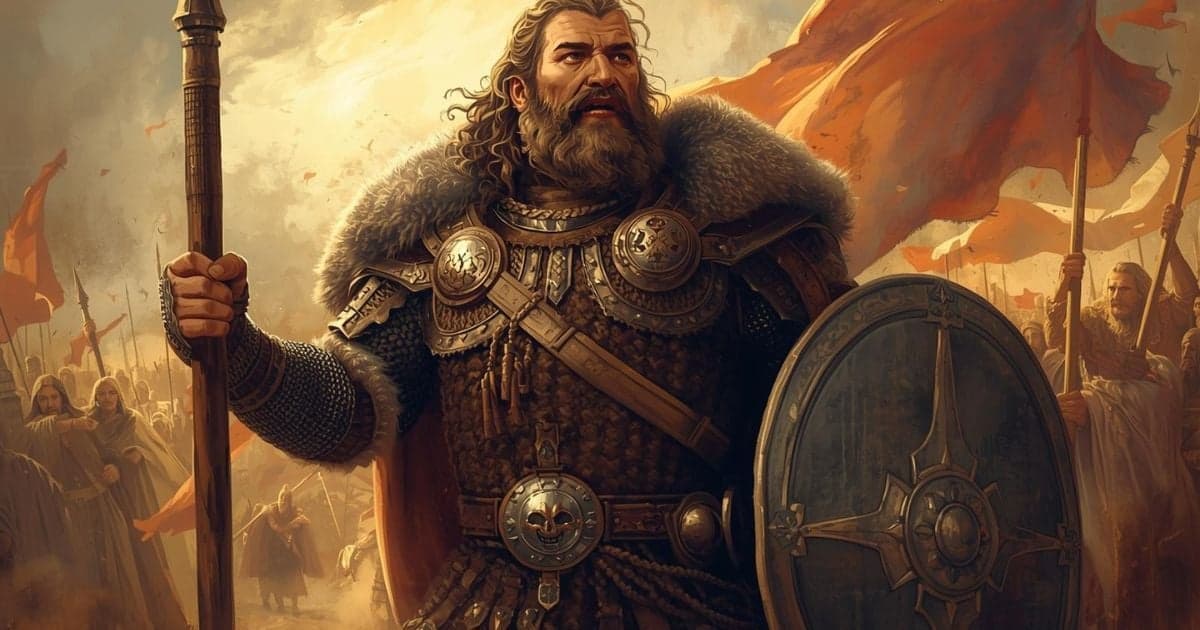
Beowulf and his men sail home to Geatland, loaded with treasure from Hrothgar. The coast-guard who first challenged them now welcomes them warmly, Beowulf even gives him a valuable sword as a gift, showing how success changes relationships and how generosity builds loyalty. Back in Geatland, they're greeted by their own port-warden who's been anxiously watching for their return, demonstrating how good leaders inspire devotion in their people. The chapter then introduces us to two very different queens, creating a study in leadership styles.
Hygd, wife of Beowulf's king Higelac, is young but wise, generous with gifts and kind to her people. She represents the ideal of queenly behavior, using her position to build relationships and strengthen the community. In stark contrast, the poet tells us about Thrytho, a queen from another land who ruled through fear and violence.
Anyone who dared look at her (except her husband) faced death. This reign of terror only ended when she married King Offa, who somehow transformed her into a better ruler. The comparison isn't subtle, it's a clear lesson about how power can corrupt or elevate, depending on the person wielding it.
Hygd shows us leadership through service and generosity, while Thrytho's story warns against using fear as a tool of control. The chapter reinforces that true strength lies not in inspiring terror, but in earning genuine respect and loyalty through consistent good character.
Coming Up in Chapter 29
Beowulf finally reunites with his king Higelac and must account for his adventures. The treasure he brings tells one story, but the full tale of his heroic deeds will reveal even more about what he's accomplished in Denmark.