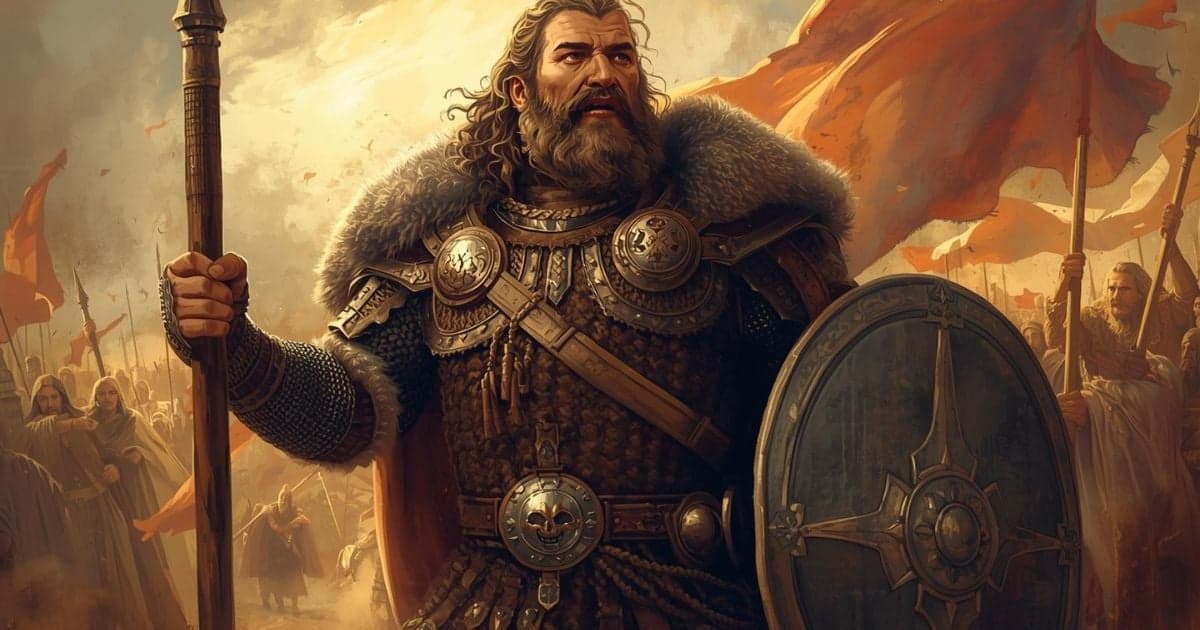
Beowulf returns triumphant to Hrothgar, carrying the ancient sword hilt as proof of his underwater victory. But he's smart about how he tells the story, he gives credit to God's help while still owning his courage and skill. This isn't false modesty; it's strategic humility that makes his achievement even more impressive. When Hrothgar examines the ancient sword hilt, he finds engravings telling the story of giants who defied God and were destroyed by flood. It's like holding a piece of cautionary history.
This sparks Hrothgar into mentor mode, and he delivers a crucial life lesson using the example of Heremod, a king who had everything but threw it all away. Heremod started strong, blessed with power, strength, and position, but let arrogance poison his heart. He became stingy with rewards, violent with his own people, and ended up dying alone and hated. Hrothgar's warning is crystal clear: success can be your biggest enemy if you let it go to your head.
He explains how God gives people talents, opportunities, and good fortune, but when they start thinking they're self-made and untouchable, pride becomes their downfall. The message hits hard because we see it everywhere, successful people who lose touch with what made them successful in the first place. Hrothgar's wisdom comes from experience and observation: he's watched good people destroy themselves when they stopped being grateful and started feeling entitled. This chapter is really about two types of leadership and character.
Beowulf shows the right way, acknowledging help, staying grounded, using strength to serve others. Heremod represents the cautionary tale, letting success corrupt you until you become the very thing people need protection from.
Coming Up in Chapter 26
Hrothgar isn't finished with his wisdom yet. He will press more counsel on Beowulf about pride when fortune rises, then turn again to treasure and the hall's lasting safety now that mother and son are gone.