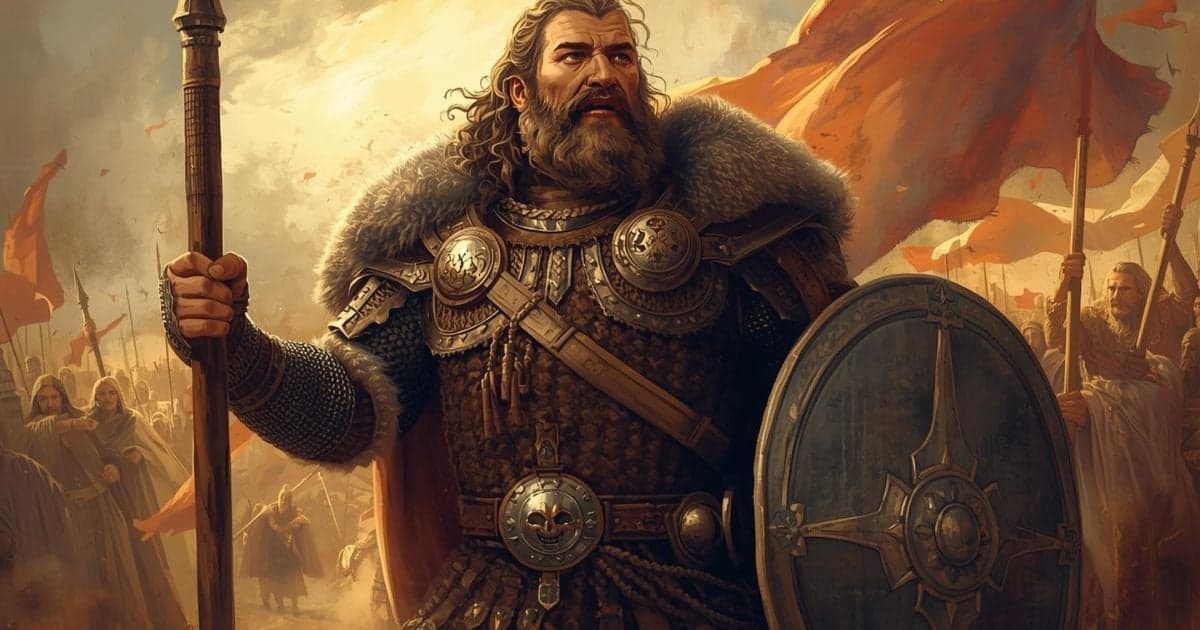
Beowulf receives magnificent gifts from Hrothgar's court, golden arm-rings, a precious corslet, and treasures that rival legendary necklaces of old. The poet pauses to tell us about one such famous necklace that belonged to Higelac, Beowulf's own king, who died wearing it in battle against the Frisians. This isn't just historical trivia, it's a warning about how even the mightiest can fall.
Queen Wealhtheow steps forward to formally present Beowulf with a golden collar, praising his achievements and asking him to be kind to her sons. Her words carry weight beyond ceremony; she's essentially asking Beowulf to protect her family's future. The celebration continues with feasting and wine, but the poet darkly hints that none of them know the sorrow coming their way.
As night falls and the warriors prepare to sleep in the hall, they arrange their weapons beside their beds, shields, helmets, and spears within easy reach. This detail reveals something crucial about their world: even in moments of greatest triumph, they never let their guard down completely. The chapter captures that bittersweet moment when success feels complete but danger lurks just beyond the firelight.
It shows us how public honor creates private obligations, and how the very treasures meant to celebrate victory can become reminders of mortality. The warriors' habit of sleeping armed isn't paranoia, it's wisdom born from experience in a world where peace is always temporary.
Coming Up in Chapter 20
Warriors bed down in Heorot with shields by their heads, believing Grendel's defeat bought them peace. Before dawn his mother enters the hall, kills Hrothgar's dearest thane, and flees with the trophy hand into the mere, summoning Beowulf from the gift-chamber to a second war.