Chapter 08
Huck wakes up alone on Jackson's Island and discovers Jim, Miss Wat...
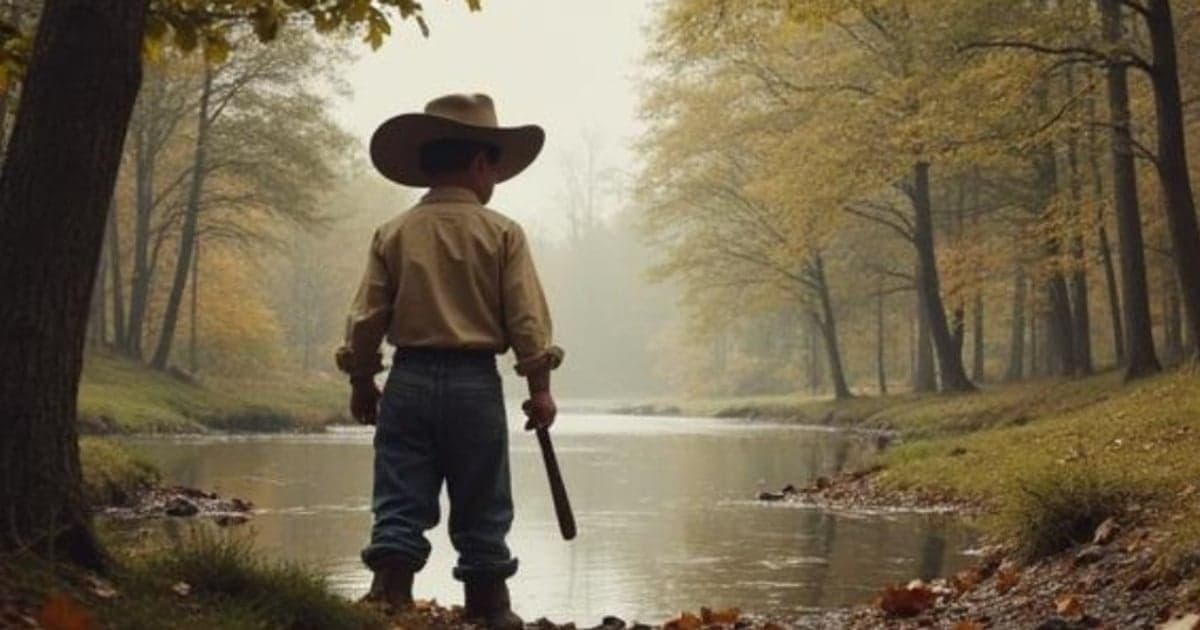
o’clock. I laid there in the grass and the cool shade thinking about things, and feeling rested and ruther comfortable and satisfied. I could see the sun out at one or two holes, but mostly it was big trees all about, and gloomy in there amongst them. There was freckled places on the ground where the light sifted down through the leaves, and the freckled places swapped about a little, showing there was a little breeze up there. A couple of squirrels set on a limb and jabbered at me very friendly. I was powerful lazy and comfortable—didn’t want to…
Public-domain chapter text, formatted for reading.
Master this chapter. Complete your experience
Purchase the complete book to access all chapters and support classic literature
Available in paperback, hardcover, and e-book formats
Now let's explore the literary elements.
Key Quotes & Analysis
"You see, they was firing cannon over the water, trying to make my carcass come to the top."
Context: Huck watches the ferry search party from hiding on Jackson's Island
The town treats Huck's body as an object to be retrieved. The comedy of him eating stolen bread while they cannonade the river underscores how completely his ruse worked.
In Today's Words:
They were literally shooting cannons to float my supposed corpse to the surface while I watched and ate breakfast. When people are sure they know what happened to you, they stop looking where you actually are. Twain shows how quickly charm, fear, or greed can reshape who holds power when nobody with authority is paying
"I was ever so glad to see Jim. I warn't lonesome now."
Context: After convincing Jim he is not a ghost
Huck's loneliness breaks the moment he recognizes a human ally. The line shows he already sees Jim as companionship, not property.
In Today's Words:
I was relieved to see someone I trusted because the island had started to feel too empty. Real safety is not only hiding; it is having one person who will not turn you in. The line still lands today when someone must decide whether to stay safe inside the story adults tell or act on
"Well, I b'lieve you, Huck. I—I _run off_."
Context: Jim confesses he escaped slavery
Jim stakes his life on Huck's promise. The hesitation shows how dangerous honesty is for an enslaved man in 1840s Missouri.
In Today's Words:
He finally admitted he ran because he trusted me enough to risk everything. Telling the truth in that moment was not casual conversation; it was handing someone your life. On the raft Huck discovers that lived experience can overturn years of teaching, especially when the person you were taught to fear turns out to be
"People would call me a low-down Abolitionist and despise me for keeping mum—but that don't make no difference."
Context: Huck decides not to betray Jim
Huck names the social cost of loyalty and chooses Jim anyway. This is his first explicit moral stand against the law he was taught.
In Today's Words:
Neighbors would hate me for protecting him, and I knew it, but I was not going to snitch. Sometimes the right choice costs you reputation before it costs you anything else. Readers still recognize the pattern when performance, politeness, or paperwork replace the simple humane move that would end the harm right now.
Thematic Threads
Class
In This Chapter
Social hierarchy collapses when Huck and Jim become equals through shared desperation—neither has power over the other
Development
Introduced here
In Your Life:
You might notice how crisis situations reveal that titles and status matter less than character and kindness
Identity
In This Chapter
Huck begins questioning who he really is when freed from society's expectations about how to treat Jim
Development
Builds on earlier hints of Huck's independence
In Your Life:
You might find your true values emerging when you're away from people who expect you to act a certain way
Human Relationships
In This Chapter
Jim shows Huck unconditional care—watching over him, sharing food—without expecting anything in return
Development
Introduced here
In Your Life:
You might recognize how rare it is to receive kindness with no strings attached, and how powerful that feels
Social Expectations
In This Chapter
Huck faces his first real moral choice between what society taught him (turn in runaway slaves) and his conscience
Development
Escalates from earlier questioning of authority
In Your Life:
You might face moments where doing the 'right' thing according to others conflicts with what feels right to you
Personal Growth
In This Chapter
Huck's promise not to betray Jim marks his first independent moral decision based on human connection rather than social rules
Development
Major step forward from earlier passive rebellion
In Your Life:
You might find that your biggest growth moments come from choosing loyalty to individuals over loyalty to systems
You now have the context. Time to form your own thoughts.
Discussion Questions
This is not a test. Five prompts guide you through the chapter, from how it opens to how it closes, so you notice context and rhythm rather than facts to memorize. Sit with each question in your own words. When you see "One way to read it," treat it as a starting point, not the only answer.
- 1
How does the ferry-boat search with cannon fire show that Huck's fake death worked?
analysis • surfaceOne way to read it
The town believes Huck drowned and searches the river for a body, which means nobody will look for a living boy on the island. Huck can watch the search from cover.
- 2
Why is Jim hiding on the island, and what did he overhear that made him run?
analysis • mediumOne way to read it
He heard Miss Watson plan to sell him down to New Orleans for eight hundred dollars. He left before the sale could separate him from his family.
- 3
When Jim first thinks Huck is a ghost, what does his fear tell us about how enslaved people viewed death and the supernatural?
application • mediumOne way to read it
Jim's terror is sincere; he begs the ghost not to hurt him and offers friendship to the dead. The moment shows his vulnerability before he learns Huck is alive.
- 4
What changes in Huck when he promises not to tell on Jim?
analysis • deepOne way to read it
He accepts social hatred as the price of protecting Jim. That is a conscious loyalty choice, not a childish whim.
- 5
When have you stayed loyal to someone even though others would disapprove?
reflection • deepOne way to read it
Strong answers name protecting a friend, coworker, or family member when gossip or policy pushed the other way. The lesson is that approval is cheaper than trust.
Critical Thinking Exercise
Map Your Vulnerability Bridges
Think of three relationships in your life that became deeper when either you or the other person shared something real and vulnerable. Write down what was shared, how it changed the relationship, and what barriers it broke down. Then identify one current relationship where strategic vulnerability might create better connection.
Consider:
- •Consider relationships that surprised you with their depth after vulnerability was shared
- •Think about times when someone's honesty about their struggles changed how you saw them
- •Notice the difference between performed vulnerability and genuine openness
Journaling Prompt
Write about a time when you had to choose between following what you were taught and following what felt right based on your direct experience with someone. What did you learn about making moral decisions independently?
Coming Up Next...
Chapter 9
Huck and Jim settle into life on the island, but their peaceful refuge won't last long. Soon they'll discover they're not as safe as they thought, and danger is closer than they realize Huck and Jim find themselves caught in a dangerous thunderstorm while camping on Jackson's Island. When lightning strikes nearby and rain pours down, they take shelter in a cave they discovered earlier..